


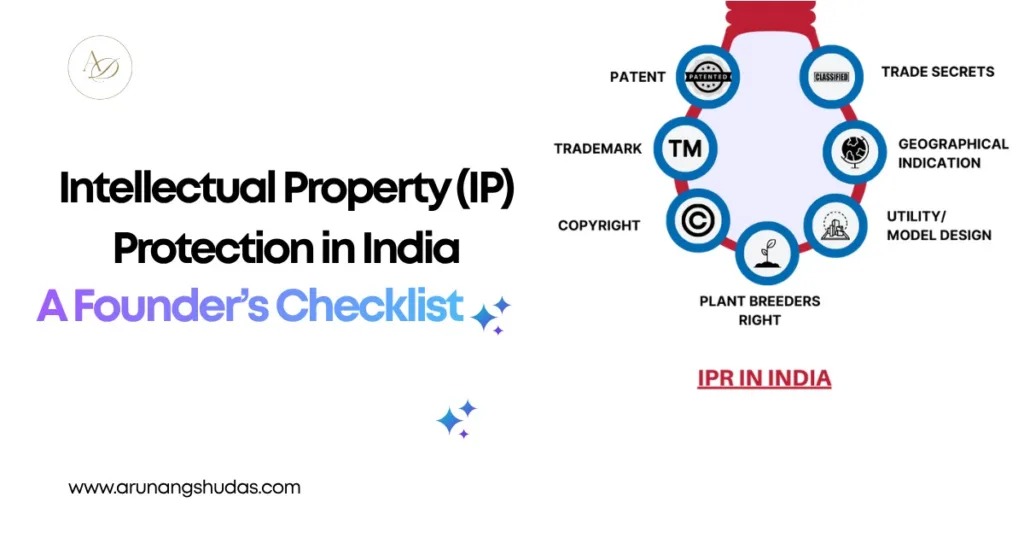
What is IP in Business
When founders hear intellectual property business, they often assume it’s just a formality. But there is much more going on. So, what is intellectual property in business? It’s intangible property such as your brand name, logo, product design, computer code and even ideas. They’re abstract but can often be more valuable than all your factories and buildings.
Imagine IP as a digital password to your ideas. Without them, your innovation is vulnerable to theft and speedier market expansion. In the burgeoning startup scene in India with a flourishing innovation culture, securing these assets is critical. intellectual property isn’t just about safeguarding, it’s about owning, profiting and sustaining growth.
Imagine creating an innovative app and not protecting it – someone else could borrow the idea, make a few changes and release it too. It isn’t yours anymore. This is the bitter lesson some entrepreneurs face by neglecting intellectual property early in the game.
Also Read:- Ultimate Guide to SaaS Tools: Boost Your Business Efficiency
Why IP Matters for Startups
Ever wonder what it feels to launch a startup, but later not own your own brand or product? Sounds extreme? It’s not as rare as you might think. intellectual property provides a level of trust – to investors, customers and partners.
Investors are not only interested in the earnings of startups now, but in their defensibility. Investors invest in startups that have IP to secure their business in the future. For startups, without intellectual property protection it’s like leaving your doors open.
The other important thing is scalability. With protected IP, you can sell, franchise or even license your invention. So, your idea becomes an income-generating security.
India’s Growing IP Ecosystem
1. Latest Statistics and Trends
India’s IP landscape is rapidly changing. A recent report suggests that India experienced a growth of nearly 20% in IP registrations in 2024-25Filings exceeded 749,000 across the three major intellectual property categories – patents, trademarks and copyrights.
India is also emerging as a global innovation powerhouse, with double-digit growth in patent applications for the last six years in a row.
This trend shows one thing for sure: we’re seeing more competition. And with more companies protecting their innovations, they all have a key advantage.
2. Why Founders Must Act Early
IP protection happens on a race-to-the-finish line. In India, the IP owner is decided based on the “first to file” principle, rather than the first to invent.
So if you have a brand name or an invention and you don’t register it, chances are someone else gets first rights to it. That’s why being quick is crucial.
Types of Intellectual Property in India
1. Trademark
A trademark is your brand’s identity, name, phrase or even sound. This means no one can adopt a similar brand name or logo that misleads consumers.
2. Patent
These safeguard inventions and give you 20 years of exclusive rights. This is the best protection if your startup is based on technology or innovation.
3. Copyright
Copyright is for literary works, computer code, videos and designs. It’s automatic, but registration provides better legal protection.
4. Design
Design registration protects product designs – ideal for product companies.
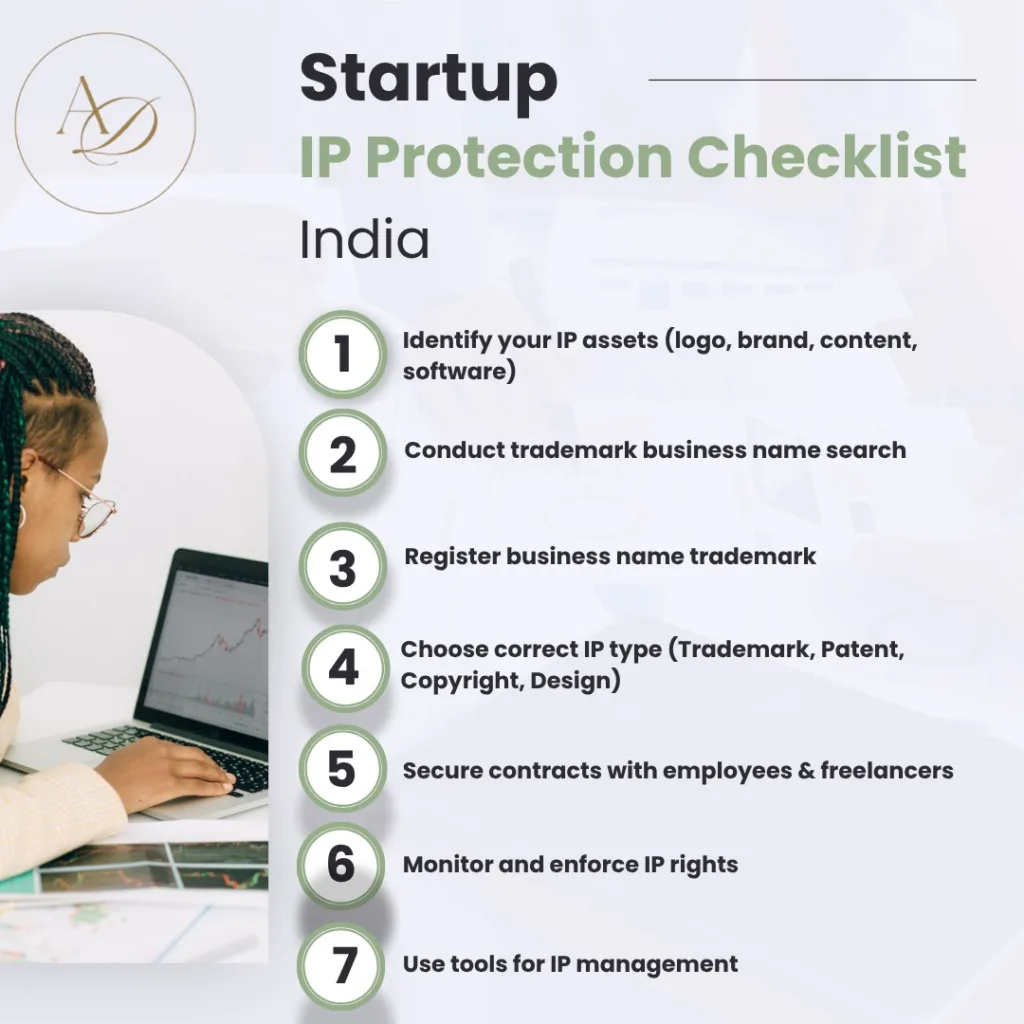
Founder’s IP Protection Checklist
Step 1 – Identify Your IP Assets
Make a list of valuable assets in your business – business name, logo, product design, software, content and even business processes. This gives an idea of what needs to be secured.
Step 2 – Trademark Business Name Search
Always carry out a trademark business name search before finalising your brand. It verifies the name you’ve selected is free to use.
Otherwise, you risk possible trademark infringement and rebranding. It’s like buying a domain name for a website.
Step 3 – Register Business Name Trademark
Once your name is checked, simply register for a business name trademark. This protects your brand and ensures legal ownership.
In 2025, trademarking has become quicker and much more digital than ever before in India – making it simpler for startups.
Step 4 – Secure Ownership Contracts
This step is often overlooked but is a huge risk. Make sure employees, freelancers and vendors sign ownership agreements that will convey IP to your company.
Otherwise, your web developer or designer could end up owning it.
Step 5 – Choose the Right IP Protection
It is not necessary for all companies to use all types of IP protection. An e-commerce business may need more focus on trademarks, whereas SaaS companies will focus on copyright and patents.
Step 6 – Monitor & Enforce Rights
IP is not a “set-and-forget” process. You need to monitor for abuse and take action against wrongdoers.
Common Mistakes Founders Make
1. Ignoring Early Registration
Founders often put off IP registration to avoid costs. This can cost more to resolve – such as rebranding or litigation.
2. Weak Contracts
Vague contracts, or even none at all, can cause ownership issues. Be precise with formal written agreements.
Tools & Technology for IP Protection
1. Software for Small & Mid-Sized Businesses
IP can be a lot to manage. Enter Software for Small & Mid-Sized Businesses They assist with managing trademarks, documents and keeping an eye on infringements.
They provide the much-needed reminder to renew on time. This is a boon for startups with multiple hats to wear.
2. Solutions for Business Growth
Protecting IP isn’t just about security, it’s about scaling. And with Solutions for Business Growth, your IP is your business.
You can lease franchises or even find investors interested in your IP portfolio. IP in the modern marketplace is strategic.
How Arunangshudas Guide Us for This
IP law is complex; having the right guidance can help. Here’s how how Arunangshudas guide us for this comes into play. They focus on demystifying IP for founders through step-by-step legal processes.
They stress importance of initial IP assessments to lay ground for risks. Rather than a one-off exercise, they advocate ongoing IP tracking and strategy that aligns with business objectives.
Importantly, they offer execution strategies for their advice. They offer founders practical checklists, schedules and advice on how to execute their IP plans, rather than complicated legal definitions. This type of guidance can be a lifeline to startups trying to survive and thrive.

Conclusion
Protecting your IP is crucial in India. In a competitive market and an ever growing world of innovation, protecting your intellectual property is the key to creating a scalable business.
Whether it’s grasping intellectual property business ideas or following a checklist, all actions contribute to protecting your startup. From researching a business name trademark search to registering a business name trademark, every step counts.
FAQs
1. What is IP in business and why is it important?
IP is intangible property such as brands, inventions and content. It gives you ownership and prevents misappropriation.
2. How long does trademark registration take in India?
It takes 6-18 months, but you can start using the ™ symbol straightaway.
3. Can I run a business without IP registration?
Yes, but it’s risky. You won’t be able to prevent people from copying your work.
4. Is trademark mandatory for startups?
No, but it’s highly advisable to secure your brand.
5. What is the cost of IP registration in India?
It’s different for different types, but there are subsidies for startups.
