


Artificial intelligence has started transforming the world as we know it. It has revolutionized everything – from education to healthcare. When it comes to healthcare, medical imaging has completely changed due to AI. Thanks to these algorithms, diagnostic accuracy and efficiency are at all-time high.
The algorithms are able to analyse huge sets of data quickly and accurately. Furthermore, algorithms are able to identify certain patterns or abnormalities that could easily be overlooked by the human eyes.
With AI in medical imaging, serious diseases such as cancer can be detected and treated in the earliest of stages. Here is everything worth knowing about the use of AI in this medical field.
Healthcare and Artificial Intelligence
Artificial intelligence has many uses today. As far as healthcare is concerned, AI is mostly used for analysis, interpretation, and comprehension of complex medical data. Besides medical imaging, AI is often used for predictive analytics. Here, healthcare specialists are able to predict outcomes and tailor better preventive care or personalized treatment plans for the patients.
Another field where AI is helpful is EHR. Electronic health records help streamline data entry and reduce administrative burden. With virtual health assistants, patients can quickly access medical advice, check their symptoms, or schedule appointments.
Using AI properly in healthcare can have numerous benefits. It can easily improve accuracy by eliminating human error. It can also bring efficiency into the doctor’s office. Most importantly, it can allow for personalized treatment plans and individualized approaches to their patients.
Identifying risk factors is another advantage AI brings to healthcare. Due to a combination of imaging, electronic health records, and genetic information, these algorithms could predict the likelihood of certain diseases developing.
The Use of AI in Medical Imaging
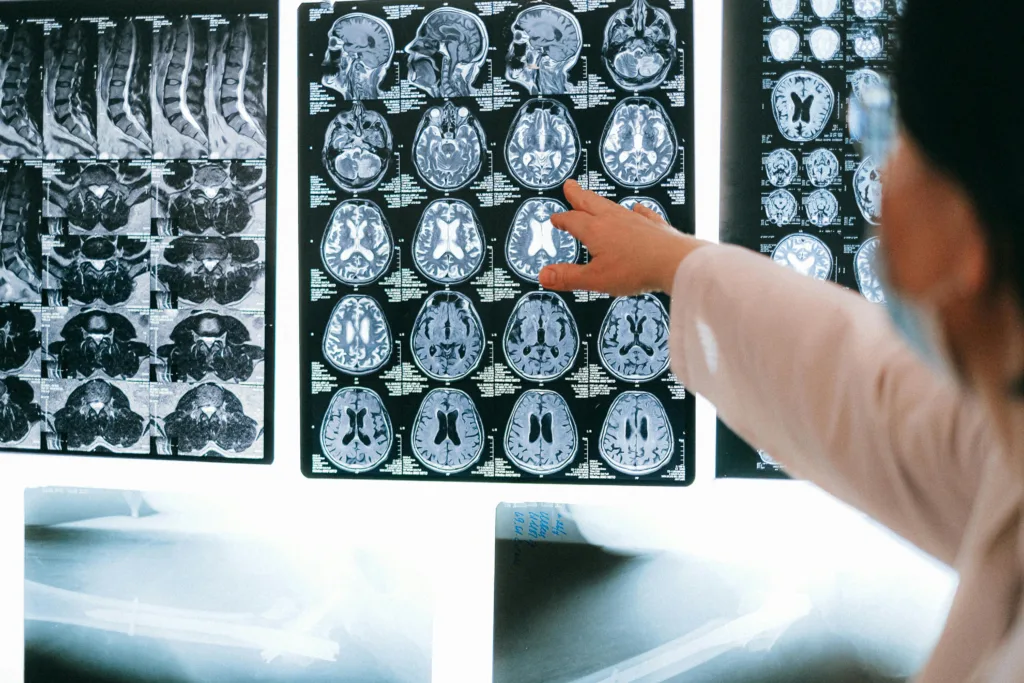
Medical imaging is essential for diagnostics. That is why efficiency and accuracy are of utmost importance. In radiology, Artificial Intelligence can help read X-rays and CT scans, as well as MRIs. With AI, going through these and identifying potential issues can be done within minutes.
Historical imaging data is used here to make certain predictions. For example, it can make it easy to predict disease progression – the way or the pace in which the disease will behave. Based on these pretty accurate assumptions and predictions, doctors can create the most suitable treatment plans.
One of the most important ways AI is used in healthcare is data integration. With old health records and new imaging data, AI can create a uniquely holistic view of a patient’s health.
Radiology and AI
Time-consuming tasks can be nerve-wrecking, especially when health is in question. Thanks to certain AI-powered tools, today, it’s possible to automate most of these tasks. For instance, saving time on segmentation and annotation lets healthcare specialists focus on more important matters.
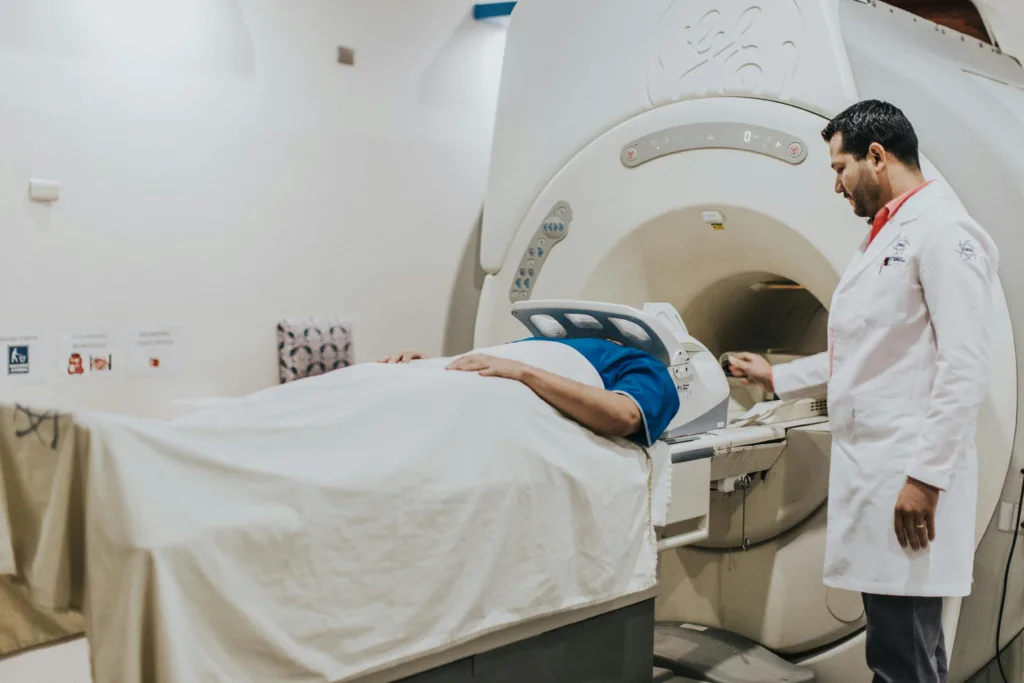
Furthermore, AI-powered systems can already detect certain conditions. For instance, they have great results when it comes to detecting conditions such as pneumonia from X-rays. The use of AI has already led to some cases of reduced false positives for mammography. All this can accelerate the treatment process, reduce stress, and help doctors prioritise properly.
Algorithms powered by AI can make Ultra Sound examinations faster and more reliable too. AI algorithms are crucial in detecting intracranial hemorrhages or pulmonary embolisms. Flagging these urgent cases in real time allows for immediate attention. Analysing this data makes it possible to prioritise and reduce dangerous delays.
Pathology and AI
In healthcare, making errors can lead to fatal scenarios. That is why minimising the error rate is a crucial thing to do. With AI systems, human error in pathology is definitely reduced.
How does AI affect pathology? The first example, of course, refers to the accuracy of diagnostics. With these modern technologies, specific cellular changes can easily be spotted and identified. Again, AI takes part in improving patient outcomes.
Here, AI is mostly used to identify cancerous cells in biopsy samples, as well as to ensure early cancer detection and treatment. In some cases, it can predict the way a disease might progress and allow for a more suitable care.
Cardiology and AI
Radiology and pathology aren’t the only spheres where AI-powered tools come in handy. Instead, these tools can be of great importance in cardiology too. As with the previous two examples, AI is used here too in order to streamline the processes and ensure accuracy and efficiency.
With these technologies, the accuracy of diagnosing conditions like coronary artery disease and arrhythmia is easier than ever. This is simply done by detecting anomalies in cardiac images. Apart from this, systems powered by Artificial Intelligence can assist in interpreting echocardiograms, MRIs, and CT scans.
The imaging data is full of signs and clues that need to be properly analysed. Quick and accurate analysis is further allowed by the streamlined data management. Integrating existing archives with hospital information systems is a great way to get a new perspective. This strengthens the coordination across various departments and provides faster access to imaging results.
Is Artificial Intelligence Helpful in Medical Imaging?
Depending on how it is used, AI can improve human life in many ways. When healthcare is concerned, AI has proven that it is a great addition. Firstly, with consistent and detailed image analysis, there is a lesser chance of diagnostic errors. Tools that pick up even on the slightest of the changes lead to more confidence in clinical decisions in general.
Having access to valuable data as soon as possible improves efficiency and overall workflow optimization. Most importantly, AI can process and manage large datasets. These will always be stored and saved for later purposes too.
In the future, we can only expect the role of AI to grow. The technologies keep evolving and patient care has a bright future due to this.
Conclusion
In the last couple of years, AI has completely changed the way we function on a daily basis. It is normal that AI is paving its way in healthcare too. With these amazing systems and tools that doctors today are using, patient care is tending to be more personalised than ever. Medical imaging and diagnostics are slowly becoming unimaginable without the revolutionising AI tools.
