



Why Financial Audits Matter for Startups
As a startup, audits may seem an issue best left to the big boys. But the reality is, audits are not just essential for compliance, they are essential for survival. A good audit equals credibility. Potential investors, loan providers and even partners are heavily dependent on you. Disorganisation or lack of consistency raises alarm bells.
An audit is like a medical check up. You may feel great but there are problems that can be eating you up. Compliance for startups that take the time to prioritise early on often grow quicker because they establish a regime for discipline and accountability. Alternatively, missing audits can lead to what we might call Financial Mistakes That Sink Bootstrapped ventures: cash flow problems, tax deductions, and bad decisions.
A good audit not only passes the test, it makes the case for your growth. This is precisely what your investors are looking for – confidence, control and consistency.
Understanding the Basics of Financial Audits
1. What is a Financial Audit?
A financial audit is a thorough review of your statements for accuracy and adherence. It ensures that preparing financial statements is compliant with accounting standards, and your reporting is accurate. In other words, your income statements, balance sheets and cash flow statements.
Audits for startups are more than compliance exercises. It helps to identify bottlenecks, risks, and enhance financial control over data. Audit can even identify opportunities to grow by identifying inefficiencies.
2. Internal Audit vs External Audit
It’s important to know the difference between internal audit vs external audit. These are usually performed by your own personnel, or auditors you may outsource, to review your controls and procedures. External audits are done by external auditors who give an objective opinion.
| Aspect | Internal Audit | External Audit |
| Purpose | Improve operations | Ensure compliance |
| Conducted By | Internal team | Independent auditors |
| Frequency | Ongoing | Annual/Periodic |
| Focus | Process efficiency | Financial accuracy |
Both play a vital role. Internal audits get you ready and external audits prove you.
Building Strong Financial Foundations
1. Financial Statements Preparation
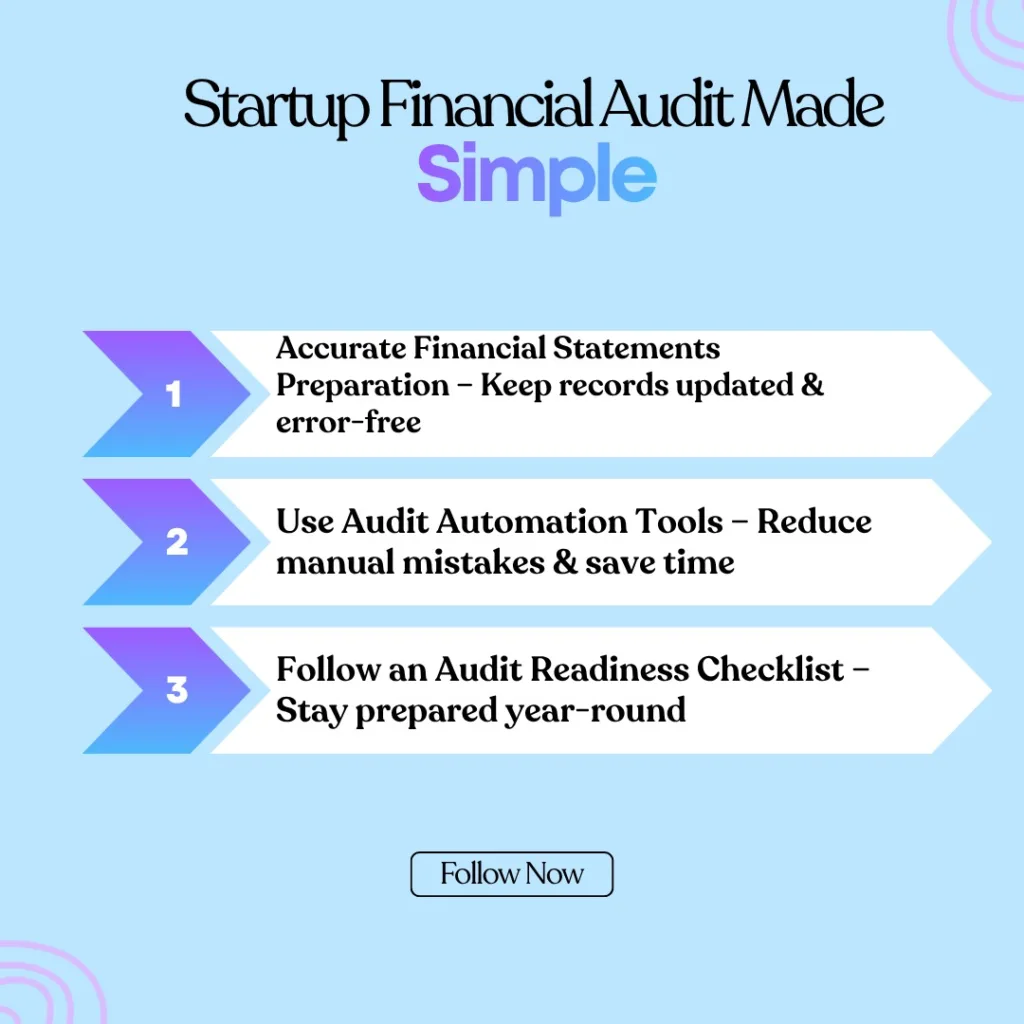
Accurate preparation of financial statements is crucial for audit success. Each transaction has to be recorded, classified and reconciled appropriately. It’s common for startups to push this to “later”, but audits will make “later” painful.
Consistency is key. Close your books monthly, document everything, and use the same reports each time to prepare for audits. It’s like tidying up every day instead of just before company comes over.
2. Financial Data Management Best Practices
Effective financial data management is crucial to audit success. This includes managing bills, expense reports, receipts, and documenting the safekeeping of records.
For startups integrating cloud technologies should be used to store data. This not only minimises mistakes, but allows rapid retrieval during audits. Auditors don’t have time to wait – and fast ways to lose credibility is to present them with incomplete data.
Essential Tools for Audit Success
1. Accounting Software for Startups
Selecting the accounting software for startups can make a world of difference. Software such as QuickBooks, Zoho Books or Xero can automate bookkeeping tasks, minimise errors and provide real-time reporting.
They ensure compliance with regulations, manage transactions, and keep records up-to-date. You won’t be stressed come tax time.
2. Audit Automation Tools
Startup companies are using audit automation tools to streamline audit processes. These are used for validating data, managing risks and ensuring compliance.
It doesn’t completely automate the audit process, but it does make it much faster and more accurate. It’s like having a helpful sidekick to check all the boxes.
Creating an Audit Readiness Checklist
1. Financial Audit Checklist for Startups
A financial audit checklist for startups covers all the bases. This involves confirming reports, bank reconciliation, tax returns and internal controls.
Rather than preparing last minute for an audit, this audit checklist prepares startups all year. It makes the audit process each year manageable.
2. Cash Flow Audit Checklist
Cash flow is essential for a startup. A cash flow audit checklist identifies the cash inflows and outflows to your business to prevent money leaking away.
It involves examining cash flows, payment trends and eliminating extraneous costs. The death of many startups is from a cash, not revenue, problem.
Common Financial Mistakes Startups Must Avoid
Startups tend to fall prey to common pitfalls that can be avoided. One of the major problems is lack of financial discipline. This translates to poor monitoring, reporting, and audit failure.
The second important issue is the wasted Pricing Strategy. Having a low price may lead to more sales, but will strain your business’s profitability. Overpricing without a corresponding value proposition can however lead to a loss in sales.
Then there’s the sinister Stop Burning Money. Frivolous spending, hiring for the wrong reasons and lack of budgeting can deplete your cash. Auditors commonly detect these problems, which can negatively impact investor confidence.
Steering clear of these pitfalls is not only for avoiding audit issues, it’s about creating a strong and healthy business.
Strategic Financial Planning for Audit Success
1. Pricing Strategy
Your Pricing Strategy affects your bottom line. It defines your cash flow, profits, and viability. Auditors may scrutinise your pricing strategies to compare them with cost and market factors.
Businesses need to review their pricing models, looking at what customers want, the competitive landscape and costs.
2. Stop Burning Cash
It’s important to learn to Stop Burning Cash. This includes managing costs, streamlining operations and prioritizing profitability.
Smart cash management not only helps startups pass audits, but it also catches the eyes of investors. It demonstrates control, planning and leadership.
Expert Guidance for Seamless Audits
Audits can be a daunting experience, particularly for first-time entrepreneurs. Here is where the advice of experts is crucial. Experts such as Arunangshudas offer strategic advice for more than compliance. They guide startups in managing financial compliance for startups, improving the way data is captured and setting up audit processes.
Under the right guidance, startups can change audits from being a dreaded process to a valuable opportunity. Don’t dread audits, start to use them to improve business planning and financial management.

Conclusion
Preparing for a clean financial audit takes time, effort, technology and processes. Whether you’re preparing financial statements or using audit automation software, each element plays its part.
Peering through the audit glass gives startups an edge. They earn credibility,secure funding, and grow sustainably. With a proven audit readiness checklist, effective financial data management, and avoiding common pitfalls, you can ensure your company’s continued success.
FAQs
1. What’s the key to audit readiness for startups?
Consistent and steadfast preparation of financial statements and documentation are the most important steps.
2. What frequency is required for startups’ internal audit?
Internal audits for startups should be done every 3 months to maintain compliance and detect issues early.
3. Is audit automation required for start-ups?
They are not required, but very valuable for accuracy and efficiency.
4. What should be on a financial audit checklist for startups?
The financial audit grid for startups entails checking financial statements, bank account balances, tax returns, and financial controls.
5. How to improve compliance for startups?
Through the use of solid accounting software for startups, effective financial data management, and audit readiness checklists, startups can enhance compliance.
