


Customer support software for SaaS startups is a critical investment, directly impacting customer retention, lifetime value, and your company’s reputation. In the subscription-based world of SaaS, exceptional support isn’t just a department—it’s a core feature of your product.
The right tool empowers your small team to deliver efficient, scalable, and human-centric service. This guide reviews the nine best platforms that balance powerful features with the budget and agility needs of early-stage SaaS companies. Many SaaS companies integrate their helpdesk with CRM tools for early-stage startups to maintain a complete view of customer interactions and support history.
Key Features to Look For in Customer Support Software for SaaS Startups
Before diving into the list, know what matters. Your ideal helpdesk software for startups should include a unified inbox, robust automation (to save time), a self-service knowledge base (to deflect tickets), seamless integrations with your existing stack, and detailed reporting to track CSAT and team performance.
At-a-Glance: Top 9 Support Platforms Compared
| Platform | Best For… | Starting Price (Est.) | Top Advantage |
| Zendesk | Rapid Enterprise Scale | $55/agent | Most powerful ecosystem. |
| Freshdesk | Balance of Power & Cost | Free ($15/paid) | Intuitive and easy setup. |
| Help Scout | Human, Personal Touch | $25/agent | Feels like email, not a “ticket.” |
| Intercom | Proactive Engagement | $39/seat | Best in-app chat and bots. |
| Zoho Desk | Budget-Conscious Orgs | Free ($14/paid) | Best value for AI features. |
| HubSpot Service | Existing HubSpot Users | Free ($20/mo) | Complete CRM integration. |
| Gorgias | E-commerce Focused SaaS | $60/mo | Revenue-focused automation. |
| Front | Team Collaboration | $19/seat | Best for shared inbox management. |
| Kayako | Simple All-in-One | $15/agent | Easy timeline view of history. |
Read more blog : Best Marketing Automation Tools for Startups in 2026
The Top 9 Customer Support Platforms for SaaS
1. Zendesk Suite (Starter Plan)
Brief Overview: An industry giant known for its robustness and scalability. Zendesk offers a comprehensive, all-in-one suite that brings support, engagement, and conversation tools together.
Best for: SaaS startups planning for rapid, enterprise-level scale who want a market-leading solution from day one.
Pricing: The Suite Team plan starts at $55/agent/month (billed annually). A limited free trial is available.
Pros: Incredibly powerful and scalable; excellent omnichannel support (email, social, chat, phone); vast app marketplace.
Cons: Can be expensive for very small teams; some complexity in setup; pricing can escalate with add-ons.
2. Freshdesk (by Freshworks)
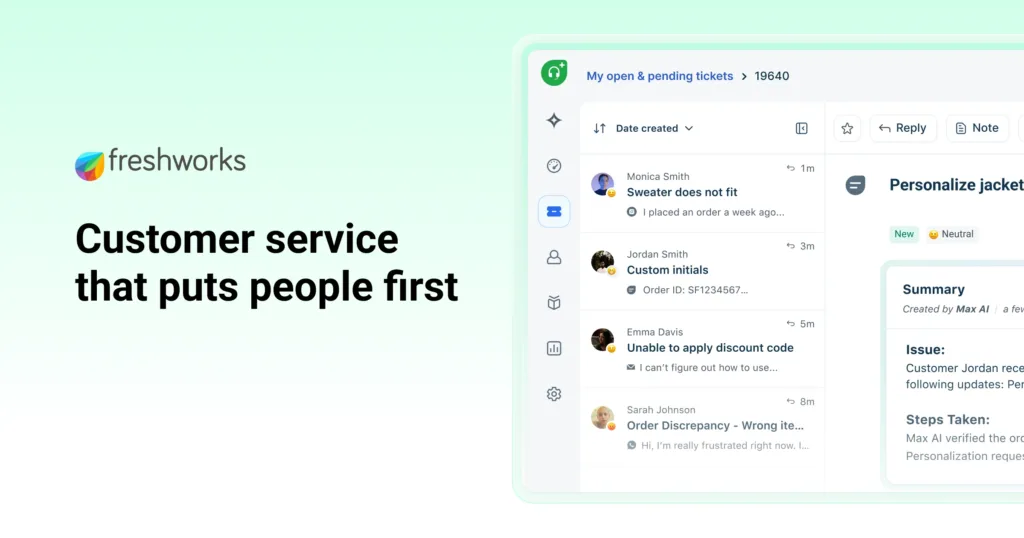
Brief Overview: A user-friendly and feature-rich alternative that offers tremendous value. It’s known for its intuitive interface and strong automation capabilities right out of the box.
Best for: Startups seeking the best balance of power, ease of use, and cost-effectiveness.
Pricing: Offers a generous free plan for up to 10 agents. Paid plans start at $15/agent/month (billed annually).
Pros: Excellent free plan; intuitive and easy to set up; strong automation and ticketing workflows; good value.
Cons: Advanced reporting is on higher tiers; can feel less customizable than some competitors at the entry-level.
3. Help Scout
Brief Overview: Built specifically for customer-centric teams, Help Scout focuses on collaborative, email-based support without the feel of a impersonal ticket system. It uses a shared inbox model.
Best for: SaaS startups that prioritize personal, high-touch customer communication and collaboration.
Pricing: No permanent free plan, but a 15-day free trial. Standard plan starts at $25/agent/month.
Pros: Excellent for team collaboration; feels like a shared email inbox (user-friendly for agents and customers); strong docs/knowledge base tool (Docs).
Cons: Less suited for complex, multi-channel support funnels; higher starting price point than some.
4. Intercom

Brief Overview: More than just a helpdesk, Intercom is a full customer communication platform combining proactive support (chatbots, tours) with a ticketing system (“Inbox”).
Best for: Startups that want to blend proactive, product-led support (in-app messages) with reactive ticketing.
Pricing: Pricing is product-based. The “Support” product (ticketing) starts at $39/seat/month. A starter pack with essential features is available.
Pros: Unifies support and engagement; powerful chatbots and automation; deep SaaS product integrations.
Cons: Can become very expensive quickly; modular pricing means core features may be sold separately.
5. Zoho Desk
Brief Overview: Part of the extensive Zoho ecosystem, Zoho Desk is a context-aware “help desk in the cloud” that integrates deeply with other Zoho apps and third-party tools.
Best for: Startups already using Zoho products (CRM, Books) or those seeking a highly affordable yet powerful system.
Pricing: Free plan for up to 3 agents. Paid plans start at $14/agent/month (billed annually).
Pros: Exceptional value; strong automation and AI features (Zia); good multi-channel support; great for the price.
Cons: User interface can feel a bit dated; the ecosystem is most powerful if you’re all-in on Zoho.
6. HubSpot Service Hub
Brief Overview: This is the support pillar of HubSpot’s CRM platform. It excels at providing a 360-degree customer view by deeply integrating support tickets with contact records and deal stages.
Best for: Startups already using HubSpot for marketing or sales, creating a seamless closed-loop customer journey.
Pricing: A free plan includes basic ticketing, a shared inbox, and email templates. Paid plans start at $20/month for 2 users.
Pros: Seamless integration with HubSpot CRM; excellent free tier; unified customer profile is powerful.
Cons: Can feel overwhelming if you only need support; advanced support features require higher-tier plans.
7. Gorgias
Brief Overview: Built specifically for e-commerce and SaaS, Gorgias shines by deeply integrating with platforms like Shopify, Magento, and WordPress, turning support tickets into revenue opportunities.
Best for: SaaS startups with a strong e-commerce component or those who need deep app integrations.
Pricing: Starts at $60/month for 2 users. A 7-day free trial is available.
Pros: Excellent commerce-specific automations and macros; unified inbox for all channels; strong integration focus.
Cons: Pricing is higher for very small teams; less generic than some options, best for its niche.
8. Front
Brief Overview: Front is a collaborative customer communication platform that replaces your shared team inbox. It’s designed to manage all customer conversations (email, social, SMS) in one place with clear internal collaboration.
Best for: Startups where internal discussion and handoff on customer issues are as important as the reply itself.
Pricing: Starts at $19/seat/month (billed annually). A limited free plan is available for teams of up to 10.
Pros: Superb for team collaboration and transparency; comment internally on emails before sending; rule-based automation.
Cons: More of an enhanced shared inbox than a traditional ticketing system; some helpdesk features are lighter.
9. Kayako
Brief Overview: A veteran in the space, Kayako offers a unified customer service experience with a focus on bringing live chat, help center, and tickets into a single dashboard.
Best for: Startups wanting a straightforward, all-in-one solution that covers multiple support channels without excessive complexity.
Pricing: Starts at $15/agent/month (billed annually). A 14-day free trial is available.
Pros: Good channel unification; simple timeline view of customer interactions; affordable starting price.
Cons: Interface can feel less modern; smaller app ecosystem compared to giants like Zendesk.
2026 Support Strategy: Choosing Your Winner
The Scalability Leaders: Zendesk & Freshdesk
If your goal is to grow from 10 to 1,000 agents quickly, Zendesk is the gold standard. However, Freshdesk is the favorite for startups that need power without the steep learning curve.
The “Human” Choice: Help Scout & Front
For startups that hate the “robotic” feel of ticket numbers, Help Scout and Front keep conversations looking like regular emails, which builds deeper trust with early adopters.
The Sales-Support Hybrid: Intercom & HubSpot
If you want to support your users inside your app, Intercom is the leader. If you already use HubSpot for marketing, adding their Service Hub creates a perfectly closed loop from lead to loyal customer.
Read more blog : 9 Best Analytics Software for Startups and SaaS Companies
Conclusion
Choosing the right support software is a strategic decision that impacts your entire customer experience. By selecting a platform that aligns with your growth stage and workflow, you lay the foundation for customer satisfaction and sustainable growth. For a look at other essential applications, explore our guide on broader SaaS tools that can power your entire operation.
Frequently Asked Questions (FAQ)
Q1: Why is dedicated customer support software for SaaS startups so important?
A: Unlike generic businesses, SaaS relies on recurring revenue. Churn is the enemy. Dedicated software helps you resolve issues faster, build knowledge bases for self-service, and gather customer insights—all critical for reducing churn and increasing lifetime value (LTV). It turns support from a cost center into a retention engine.
Q2: When should a SaaS startup invest in a tool like this?
A: The moment you have enough customer inquiries that tracking them in a shared email inbox becomes chaotic or you start missing replies. Implementing a system early establishes efficient processes, ensures no customer falls through the cracks, and makes scaling your support team far easier.
Q3: Are these SaaS support tools difficult to set up and learn?
A: Most modern platforms are designed for quick setup. Tools like Freshdesk and Help Scout are notably user-friendly. The key is to start with core features (ticketing, basic automation, a simple knowledge base) and gradually explore advanced capabilities as your needs grow. Many offer extensive onboarding resources.
Q4: Can we use helpdesk software for startups to improve our product?
A: Absolutely. This is a major advantage. By tagging tickets and analyzing common issues, feature requests, and user confusion, you generate a vital feedback loop for your product team. This data-driven insight helps prioritize your roadmap and improve UX, directly reducing future support tickets.
