


Smart Farming with IoT is no longer a futuristic concept but a present-day revolution quietly reshaping the agricultural landscape. At its core, this transformation is driven by a network of interconnected devices and IoT sensors that collect real-time data from every corner of the farm. This shift from traditional, intuition-based practices to precision agriculture is enabling farmers to make smarter, more efficient, and more sustainable decisions.
By leveraging a constant stream of information on soil conditions, crop health, microclimates, and livestock welfare, modern farming is becoming a science of meticulous management and optimized resource use. This article delves into the world of connected agriculture, exploring how these tiny technological marvels are sowing the seeds for a more productive and resilient future.
Table of Contents
The Backbone of the Revolution: A Network of IoT Sensors
The essence of Smart Farming with IoT lies in its sensor technology. These devices are the digital senses of the farm, continuously gathering critical data that was previously difficult or impossible to obtain at scale.
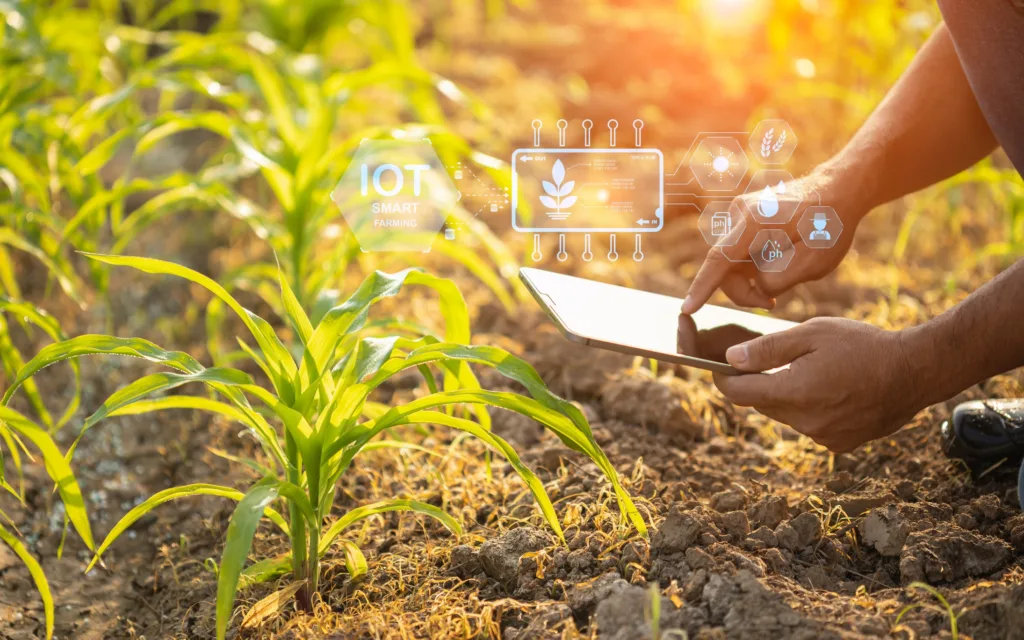
- Soil Sensors: Probes measure volumetric water content, temperature, and key nutrient levels like nitrogen, phosphorus, and potassium. This data is fundamental to precision agriculture, allowing for variable-rate irrigation and fertilization—applying exactly what is needed, where and when it is needed.
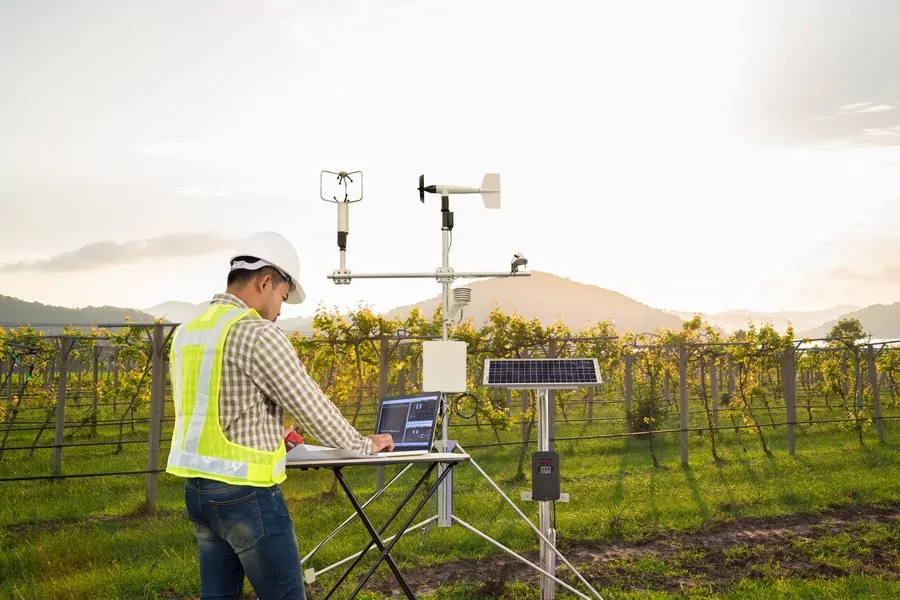
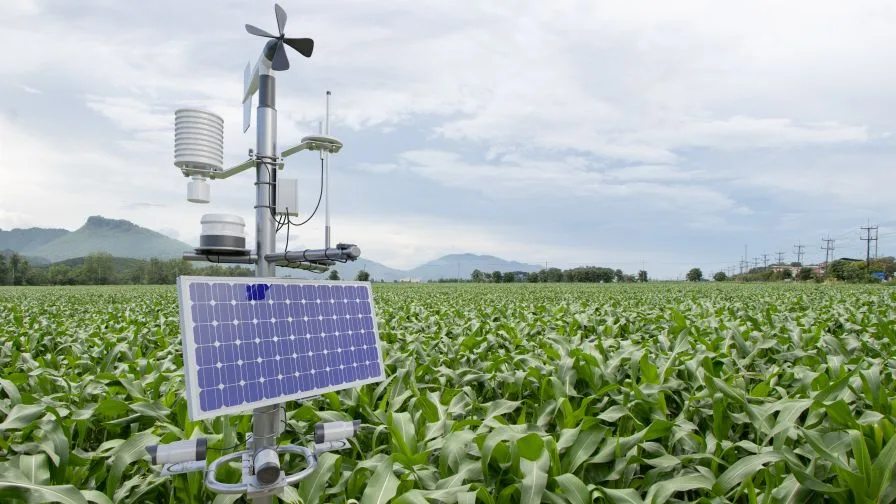
- Climate and Environmental Sensors: Weather stations and distributed microclimate sensors monitor air temperature, humidity, wind speed, solar radiation, and rainfall. This hyper-local weather data helps predict frost events, disease outbreaks (like fungal growth favored by specific humidity), and optimal spraying times.
- Crop Health Sensors: Multispectral and hyperspectral cameras, often mounted on drones or satellites, capture data beyond the visible spectrum. They can detect plant stress, water deficiency, or pest infestation days or weeks before the human eye can see any symptoms, enabling preemptive action.
- Livestock Monitoring Sensors: Wearable tags on animals track location, activity levels, body temperature, and rumination patterns. This allows for early illness detection, optimized breeding cycles, and improved herd management, ensuring animal welfare and productivity.
This ecosystem of IoT sensors creates a comprehensive “digital twin” of the farm, a virtual model that updates in real-time, providing unprecedented visibility.
From Data to Decisions: Enabling Precision Agriculture
The raw data from sensors is powerful, but its true value is unlocked through data analytics platforms. This is where data-driven farming takes full form.
- Optimized Resource Use: Automated irrigation systems, guided by soil moisture data, can reduce water usage by up to 30%. Similarly, knowing precise nutrient levels prevents over-application of fertilizers, saving costs and minimizing environmental runoff into waterways.
- Enhanced Crop Protection and Yield: By identifying pest hotspots or disease outbreaks early, farmers can target interventions precisely, reducing the volume of pesticides used. Predictive analytics can also recommend optimal planting and harvesting times, directly boosting yield quantity and quality.
- Automation and Labor Efficiency: Sensor data directly feeds into automated machinery. Tractors can use GPS and field data for auto-steering and variable-rate seeding. Automated greenhouse systems adjust lighting, ventilation, and watering based on sensor readings, reducing manual labor and human error.
- Improved Traceability and Forecasting: Data-driven farming extends beyond the field. Sensor data logged throughout the growing cycle creates an immutable digital record, enhancing food traceability for safety and supply chain transparency. Furthermore, by combining historical sensor data with weather forecasts, farmers can make more accurate predictions about yield, aiding in financial planning and market negotiations.
Challenges and the Road Ahead
Despite its promise, the adoption of Smart Farming with IoT faces hurdles. The initial investment in sensors, connectivity infrastructure (like rural broadband or LoRaWAN networks), and data platforms can be significant for small to mid-sized farms.
There is also a need for digital literacy and training to interpret data and manage new systems. Data security and ownership remain pressing questions—who owns the valuable data generated by a farm’s operations?
However, the trajectory is clear. As sensor costs decrease and connectivity improves, these solutions will become more accessible. The integration of Artificial Intelligence (AI) and machine learning will further advance predictive capabilities, moving from descriptive analytics (“what is happening”) to prescriptive insights (“what should I do”).
The future points towards fully autonomous farm operations, where decisions are made and executed by intelligent systems in a closed loop, continuously refined by IoT sensor feedback.
Conclusion
The integration of the Internet of Things into agriculture marks a profound leap forward. Smart Farming with IoT, powered by an array of sophisticated sensors, is transitioning agriculture from an art to a science of exactitude. By embracing precision agriculture and data-driven farming, growers can navigate the pressing challenges of climate change, resource scarcity, and global food demand.
This technological transformation promises not only greater efficiency and profitability for farmers but also a more sustainable and transparent food system for all. The fields of the future will be connected, intelligent, and responsive, cultivating abundance from the stream of data.
FAQs on Smart Farming with IoT
1. What is the main benefit of Smart Farming with IoT for a small-scale farmer?
The primary benefit is enhanced decision-making and risk reduction. Even on a small scale, sensors for soil moisture and microclimate can prevent crop loss from under or over-watering, optimize expensive inputs like fertilizer, and provide early warnings for pests or frost. This leads to cost savings, higher yield quality, and greater resilience against unpredictable conditions.
2. Is Smart Farming with IoT only about crops, or does it apply to livestock as well?
It applies extensively to both. Precision agriculture concepts are mirrored in livestock management as “precision livestock farming.” IoT sensors in wearables track health metrics, location, and behavior, allowing for individualized animal care, early disease detection, optimized feeding, and improved herd productivity and welfare.
3. How reliable is the data from agricultural sensors, and what about connectivity in remote rural areas?
Modern agricultural sensors are highly reliable and designed for harsh outdoor environments. For connectivity challenges in remote areas, technologies like Low-Power Wide-Area Networks (LPWANs), such as LoRaWAN, are specifically designed for long-range, low-bandwidth communication from sensors, making them ideal and cost-effective for farm deployments even without strong cellular coverage.
4. Doesn’t Smart Farming technology make agriculture more expensive and complex?
While there is an upfront investment, the technology is increasingly seen as a cost-saving tool. The reduction in waste (water, fertilizer, pesticides), labor costs, and crop losses, along with increased yields, typically provides a strong return on investment (ROI). Furthermore, user-friendly software platforms are being designed to simplify data interpretation, making the complexity manageable for farmers.
