


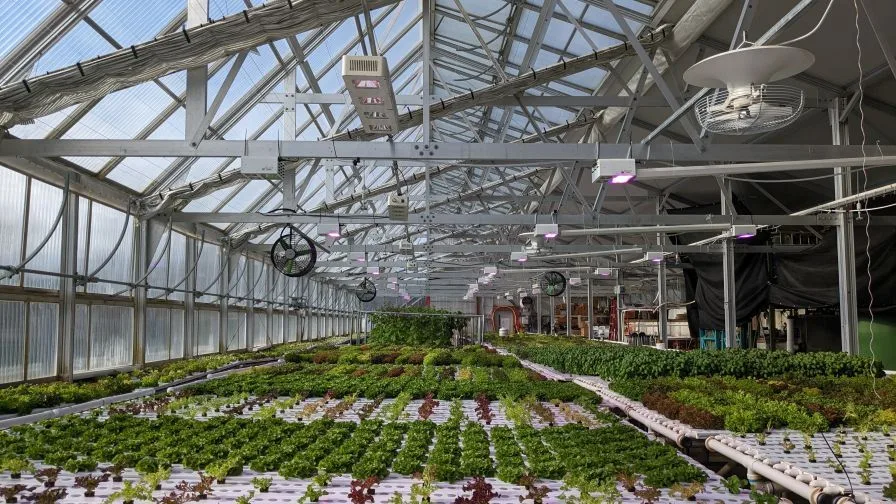
The pressing challenges of climate volatility, arable land scarcity, and a growing global population are compelling agriculture to look upward and inward for solutions. At the forefront of this revolution are IoT-based smart greenhouses and vertical farming, two synergistic approaches that represent the future of controlled, efficient, and resilient food production.
By integrating the Internet of Things (IoT) with advanced cultivation structures, these systems transform farming from a field-based, weather-dependent endeavor into a precise, data-driven science. This evolution allows for the meticulous management of every environmental variable, promising unparalleled resource efficiency, year-round production, and a significant step toward true agricultural sustainability.
This article explores how these interconnected technologies are reshaping the very fabric of cultivation.
Table of Contents
The Architectural Shift: Understanding IoT-Based Smart Greenhouses and Vertical Farming
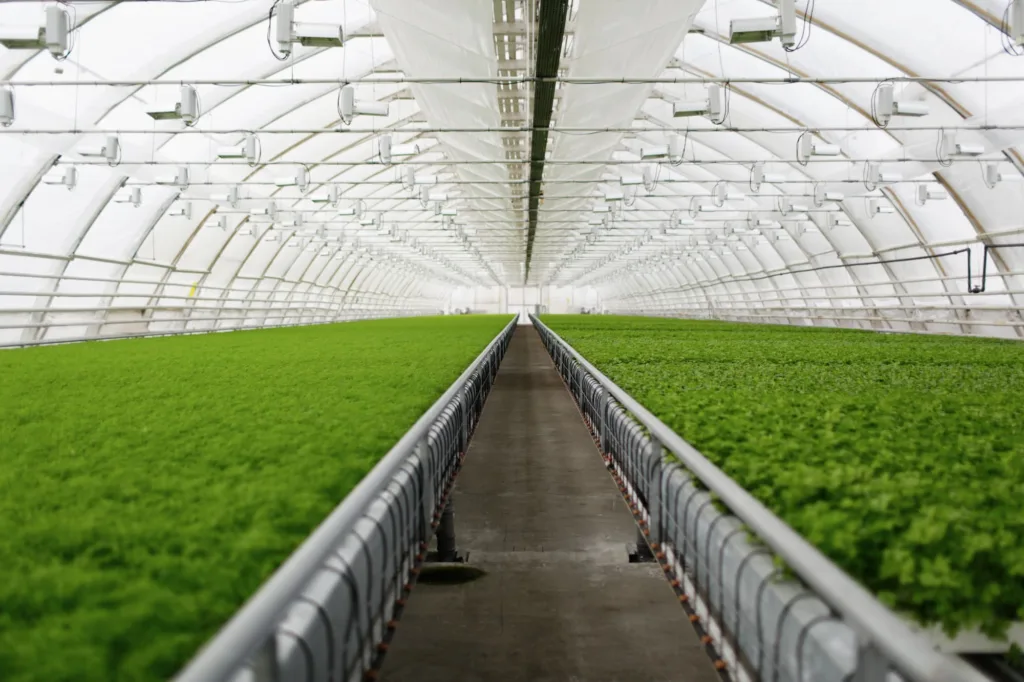
While distinct in form, smart greenhouses and vertical farms share a core philosophy: creating and maintaining an optimal biosphere for plant growth, independent of external conditions.
- IoT-Based Smart Greenhouses: These are enhanced traditional structures where a dense network of sensors and actuators is deployed. IoT sensors continuously monitor parameters like internal temperature, humidity, CO2 levels, soil/substrate moisture, and light intensity. This data feeds into a central control system that automatically adjusts conditions—activating vents, heaters, misters, shade cloths, or supplemental LED lighting—to maintain a pre-set “recipe” for the specific crop.
- Vertical Farming: This method takes controlled environment agriculture (CEA) to a multi-layered extreme, often in warehouses or urban settings. Plants are grown in stacked trays or towers under fully artificial lighting. Here, IoT-based smart greenhouses principles are applied with even greater intensity. Every aspect of the environment—spectrum and duration of light, nutrient composition in water (hydroponics/aeroponics), air flow, and humidity—is precisely controlled and monitored by IoT systems. It represents the ultimate fusion of agriculture, technology, and data analytics.
Together, they form the pinnacle of precision agriculture, where inputs are measured and delivered with surgical accuracy.
The Nervous System: IoT Technology at the Core
The intelligence of these systems lies in their interconnected IoT architecture, which functions as the operation’s central nervous system.
- Comprehensive Sensor Networks: A suite of sensors forms the foundation. This includes climate sensors (temperature, humidity, CO2), soil/water sensors (pH, electrical conductivity, nutrient levels, moisture), and light sensors (PPFD, spectrum). In vertical farms, cameras and hyperspectral imaging sensors may also monitor plant health and growth rates in real-time.
- Data Integration and Cloud Analytics: Data from all sensors is wirelessly aggregated onto a cloud platform. This is where raw data becomes actionable intelligence. Advanced algorithms and machine learning models analyze the information, identifying patterns, predicting plant needs, and detecting anomalies like the early signs of disease or nutrient deficiency.
- Automated Actuation and Control: Insights from the analytics platform trigger automated responses. Commands are sent to actuators without human intervention: nutrient dosers adjust fertilizer levels in irrigation water, HVAC systems modulate climate, LED lights alter their intensity and spectrum, and robotic seeders or harvesters can be scheduled. This creates a closed-loop system of measurement, analysis, and action.
Cultivating Benefits: Efficiency, Yield, and Sustainability
The implementation of IoT-based smart greenhouses and vertical farming yields transformative benefits that address core 21st-century issues.
- Radical Resource Efficiency: These systems achieve staggering reductions in key inputs. Precise irrigation and recirculation in soilless systems can slash water usage by up to 95% compared to traditional farming. Targeted nutrient delivery minimizes fertilizer waste. By optimizing light and climate, energy use, while significant in vertical farms, is becoming more efficient with advances in LED technology and renewable energy integration.
- Maximized Yield and Year-Round Production: Eliminating seasonal and weather constraints allows for more crop cycles per year. Ideal growing conditions accelerate plant growth and reduce stress, leading to higher yields per square foot. A vertical farm can produce the equivalent of a 50-acre traditional farm on less than an acre of floor space, a crucial advantage for urban food security.
- Enhanced Food Safety and Quality: The sealed, controlled environment drastically reduces the need for chemical pesticides and herbicides. Cultivation can be truly organic by design. Proximity to urban centers minimizes transportation miles, leading to fresher, longer-lasting produce with a lower carbon footprint from logistics.
- Resilience and Climate Independence: IoT-based smart greenhouses and vertical farming provide a buffer against extreme weather, droughts, and pests that plague open-field agriculture. This resilience is critical for ensuring consistent food supply chains in the face of climate change.
Challenges and the Road Ahead
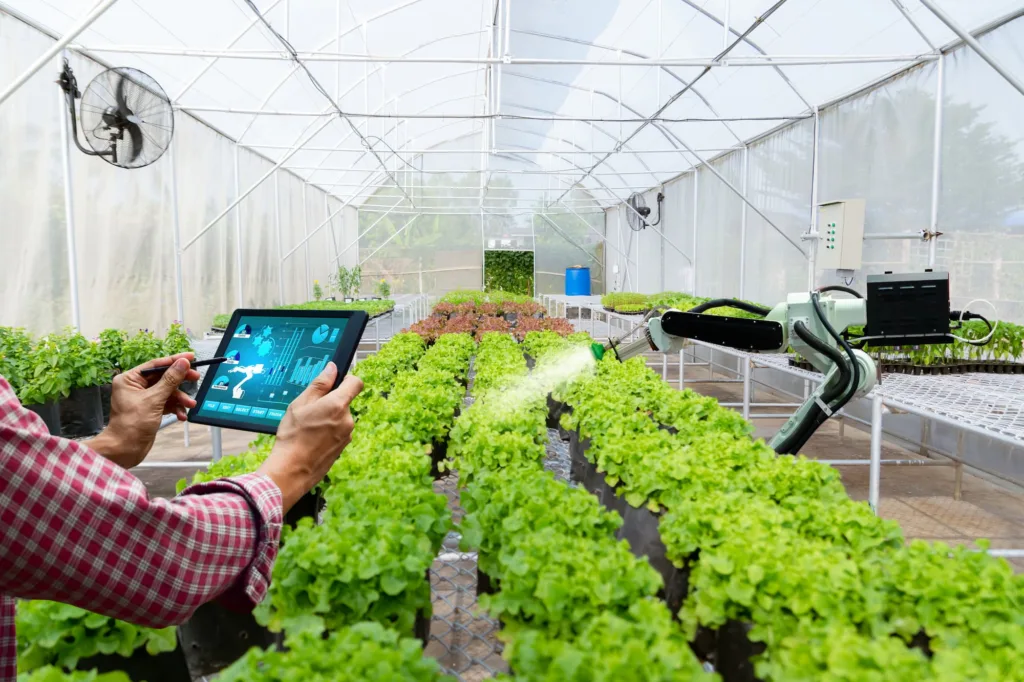
The path forward is not without obstacles. The capital expenditure (CapEx) for high-tech vertical farms and advanced smart greenhouses remains substantial, centered on equipment, construction, and technology infrastructure.
Operational expenses (OpEx), particularly energy costs for lighting and climate control in vertical farms, are a primary economic hurdle. Furthermore, the technical complexity requires a new breed of farmers—agronomists who are also data analysts and systems engineers.
The future lies in overcoming these barriers through innovation. Advances in energy-efficient, spectrum-tuned LEDs and the integration of on-site renewable energy (solar, geothermal) will tackle OpEx. AI and machine learning will evolve from reactive control to predictive optimization, forecasting plant growth and fine-tuning environments autonomously.
As technology scales and becomes more affordable, these systems will become viable for a wider range of crops and business models, moving beyond leafy greens to include fruits, vegetables, and even pharmaceutical botanicals.
Conclusion
IoT-based smart greenhouses and vertical farming are far more than niche agricultural trends; they are foundational components of a future-proof food system. By marrying the principles of precision agriculture with the pervasive connectivity of IoT, they offer a viable solution to produce more food with fewer resources, closer to consumers, and with greater reliability.
While challenges persist, the trajectory is clear. As technology matures and scales, these controlled, data-driven environments will play an increasingly vital role in nourishing urban populations, conserving our planet’s resources, and securing the future of agriculture.
FAQs on IoT-Based Smart Greenhouses and Vertical Farming
1. What crops can be grown economically in these systems currently?
Currently, the most economically viable crops are high-value, fast-growing leafy greens (lettuce, kale, arugula), herbs (basil, cilantro, mint), and microgreens. These have short growth cycles and high yield per square foot. Research and pilot projects are actively expanding into strawberries, peppers, tomatoes, and certain root vegetables. The economics for each crop depend on energy costs, growth cycle, and market price.
2. Are IoT-based smart greenhouses and vertical farms truly sustainable given their high energy use?
This is the central sustainability trade-off. While they save immense amounts of water and land and eliminate agricultural runoff, energy use is the critical metric. The sustainability claim hinges on the source of that energy. The model becomes vastly more sustainable when powered by renewable sources like solar or wind. Furthermore, ongoing advancements in LED efficiency (more light per watt) and system design (waste heat recapture) are continuously improving the energy footprint.
3. Can this technology be scaled down for personal or community use?
Absolutely. The core principles are scalable. Consumer-grade smart indoor gardens and compact hydroponic cabinets with basic IoT controls (apps for light schedules, nutrient reminders) are already available. At the community level, modular container farms—shipping containers fitted with vertical farming tech—are popular for schools, restaurants, and neighborhood initiatives, making hyper-local production accessible.
4. How is data security handled in these automated systems?
As with any IoT network, security is paramount. A breach could disrupt climate control and ruin crops. Reputable providers implement enterprise-grade security: encrypted data transmission, secure cloud storage, robust user authentication, and regular software updates. Farmers must prioritize systems with strong security protocols and ensure their internal network is secure.
