

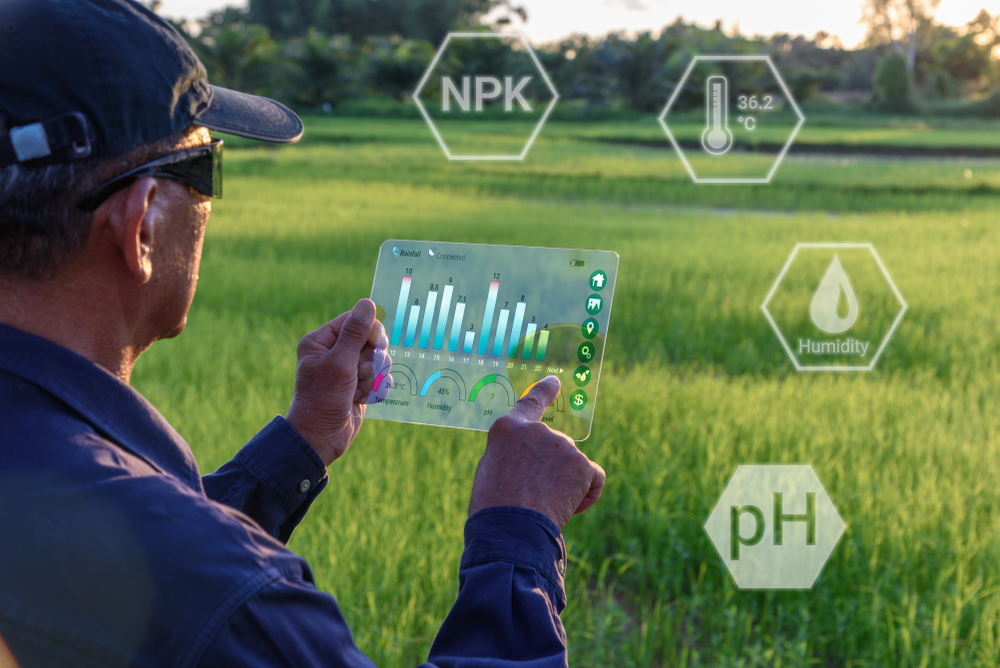
The modern farm is becoming a living data ecosystem, and at the heart of this transformation is the role of IoT in crop monitoring and disease prediction. This technological integration is shifting agriculture from a reactive practice to a proactive science.
By deploying networks of smart sensors and leveraging advanced data analytics, farmers can now monitor crop health in real-time and predict threats before they cause significant damage. This capability is pivotal, as timely intervention is the most effective factor in managing crop diseases, which can otherwise devastate yields and farmer livelihoods.
The role of IoT in crop monitoring transcends simple observation; it enables a predictive, preventative approach that safeguards harvests, optimizes inputs, and ensures greater food security.
Table of Contents
The IoT Ecosystem for Proactive Crop Monitoring
Effective IoT in crop monitoring relies on a layered network of devices that act as the eyes and ears of the field. This ecosystem collects a continuous, multi-dimensional stream of data far beyond human capacity.
- In-Field Sensor Networks: Stationary sensors placed throughout the field measure critical soil parameters (moisture, nutrient levels, temperature) and atmospheric conditions (canopy humidity, air temperature). These create a foundational understanding of the crop’s microenvironment, which directly influences plant health and stress.
- Remote Sensing Platforms: Drones and satellites equipped with multispectral and hyperspectral cameras are force multipliers. They capture imagery across specific light wavelengths, including near-infrared and thermal. These “spectral signatures” can reveal plant stress—such as water deficiency, nutrient lack, or pest infestation—long before visible symptoms like wilting or discoloration appear to the naked eye. This is the cornerstone of early detection.
- Data Integration and Transmission: The data from these disparate sources is wirelessly transmitted via networks like LoRaWAN or cellular networks to a centralized cloud platform. Here, information from soil probes, weather stations, and drone imagery is fused, creating a comprehensive, living map of the entire field’s status.
This constant, granular crop monitoring provides an unprecedented baseline of “crop health,” allowing farmers to identify anomalies that deviate from the norm.
From Monitoring to Forecasting: The Leap to Disease Prediction
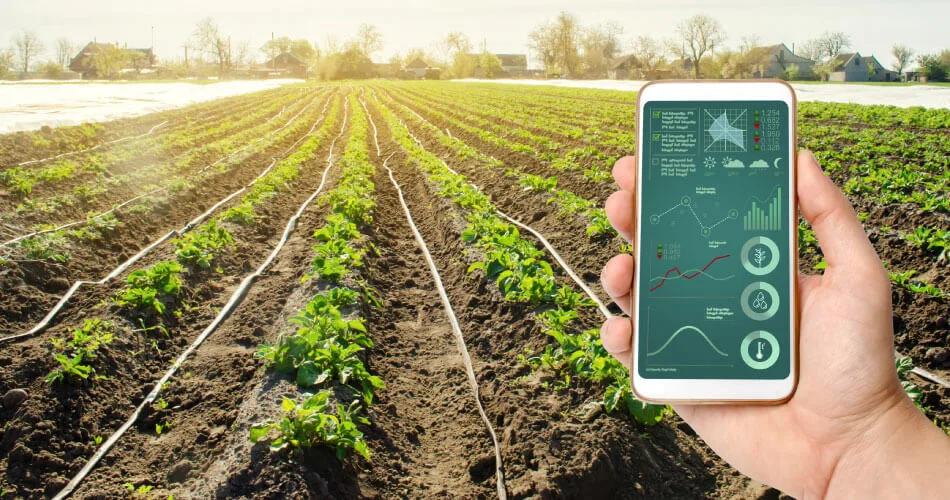
While real-time monitoring is powerful, the true breakthrough of IoT lies in its disease prediction capabilities. This moves the goalpost from identifying a problem early to anticipating it entirely.
- Creating Predictive Models: By combining real-time IoT data with historical agronomic data, weather forecasts, and known disease models, algorithms can identify high-risk conditions. For example, many fungal pathogens, like powdery mildew or blight, require specific combinations of leaf wetness duration, temperature, and humidity to germinate and spread.
- The Power of Data Correlation: An IoT system doesn’t just see a wet leaf; it correlates prolonged canopy humidity (from leaf wetness sensors) with a favorable temperature range and the crop’s current growth stage (from spectral imagery). When these parameters align with a known disease model, the system triggers an alert.
- Actionable Alerts and Prescriptions: Instead of a generic warning, farmers receive targeted, actionable insights. An alert might state: “High risk of Botrytis cinerea (gray mold) detected in Zone 7A within the next 48-72 hours. Recommended action: Adjust irrigation schedule to reduce canopy wetness period and consider targeted fungicide application.” This allows for precision intervention, potentially eliminating the need for broad-scale, preventative spraying.
This predictive approach is a hallmark of advanced precision agriculture, where inputs and actions are guided by data-driven foresight rather than calendar-based routines or crisis response.
Tangible Benefits for Farmers and the Environment
The integration of IoT for monitoring and prediction delivers concrete value across the agricultural chain.
- Yield Protection and Financial Security: Early and accurate prediction of disease prevents catastrophic losses. By enabling intervention at the most effective moment—or even avoiding an outbreak altogether—farmers protect their primary asset: their yield. This translates directly into financial stability and risk mitigation.
- Dramatic Reduction in Chemical Usage: Predictive alerts allow for targeted, judicious use of pesticides and fungicides. Instead of spraying entire fields on a schedule, farmers can treat only the specific areas at genuine risk. This reduces input costs, minimizes chemical residue on food, and significantly lessens the environmental impact on soil and water ecosystems.
- Optimized Resource Allocation: Understanding crop health and stress factors allows for better management of water and fertilizers. Irrigation can be adjusted not just for water conservation, but to create conditions less hospitable to disease. Labor can be directed to specific field zones requiring attention, rather than spent on manual, whole-field scouting.
Challenges and Future Trajectory
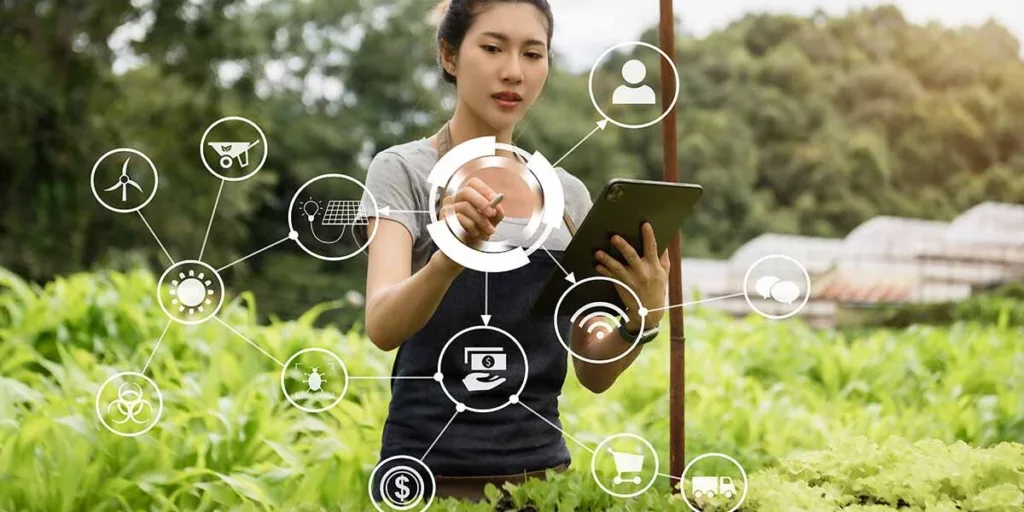
Despite its promise, widespread adoption faces hurdles. The initial cost of sensor networks and analysis platforms can be a barrier. The effectiveness of disease prediction models depends on the quality and locality of the data they are trained on, requiring continuous refinement. Furthermore, farmers need accessible tools and training to interpret and act on the complex data and alerts generated.
The future, however, is one of increasing integration and intelligence. The convergence of IoT with Artificial Intelligence (AI) and machine learning will lead to even more accurate and localized predictive models.
We are moving towards autonomous systems that not only predict a threat but can also initiate a predefined response, such as adjusting a smart irrigation valve to alter the microclimate. As these technologies become more affordable and user-friendly, they will transition from tools for large agribusiness to essential assets for farms of all sizes.
Conclusion
The role of IoT in crop monitoring and disease prediction represents a fundamental leap forward in agricultural management. By providing a continuous, data-rich picture of crop health and leveraging analytics to forecast threats, this technology empowers farmers to act with precision and foresight. It transforms disease management from a game of chance into a calculated science.
As this field evolves, the marriage of IoT, data analytics, and precision agriculture will continue to be our most potent tool in cultivating resilient crops, ensuring sustainable practices, and securing the global food supply against an ever-changing set of challenges.
FAQs on IoT in Crop Monitoring and Disease Prediction
1. How accurate are IoT-based disease prediction models?
Accuracy is continually improving and depends heavily on the quality of the input data and the specificity of the model. Models trained on extensive local historical data, combined with high-fidelity real-time IoT data, can achieve high accuracy in forecasting high-risk conditions. However, they are predictive tools, not absolute crystal balls. They are designed to highlight probability and risk, enabling preventative measures that are far more effective than reacting to a full-blown outbreak.
2. Can small-scale farmers afford and benefit from this technology?
Yes, increasingly so. While complex, full-field systems can be costly, the market is expanding with scalable and affordable solutions. A small farmer might start with a few strategic soil moisture and microclimate sensors paired with a subscription to a satellite-based crop health monitoring service. This alone can provide valuable insights for irrigation and highlight areas of stress that may indicate disease risk, offering a significant portion of the benefit at a lower entry point.
3. Does using IoT for crop monitoring require advanced technical skills?
The industry is actively designing solutions to minimize this barrier. The goal is for the technology to be a tool, not a burden. Modern platforms present data through intuitive dashboards, maps, and simple alerts (like traffic-light systems: green, yellow, red). The key for farmers is developing the agronomic knowledge to interpret why an alert was triggered and decide on the best course of action, rather than needing to understand the underlying data science.
4. What about data privacy? Who owns the field data collected by sensors?
This is a critical question. Farmers must carefully review service agreements. Reputable providers ensure that the farmer retains ownership of their agronomic data. It is essential to choose partners who are transparent about data usage, store information securely, and do not sell or misuse farm-specific data. The value should be in the insights provided to the farmer, not in the exploitation of their data.
