


Small and mid-sized companies encounter increasing demands to compete quickly while handling resources spread over disparate systems. Tailored ERP development tackles this issue by integrating business functions into one customized platform that simplifies processes and delivers real-time data. In contrast to off-the-shelf software options, custom enterprise resource planning solutions cater to your business workflows, allowing SMEs to function as efficiently as large corporations while preserving the flexibility that fuels competitive edge.
What Is Custom ERP Development?
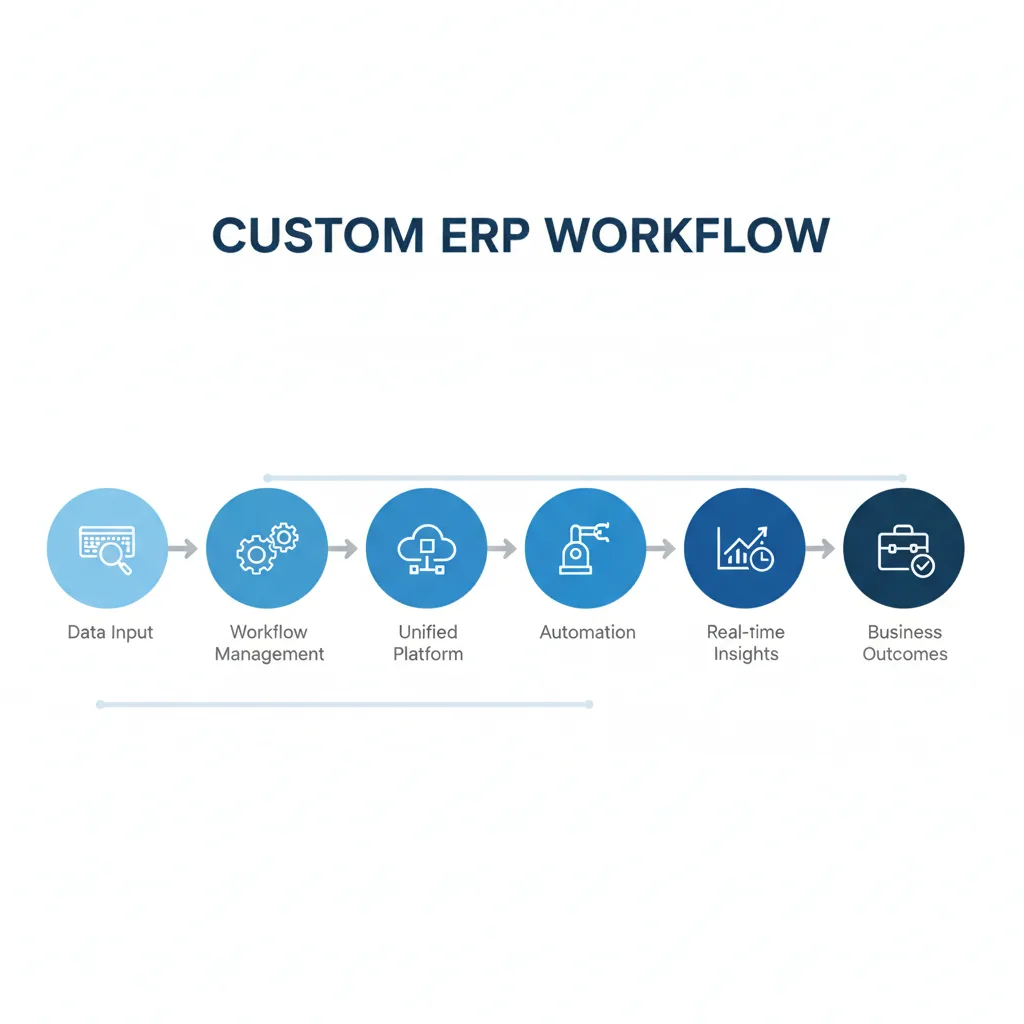
Custom ERP development involves crafting and constructing enterprise resource planning software uniquely suited to a company’s operational needs, sector norms, and expansion goals. This method produces systems that perfectly match workflows instead of requiring businesses to conform to fixed software constraints.
Benefits of ERP Systems for SMEs
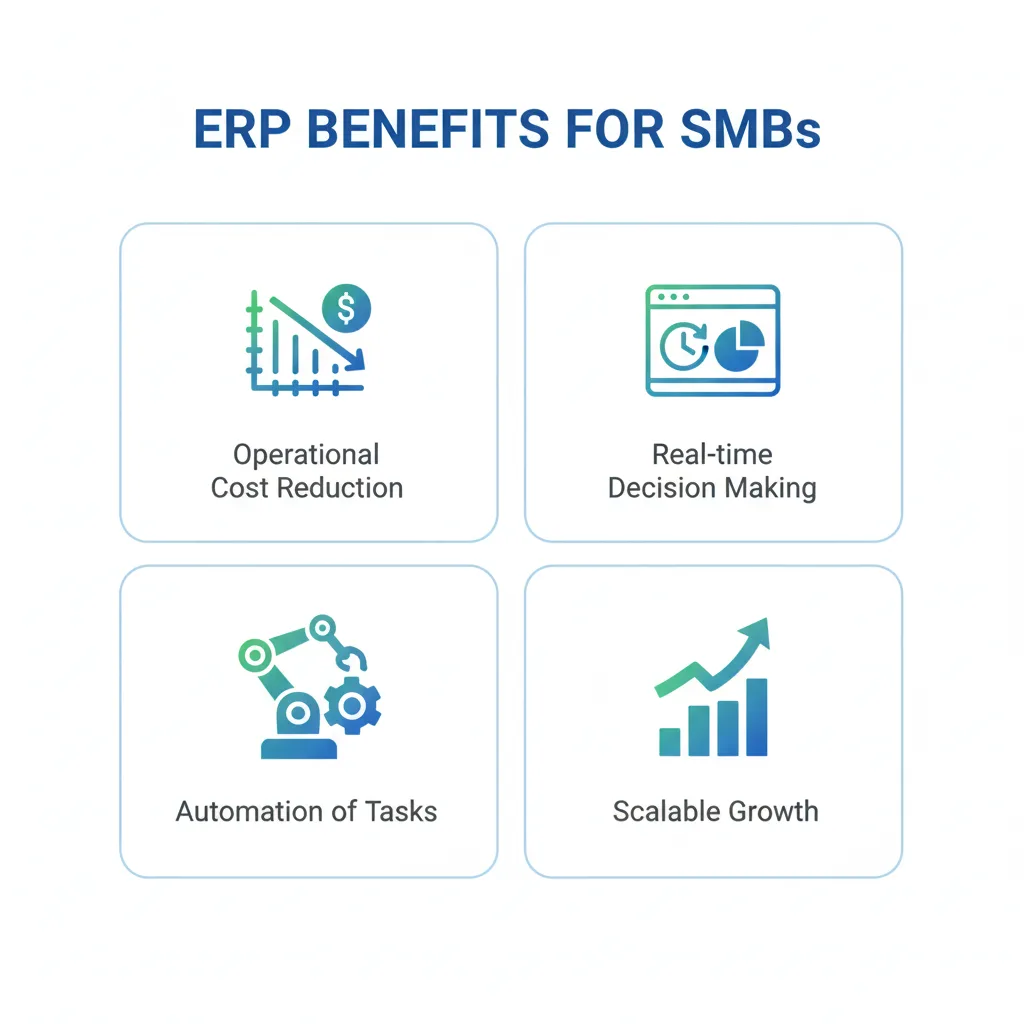
Enterprise resource planning changes the way small and medium-sized enterprises handle activities by consolidating critical business information and automating ongoing tasks. The effect goes beyond efficiency improvements to fundamental enhancements in decision-making and market competitiveness.
Operational Efficiency and Cost Reduction
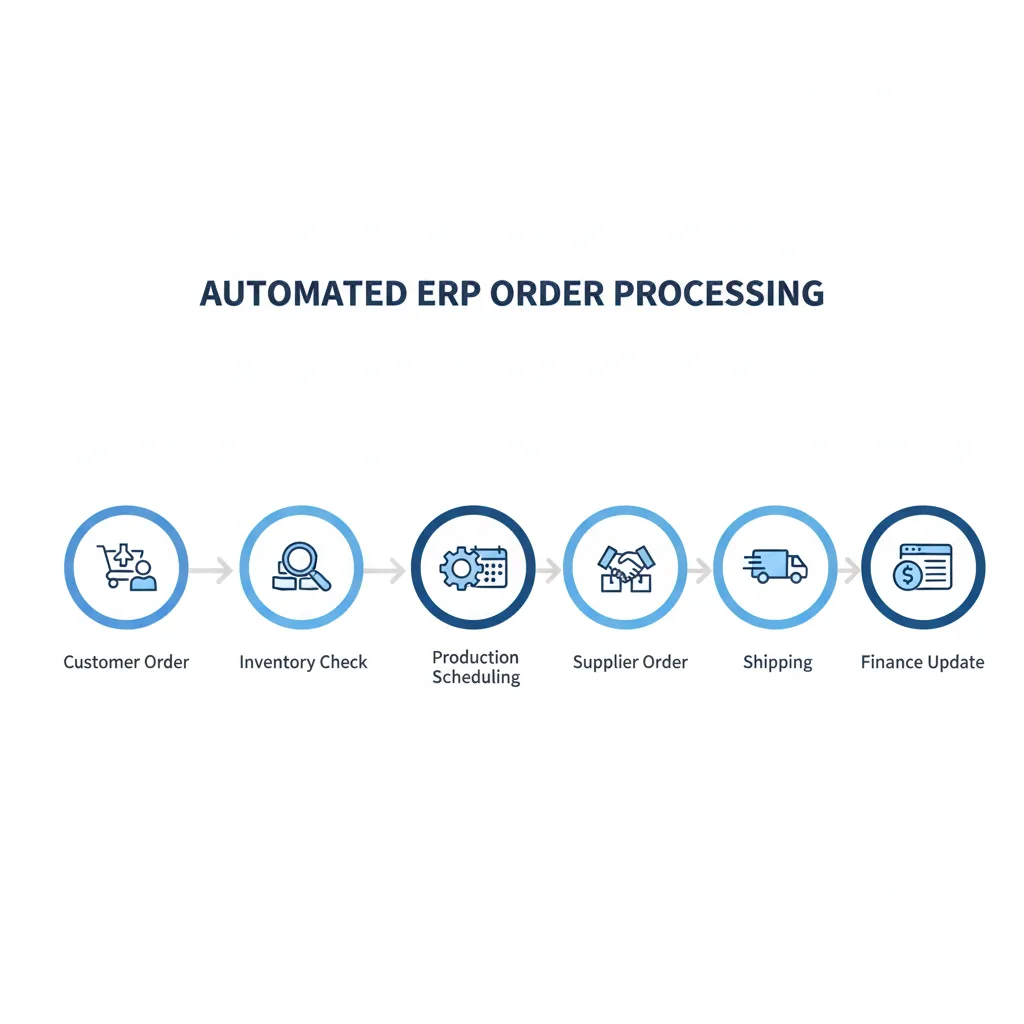
ERP solutions remove the need for data input and labor-intensive tasks that waste precious employee hours. By managing inventory, sales monitoring, accounting, and customer support via a unified system, companies often experience noticeable declines in operational expenses during the initial year. Team members are able to redirect their attention from duties to strategic endeavors that promote expansion. The automation of workflows greatly lowers the likelihood of mistakes caused by humans. Order processing that previously needed manual verifications now progresses smoothly from customer order to completion with automatic inventory adjustments and financial logging at every stage.
Real-Time Decision Making
Modern ERP systems offer transparency across all facets of business activities. Executives can monitor real-time stock quantities, financial liquidity, and sales metrics via any device, facilitating adaptation to market shifts or operational issues. Such immediate visibility is particularly beneficial for SMEs vying with corporations. Quick access to information empowers small enterprises to adjust tactics swiftly, seize new prospects, and resolve issues early. For example, manufacturing firms utilizing real-time ERP information can decrease production downtime by 25% by implementing maintenance planning.
Scalability Without Disruption
Tailored ERP systems expand with your company by leveraging a framework. Organizations may begin with core features such as inventory and accounting, later integrating functions for production, customer relationship management, or advanced analytics as requirements change. This strategy avoids the system overhauls that burden companies relying on rigid software platforms.
When assessing scalability requirements, think about collaborating with ERP Implementation Services to guarantee your system design can accommodate future growth without necessitating total reconstruction.
Custom ERP vs. Off-the-Shelf Systems
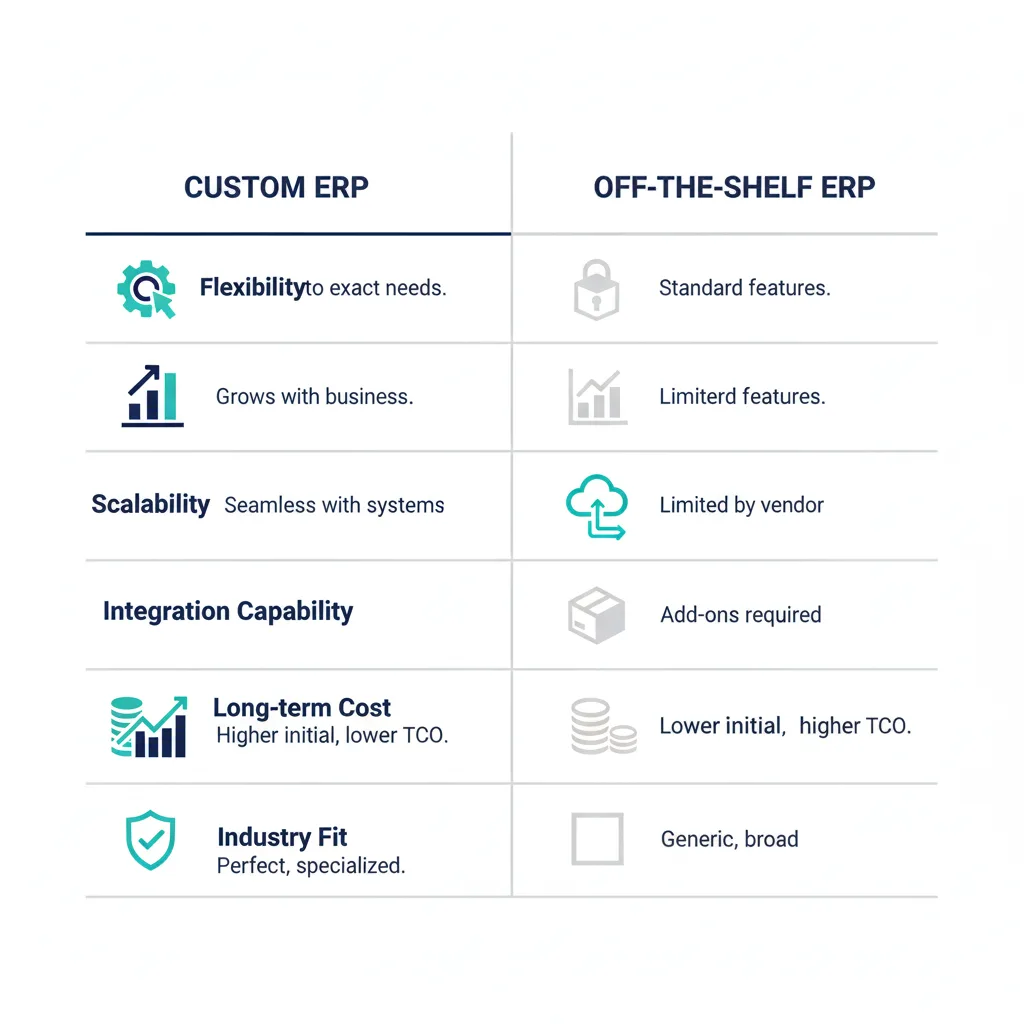
Deciding between tailor-made development and off-the-shelf ERP software greatly influences both workflows and future expansion possibilities.
Tailored Functionality for Specific Industries
Nonproprietary ERP platforms aim to support industries using uniform features, frequently leading to unnecessary complexity or the absence of critical capabilities. Manufacturing firms demand production planning and quality management, which systems designed for retail typically do not provide. Conversely, service-oriented enterprises need tools for project monitoring and resource management that are irrelevant to companies focused on products.
Tailored development guarantees that each function fulfills a business need. A food producer may require batch monitoring for reasons, whereas a professional services company needs timesheet syncing with invoicing. These technical demands turn into fundamental system features of costly extras.
Integration with Existing Systems
The majority of SMEs currently utilize software that performs efficiently for tasks. Developing a custom ERP maintains these investments by integrating instead of substituting them. Your unique industry software, favored accounting system, or client interaction tools remain operational while benefiting from features via ERP linkage.
This method of integration reduces interruptions throughout the implementation process. Staff continue using interfaces for routine work as the ERP system manages data transfer and process synchronization in the background. Expert System Integration Consulting guarantees interaction between your ERP software and current business applications.
Total Cost of Ownership Considerations
The upfront cost of bespoke ERP development usually surpasses that of licensing fees. Nonetheless, ongoing expenses frequently make custom options more advantageous by removing repeated licensing charges, decreasing the need for customization, and cutting training expenses owing to user-friendly role-tailored interfaces.
ERP Implementation Strategy for Small Businesses
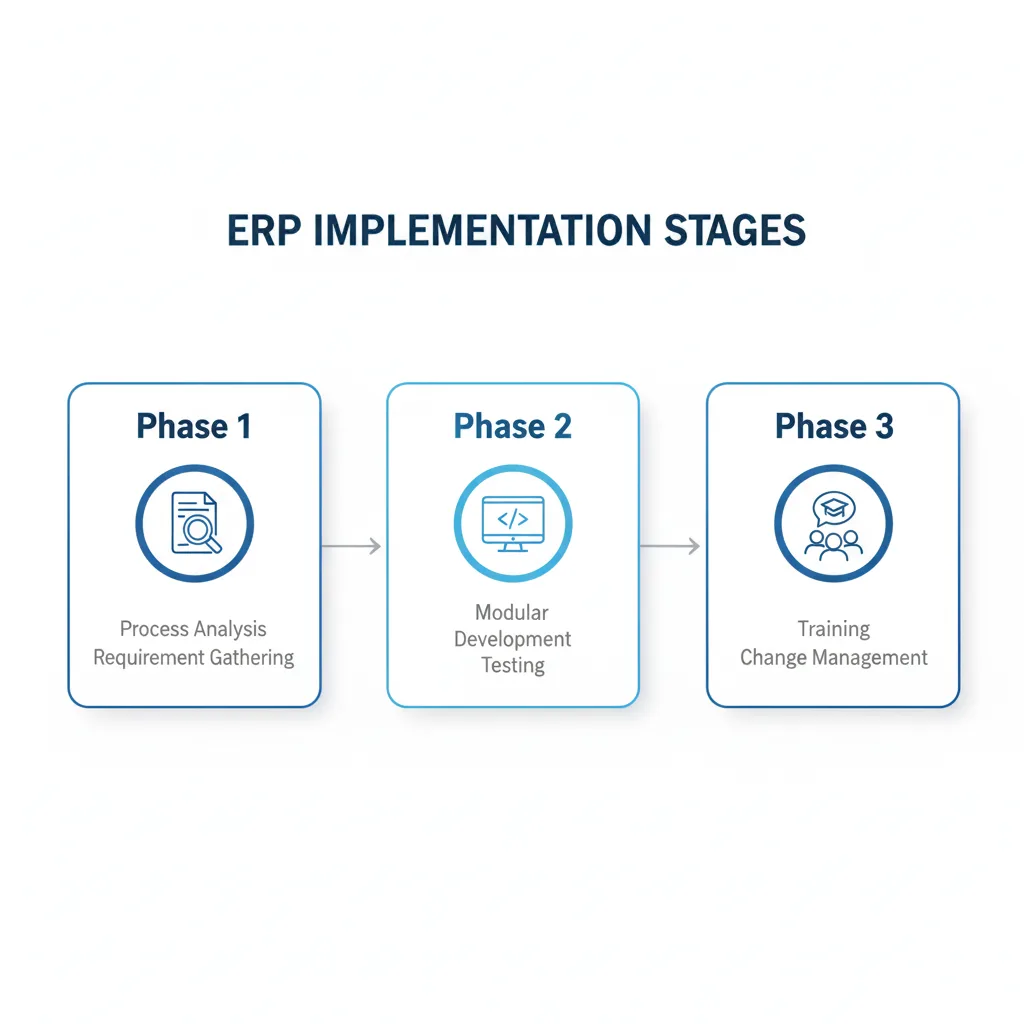
Effective ERP implementation demands planning and execution to guarantee a seamless transition that does not interfere with current operations.
Phase 1: Process Analysis and Requirements Gathering
Prior to coding, thoroughly record existing workflows throughout all divisions. Detect inefficiencies, duplications, and manual tasks that result in slowdowns or mistakes. Conduct interviews with staff at all tiers to grasp obstacles and requested enhancements. This evaluation step uncovers which processes require focus and which may be deferred to later stages. Focusing on high-value enhancements guarantees successes that generate momentum for ongoing execution.
Phase 2: Modular Development and Testing
Deploy ERP functionalities gradually, rather than trying to replace the entire system at once. Start with a department or process, as a trial, refine the deployment, then roll out to other sections. This method ensures operations and confirms the success of each module.
Testing is conducted continuously during the development process. End users are involved in validation to confirm that the system fulfills real-world requirements beyond technical criteria. Frequent feedback cycles avoid changes following deployment.
Phase 3: Training and Change Management
The success of implementation hinges on employee adoption. Design training tailored to roles, highlighting how the ERP system enhances each person’s job efficiency instead of covering general system capabilities. Provide reference guides available directly in the system interface for support.
Appoint departmental advocates who undergo training and act as the primary support for team members. These in-house specialists connect skills with real-world usage.
Business Automation Through ERP Software
Automation in ERP platforms goes further than task scheduling by managing intricate workflows across multiple departments that once needed continuous manual oversight.
Intelligent Workflow Automation
Modern ERP systems streamline business workflows from start to finish. When a customer places an order, it prompts inventory checks, initiates production planning if stock is insufficient, automatically places supplier orders for materials, and organizes shipping, all without input. Every phase updates accounting records, preserves audit logs, and alerts staff about any anomalies that need review.
These automated workflows adapt to business rules and exceptions. Rush orders receive priority processing, preferred customers get particular pricing mechanically applied, and inventory reordering adjusts for seasonal demand patterns learned from existing data.
Predictive Analytics and Optimization
Sophisticated ERP platforms integrate machine learning to detect patterns and enhance operations consistently. The system analyzes data to forecast future demand, propose ideal inventory quantities, and advise on process enhancements.
For instance, examining production data could show that specific product pairings lead to changeover periods. The system then automatically modifies the production schedule to cluster alike items, minimizing downtime without the need for evaluation.
Cloud-Based ERP Systems: The Modern Approach
Cloud-based deployment has enabled companies that could not previously afford on-site setups to access enterprise-level ERP functionalities.
Reduced Infrastructure Requirements
Cloud-based ERP removes the need for buying servers, signing maintenance agreements, and having specialized IT infrastructure. Companies use the features via web browsers, with the provider ensuring enterprise-level security and efficiency. Updates happen automatically guaranteeing access to the functionalities without any interruption or extra expense.
This model converts ERP from a capital expenditure into a consistent monthly operational cost. SMEs adopting cloud-based ERP systems in 2024 experience 30% reduced IT expenses compared to on-site solutions. Small and medium enterprises acquire enterprise functionalities without requiring enterprise-level IT budgets.
Enhanced Collaboration and Mobility
Remote access allows teams to operate efficiently from any location. Field service technicians provide real-time job status updates, sales reps verify inventory while meeting customers, and managers authorize purchases while on the move. Interfaces designed for devices guarantee full functionality on tablets and smartphones. Cloud deployment is especially advantageous for businesses with multiple locations. Every site runs the system version with centralized data, removing synchronization problems common in distributed databases.
Sectors That Gain the Most from Tailored ERP Systems
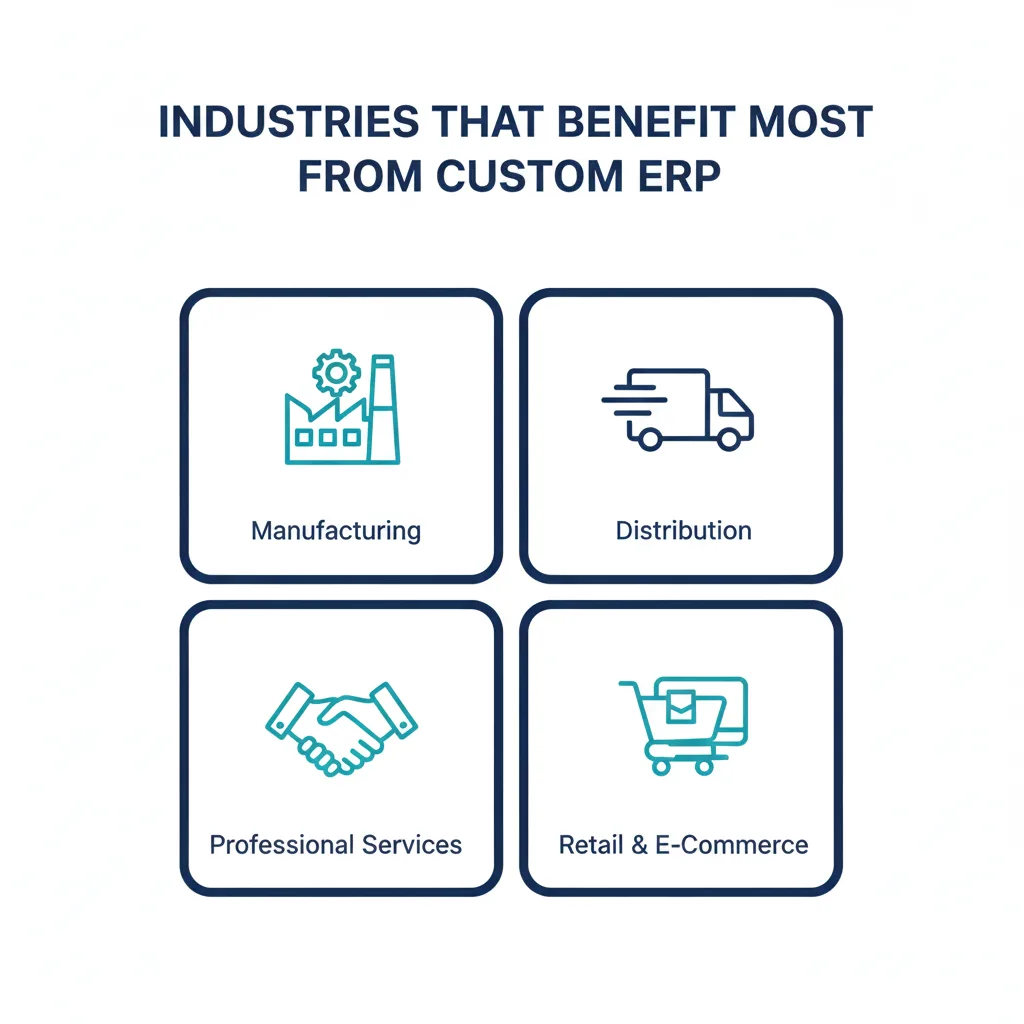
While any business with complex operations benefits from ERP implementation, certain industries experience particularly transformative results.
Manufacturing and Distribution
Producers manage raw material acquisition, production planning, quality assurance, and delivery via ERP platforms. Instantaneous insight avoids shortages. Reduces inventory holding expenses. Automated replenishment sustains material quantities aligned with production timelines and lead durations. Distribution firms utilize ERP for managing warehouses, optimizing routes, and handling channel order fulfillment. The platform monitors items from arrival to shipment, overseeing logistics while preserving accurate inventory across two sites.
Professional Services and Consulting
Service companies monitor the profitability of projects by linking time tracking, expense management, and client invoicing. Resource planning software enhances staff distribution among projects while keeping oversight of utilization levels and capacity.
Combining project management with systems enables immediate profitability tracking. Managers can spot lagging projects promptly. Modify resources or project scope to preserve profit margins. Organizations aiming for deployment should explore Professional Services Automation to fully leverage these features.
Retail and E-commerce
Retail functions demand collaboration between digital and physical storefronts. ERP platforms sustain stock records across every sales medium, avoiding stockouts and enhancing product accessibility. Purchasing records from all channels guides customer service efforts. Point of sale systems offer real-time sales information for inventory control and accounting purposes. Automated restocking driven by sales trends and seasonal fluctuations ensures inventory levels without human input.
Cost Considerations and ROI
Understanding custom ERP development costs requires examining both initial investment and long-term value creation.
Investment Ranges and Factors
ERP initiatives for enterprises demand different levels of investment based on factors such as complexity, number of users, integration demands, and automation degree. The expenses for development increase, with the intricacy of the business and its sector-specific necessities.
Sized enterprises frequently allocate greater resources toward integrated systems that manage intricate multi-entity processes featuring sophisticated automation and analytic functionalities.
Return on Investment Timeline
Near SMEs realize ROI within 18-24 months by lowering operational expenses via automation, cutting inventory holding costs, enhancing cash flow through expedited billing cycles, and optimizing resource use. Gradual rollout frequently yields returns on modules while supporting ongoing development, rendering the investment self-sufficient over time. Collaborating with ROI Analysis Consultants assists in measuring expected returns and monitoring actual performance, versus forecasts.
Future Trends in ERP Development
The ERP environment keeps advancing through technologies that improve system functionalities.
Artificial Intelligence Integration
ERP platforms driven by AI analyze trends to automatically recommend enhancements in processes. Natural language processing supports voice inputs and interactive dialogues, making intricate inquiries easier to handle.
Internet of Things Connectivity
IoT sensors deliver information on equipment status, environmental factors, and asset tracking straight to ERP systems. This integration facilitates maintenance, automated quality assurance, and improved supply chain transparency.
Tailored ERP development offers to medium-sized enterprises effective solutions to optimize processes, cut expenses, and better compete in challenging markets. Although the upfront cost demands deliberation of the lasting advantages like integrated operations, automated processes, and analytics-based decisions, custom enterprise resource planning platforms serve as vital assets for growth-oriented SMEs. Success depends on choosing a development strategy, executing it methodically, and guaranteeing strong user engagement via training and assistance. Take the first step toward functional transformation by exploring Custom ERP Solutions tailored to your business needs
Conclusion
Custom ERP development provides minimal and intermediate businesses with powerful tools to streamline operations, reduce costs, and compete more efficaciously in demanding markets. While initial investment requires aware consideration of the semi-permanent benefits of unified operation, automated workflows, and data-driven decision making, position custom enterprise resource planning systems as essential investments for growth-focused SMEs. The key lies in selecting a satisfactory development approach, implementing it systematically, and ensuring powerful user adoption through training and support. Take the first step toward functional transformation by exploring Custom ERP Solutions tailored to your business needs
FAQs
How long does a custom ERP implementation take for small businesses?
Simple implementations finish within 3-4 months, whereas full-scale systems take 8-12 months. Step-, by-step methods provide features in 60-90 days.
Is it possible to retain our accounting software while deploying ERP?
Indeed, custom ERP development typically begins by connecting with accounting systems and then slowly transfers functionalities as confidence in the new system increases.
What occurs if our business procedures shift following ERP implementation?
Custom ERP platforms adjust to process modifications by updating configurations or adding modules, eliminating the need to replace the system.
What number of staff is required to validate an investment in a custom ERP?
Companies employing 15-20 people frequently gain advantages from ERP solutions, particularly those managing intricate inventory, production, or multiple-site operations.
How do cloud-based and on-premise ERP systems differ for SMEs?
Cloud-based ERP offers lower upfront costs, automatic updates, and remote access, while on-premise ERP provides complete data control but requires IT infrastructure investment
