


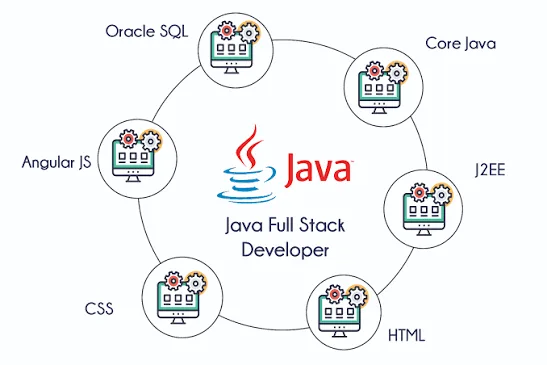
Java full stack developer is a popular career path for people who want to work across both frontend and backend development. A Java full stack developer can build complete web applications by working with the user-facing interface, server-side logic, databases, APIs, and deployment technologies.
As businesses continue to rely on web applications and digital platforms, developers who understand multiple parts of the technology stack can be valuable to employers. Java remains widely used for enterprise applications because of its reliability, scalability, security features, and extensive ecosystem.
But what exactly does a Java full stack developer do? Which skills are required, and how can you start a career in this field? This guide covers the responsibilities, technical skills, tools, career opportunities, and learning path you should know before becoming a Java full stack developer.
Table of Contents
What Is a Java Full Stack Developer?
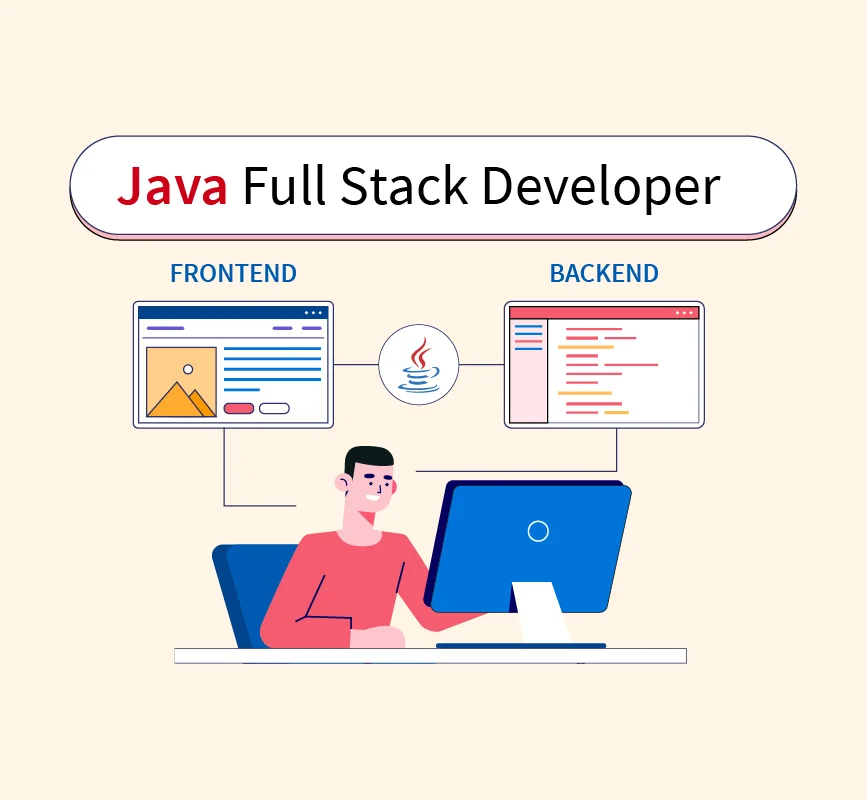
A Java full stack developer is a software developer who works on both the frontend and backend of a web application, with Java commonly serving as the primary backend programming language.
The frontend is the part users see and interact with. It can include technologies such as HTML, CSS, JavaScript, React, or Angular.
The backend handles application logic, authentication, APIs, data processing, and communication with databases. Java frameworks such as Spring Boot are commonly used for building backend applications.
A full stack developer connects these different layers to create a complete application.
For example, an ecommerce application may require a frontend product page, a Java backend that processes orders, a database that stores customer information, and APIs that allow the frontend and backend to communicate.
Java Full Stack Developer Skills You Need
Becoming a Java full stack developer requires knowledge across several areas of software development. You do not need to master everything immediately, but developing a strong foundation in each area is important.
1. Core Java
Java is the foundation of the backend for many full stack applications.
You should understand concepts such as:
- Variables and data types
- Classes and objects
- Inheritance
- Polymorphism
- Encapsulation
- Exception handling
- Collections
- Multithreading
- File handling
- Java streams
- Lambda expressions
A strong understanding of core Java makes it easier to learn frameworks such as Spring and Spring Boot.
2. HTML and CSS
HTML creates the structure of web pages, while CSS controls their appearance and layout.
A full stack developer should understand headings, forms, tables, links, semantic HTML, responsive layouts, positioning, Flexbox, and CSS Grid.
You do not necessarily need to become a professional UI designer, but you should be comfortable creating and modifying web interfaces.
3. JavaScript
JavaScript adds functionality and interactivity to web applications.
Important concepts include variables, functions, arrays, objects, events, promises, asynchronous programming, DOM manipulation, and API communication.
Modern frontend frameworks also rely heavily on JavaScript concepts.
4. Frontend Frameworks
Many modern applications use frontend frameworks or libraries such as React or Angular.
A Java full stack developer may use Angular to build components and communicate with a Java backend through REST APIs. React is another common option.
You should understand components, routing, state management, forms, API requests, and basic frontend architecture.
5. Spring and Spring Boot
Spring Boot is one of the most important technologies for modern Java backend development.
It simplifies the process of creating production-ready Java applications and is widely used for developing REST APIs and enterprise applications.
A developer should understand dependency injection, controllers, services, repositories, configuration, validation, exception handling, and security basics.
6. Databases
Applications need databases to store information.
A Java full stack developer should understand relational databases such as MySQL or PostgreSQL and know how to write SQL queries.
Important concepts include:
- Tables
- Primary keys
- Foreign keys
- Joins
- Indexes
- Transactions
- CRUD operations
Knowledge of NoSQL databases such as MongoDB can also be useful.
7. REST APIs
REST APIs allow frontend applications to communicate with backend services.
You should understand HTTP methods such as GET, POST, PUT, PATCH, and DELETE, as well as status codes, JSON, authentication, and API testing.
For example, when a user submits an order through a website, the frontend may send a POST request to a Java backend API. The backend processes the request and stores the information in the database.
8. Git and Version Control
Git is an essential tool for modern software development.
It allows developers to track code changes, work on branches, collaborate with other developers, and return to previous versions when necessary.
You should understand basic commands such as clone, add, commit, push, pull, branch, and merge.
Responsibilities of a Java Full Stack Developer
The responsibilities of a Java full stack developer can vary depending on the company and project.
Common responsibilities include:
Developing Frontend Interfaces
Developers build responsive interfaces that allow users to interact with applications. This can involve HTML, CSS, JavaScript, React, or Angular.
Building Backend Services
Java developers create business logic and backend services using Java and frameworks such as Spring Boot.
Developing APIs
They build REST APIs that allow frontend applications and other systems to exchange data.
Managing Databases
Developers create database structures, write queries, manage relationships, and optimize database performance.
Testing and Debugging
Testing helps identify application errors before software reaches users. Developers may write unit tests, integration tests, and perform debugging.
Collaborating With Teams
Full stack developers often work with designers, product managers, QA engineers, DevOps professionals, and other developers.
Communication and teamwork are therefore important alongside technical skills.
Java Full Stack Developer Tools and Technologies
A modern Java full stack developer may work with a broad technology stack.
A typical stack could look like:
| Development Area | Common Technologies |
|---|---|
| Frontend | HTML, CSS, JavaScript |
| Frontend Framework | React or Angular |
| Backend | Java, Spring Boot |
| API | REST |
| Database | MySQL, PostgreSQL, MongoDB |
| Version Control | Git, GitHub |
| Build Tools | Maven, Gradle |
| Testing | JUnit, Mockito |
| Deployment | Docker, cloud platforms |
You do not need to learn every technology listed above at once. Start with the fundamentals and gradually expand your stack.
Java Full Stack Developer Career Path
The career path can vary depending on your education, experience, and specialization.
A beginner may start by learning programming fundamentals and building simple applications.
The next stage is learning Java backend development, databases, APIs, and frontend technologies.
After gaining practical experience, you can apply for roles such as:
- Junior Java Developer
- Java Full Stack Developer
- Backend Developer
- Software Engineer
- Full Stack Engineer
With experience, you can move into senior development, technical leadership, software architecture, or engineering management.
How to Become a Java Full Stack Developer
A structured learning path can make the process easier.
Step 1: Learn Programming Fundamentals
Start with Java and understand object-oriented programming thoroughly.
Step 2: Learn Frontend Development
Study HTML, CSS, and JavaScript before moving to React or Angular.
Step 3: Learn Backend Development
Study Spring and Spring Boot. Build REST APIs and connect them to databases.
Step 4: Learn SQL and Databases
Practice creating tables, writing queries, and connecting databases to Java applications.
Step 5: Learn Git
Use Git for every project so you become comfortable with version control.
Step 6: Build Real Projects
Projects are one of the best ways to demonstrate your skills.
You could build:
- Ecommerce application
- Employee management system
- Banking application
- Online booking platform
- Task management application
- Blog platform
Try to build projects that include authentication, database integration, REST APIs, and a frontend interface.
Step 7: Create a Portfolio
Publish your projects on GitHub and create a portfolio that explains what you built, which technologies you used, and the problems you solved.
A strong portfolio can help demonstrate practical skills when applying for jobs.
Why Learn Java Full Stack Development?
There are several reasons to consider this career path.
Java has a mature ecosystem and is widely used in enterprise software. Learning both frontend and backend development can also give you a broader understanding of how web applications work.
Full stack skills can make it easier to collaborate with different development teams and understand an application’s complete architecture.
However, becoming a full stack developer does not mean you need to know every technology. Strong fundamentals and the ability to learn new tools are often more valuable than simply collecting technologies on your resume.
Challenges of Becoming a Java Full Stack Developer
The biggest challenge is the breadth of knowledge required.
You need to understand frontend development, backend programming, databases, APIs, testing, version control, and potentially cloud and DevOps technologies.
Technology also changes quickly. New frameworks, libraries, and development practices appear regularly.
The solution is to avoid trying to learn everything simultaneously. Build a solid foundation first and add new technologies as your projects require them.
Final Thoughts
A Java full stack developer combines frontend and backend development skills to create complete web applications. Java, Spring Boot, JavaScript, frontend frameworks, databases, REST APIs, and Git are among the most important technologies to learn.
The career requires consistent practice because full stack development covers a wide range of technical concepts. However, you can make the learning process manageable by following a structured path and building practical projects.
Start with core Java, move into frontend fundamentals, learn Spring Boot and databases, and then connect everything through real-world applications. Over time, you can develop the skills needed to pursue junior, mid-level, and senior full stack development roles.
Frequently Asked Questions
1. What does a Java full stack developer do?
A Java full stack developer works on both frontend and backend parts of web applications. Their responsibilities can include building user interfaces, developing Java backend services, creating APIs, managing databases, testing applications, and fixing bugs.
2. Which skills are required for a Java full stack developer?
Important skills include Core Java, Spring Boot, HTML, CSS, JavaScript, React or Angular, SQL, databases, REST APIs, Git, testing, and basic deployment knowledge.
3. Is Java full stack development difficult to learn?
It can be challenging because you need to learn several areas of development. However, learning them step by step and building practical projects can make the process much more manageable.
4. How long does it take to become a Java full stack developer?
The timeline varies depending on your previous programming experience and the amount of time you can dedicate to learning. With consistent study and project practice, beginners can build a foundation over several months and continue developing their skills through real-world projects.
