


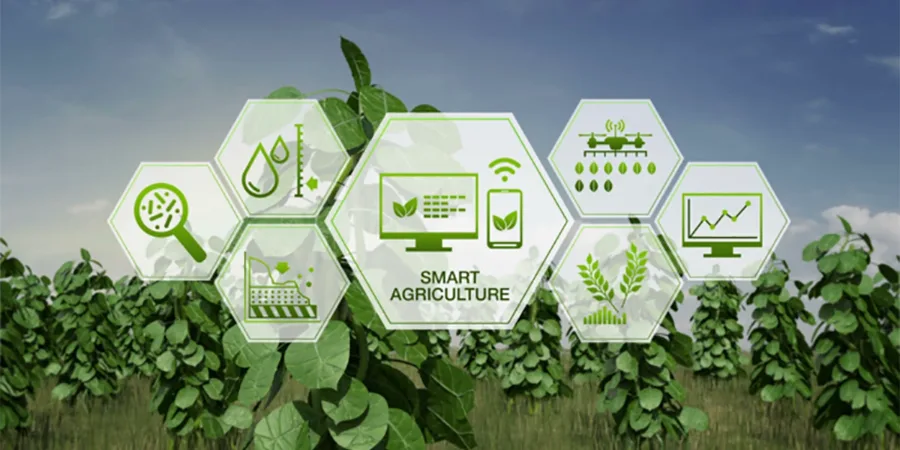
Agricultural IoT Applications are changing the way farmers grow crops, manage resources, monitor fields, and improve productivity. By connecting sensors, agricultural equipment, weather stations, irrigation systems, drones, and software platforms, farmers can collect real-time data and make better decisions.
Modern agriculture faces several challenges, including changing weather conditions, water shortages, rising operating costs, labor constraints, and increasing demand for food production. Traditional farming methods remain important, but technology can help farmers manage these challenges more efficiently.
This is where IoT in agriculture becomes increasingly valuable. Connected devices can continuously monitor conditions in fields and provide information that would otherwise require frequent manual inspections. When combined with automation and data analytics, these technologies support a more efficient approach to smart farming.
From smart irrigation to livestock monitoring, there are many ways IoT is becoming part of modern agricultural operations.
Table of Contents
What Are Agricultural IoT Applications?
Agricultural IoT Applications refer to the different ways Internet of Things technology is used in farming and agricultural management.
IoT devices can include soil sensors, weather stations, GPS systems, cameras, drones, connected tractors, irrigation controllers, and livestock tracking devices. These devices collect information and transmit it to software platforms where farmers can monitor conditions and make decisions.
For example, a soil moisture sensor can measure the amount of water in the soil and send the information to a smartphone or cloud platform. If the soil becomes too dry, the farmer can receive an alert or an automated irrigation system can activate.
This combination of connected devices, data collection, analytics, and automation is at the core of IoT in agriculture.
10 Agricultural IoT Applications Changing Smart Farming
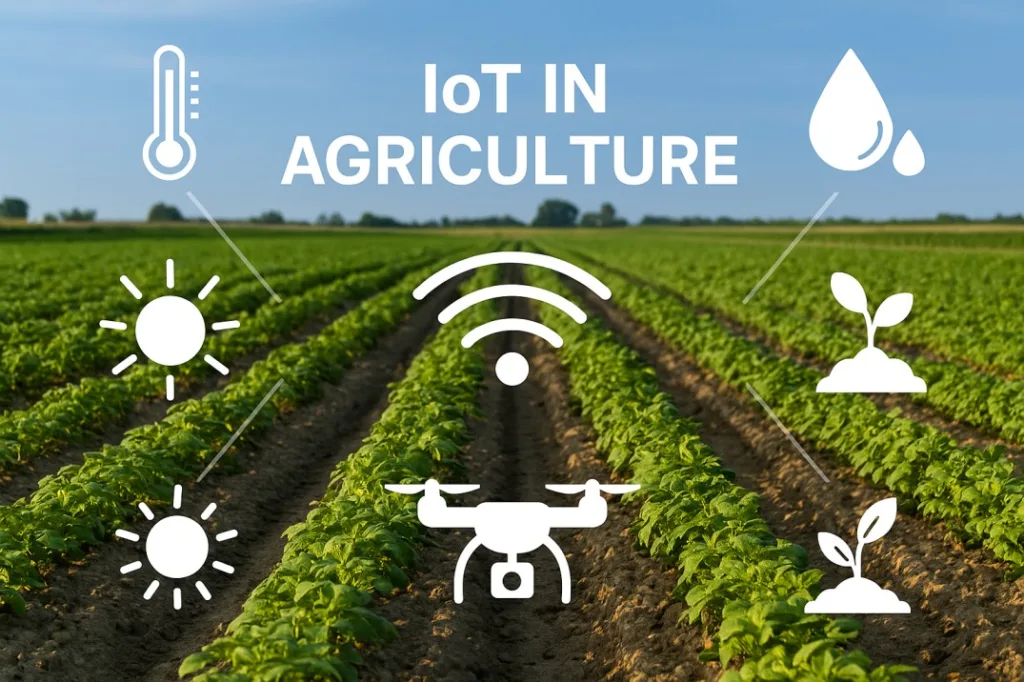
There are many potential uses of IoT technology in modern agriculture. Here are 10 important Agricultural IoT Applications.
1. Smart Irrigation
Smart irrigation is one of the most common applications of IoT technology in farming.
Soil moisture sensors can measure how much water is available in the soil. Instead of following a fixed irrigation schedule, farmers can use this data to determine when crops actually need water.
Advanced irrigation systems can automatically turn pumps and valves on or off based on sensor readings. Weather data can also be incorporated to avoid unnecessary watering when rainfall is expected.
This can help farms manage water more efficiently and reduce waste, making smart irrigation an important part of smart farming.
2. Soil Monitoring
Healthy soil is essential for productive agriculture. IoT sensors can continuously monitor soil conditions such as moisture, temperature, pH, and other relevant characteristics.
Farmers can use this information to identify differences between areas of a field and determine where attention may be needed.
Instead of treating an entire field identically, IoT in agriculture can support more targeted decisions based on actual soil conditions.
3. Crop Health Monitoring
Monitoring crop health manually across large fields can be time-consuming. IoT-connected cameras, drones, and sensors can help farmers observe crop conditions more efficiently.
These systems can identify changes in plant appearance, growth, or other indicators of stress. When unusual conditions are detected, farmers can investigate specific areas instead of inspecting the entire field.
Early detection can help farmers respond to potential diseases, pest problems, or nutrient deficiencies before they become more widespread.
4. Weather Monitoring
Weather can have a major effect on farming operations. Local IoT weather stations can continuously collect information about temperature, humidity, rainfall, wind speed, and other environmental conditions.
Farmers can use this information to plan irrigation, spraying, planting, and harvesting activities.
Local weather data can also complement broader weather forecasts by providing information from the farm itself.
5. Livestock Monitoring
IoT isn’t limited to crop production. Connected technologies can also be used to monitor livestock.
Wearable devices can track animal location, movement, activity, and other indicators. Farmers can use this information to identify unusual behavior or changes that may require attention.
Livestock monitoring can be particularly useful for farms managing large numbers of animals because connected devices can provide information without requiring constant manual observation.
6. Smart Greenhouses
Greenhouses provide controlled environments for growing crops, and IoT technology can make that control more precise.
Sensors can monitor temperature, humidity, light, soil moisture, and other conditions inside a greenhouse. Automated systems can then adjust ventilation, irrigation, lighting, or other equipment according to predefined requirements.
These Agricultural IoT Applications can help greenhouse operators maintain more consistent growing conditions while reducing unnecessary manual intervention.
7. Precision Fertilization
Fertilizers are important agricultural inputs, but excessive application can increase costs and contribute to environmental problems.
IoT sensors can collect information about soil conditions and crop requirements. When combined with precision agricultural equipment, farmers can use this data to apply fertilizers more selectively.
This approach can help ensure that nutrients are provided where they are needed rather than applying identical quantities across an entire field.
Precision fertilization is another area where IoT in agriculture can support efficient resource management.
8. Agricultural Equipment Monitoring
Modern farms often depend on tractors, harvesters, irrigation pumps, and other machinery. IoT devices can monitor the location, operating condition, fuel consumption, and performance of connected equipment.
Farmers and farm managers can use dashboards to track equipment and identify potential maintenance requirements.
Predictive maintenance systems can also analyze equipment data and identify signs of potential problems. Addressing maintenance issues earlier may help reduce unexpected downtime during critical farming periods.
9. Drone-Based Farm Monitoring
Drones equipped with cameras and other sensors can provide aerial information about large agricultural areas.
Instead of walking through an entire field, farmers can use drone imagery to identify areas with unusual crop growth, water stress, or other conditions requiring closer inspection.
When drone technology is integrated with other Agricultural IoT Applications, farmers can combine aerial observations with ground-level sensor data for a more complete understanding of field conditions.
10. Automated Farm Management
One of the most advanced applications of IoT is farm automation.
Connected systems can bring together information from soil sensors, weather stations, irrigation systems, machinery, and other devices. Software can then use this information to support automated or semi-automated decisions.
For example, an automated system could monitor soil moisture and weather conditions and adjust irrigation accordingly.
As smart farming technologies become more sophisticated, greater integration between IoT, artificial intelligence, robotics, and automation could further reduce manual work.
Benefits of IoT in Agriculture
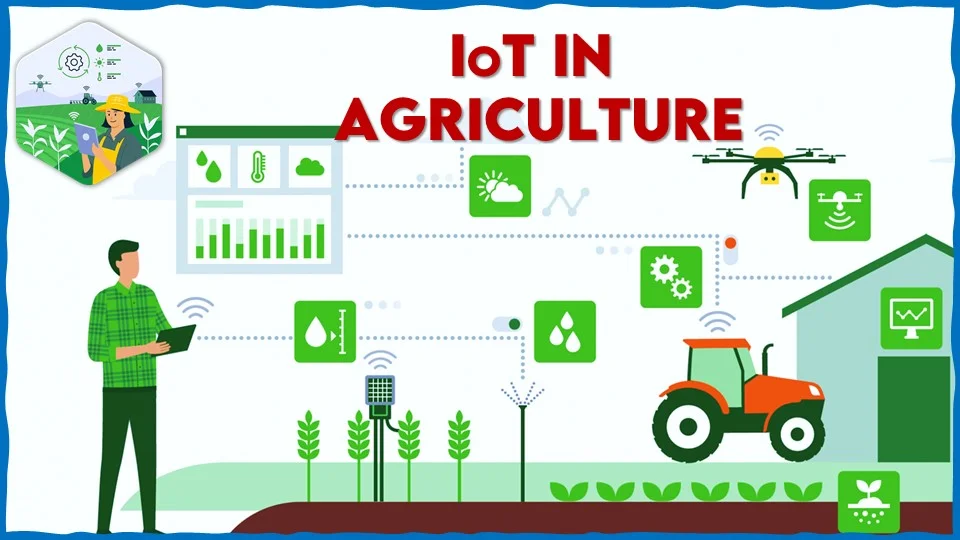
The growing adoption of IoT in agriculture offers several potential benefits.
Better Decision-Making
Farmers can access real-time information instead of relying entirely on manual observations or historical assumptions. This can support faster and more informed decisions.
Efficient Resource Usage
IoT can help farmers determine where and when water, fertilizers, pesticides, and other resources are needed. More precise application can reduce unnecessary consumption.
Improved Farm Productivity
Better monitoring and automation can help farmers manage agricultural operations more efficiently. Timely irrigation, crop monitoring, and equipment maintenance can contribute to smoother operations.
Reduced Labor Requirements
Automated monitoring can reduce the need for workers to perform certain repetitive inspection tasks. Farmers can focus more of their time on activities that require human judgment.
Early Problem Detection
Sensors can continuously monitor conditions and send alerts when measurements change significantly. This can give farmers an opportunity to investigate potential problems earlier.
Greater Sustainability
More efficient use of water, fertilizers, fuel, and other resources can support sustainable agricultural practices. IoT can help farmers balance productivity with responsible resource management.
Challenges of Agricultural IoT Applications
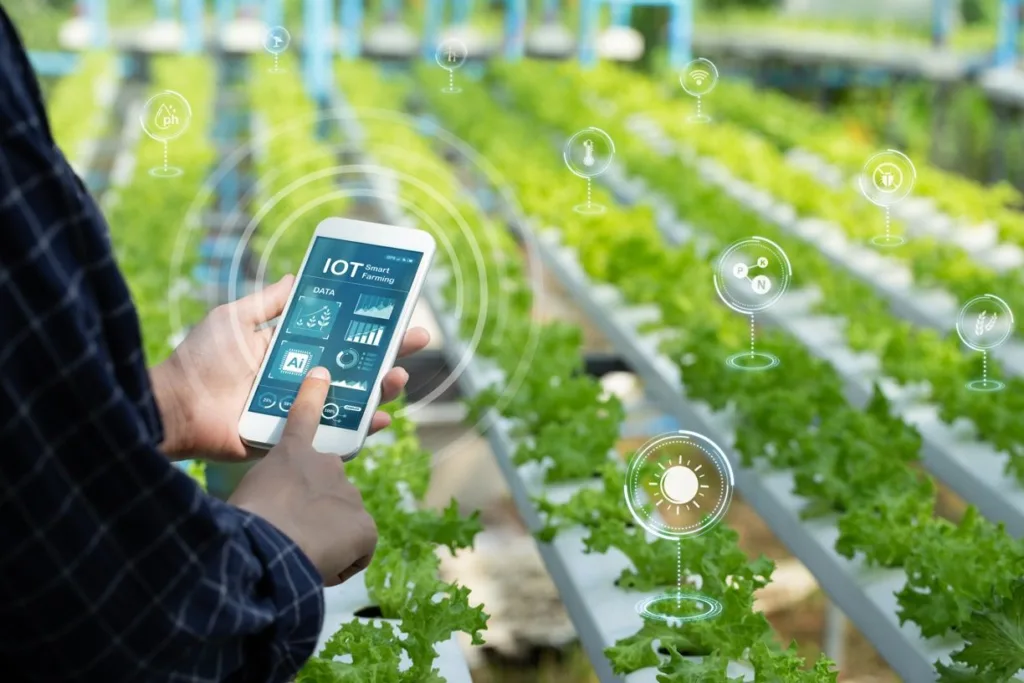
Despite their potential, Agricultural IoT Applications also come with challenges.
The initial cost of sensors, software, connectivity equipment, and automated machinery can be significant. This may make adoption more difficult for small farms.
Connectivity is another concern. Some agricultural areas may have limited cellular or internet coverage, which can affect the performance of connected systems.
Data security is also important because IoT platforms can collect large amounts of operational and agricultural information. Farmers need appropriate security measures to protect their data.
Finally, farmers may need training to install devices, maintain sensors, understand dashboards, and interpret collected data effectively.
The Future of Agricultural IoT Applications
The future of Agricultural IoT Applications will likely involve deeper integration with artificial intelligence, robotics, satellite imagery, drones, and autonomous machinery.
AI can analyze large amounts of data collected from connected agricultural devices and identify patterns that may not be immediately obvious. This could lead to more accurate recommendations for irrigation, crop health, pest management, and harvesting.
Robotics and autonomous machinery could also work alongside IoT systems to perform specific agricultural tasks with limited human intervention.
As sensor prices decrease, connectivity improves, and agricultural software becomes easier to use, smart farming could become increasingly accessible to farms of different sizes.
Conclusion
Agricultural IoT Applications are helping transform traditional farming into a more connected and data-driven industry. From smart irrigation and soil monitoring to livestock tracking, drone surveillance, and automated farm management, IoT can support farmers across many areas of agricultural production.
The technology can help improve decision-making, optimize resource usage, monitor crops more effectively, and potentially increase operational efficiency.
Although challenges such as cost, connectivity, cybersecurity, and technical skills remain, continued developments in IoT in agriculture, artificial intelligence, automation, and robotics are creating new opportunities.
As the agricultural industry continues to evolve, smart farming technologies will likely play an increasingly important role in producing food efficiently while making better use of limited resources.
FAQs About Agricultural IoT Applications
1. What are Agricultural IoT Applications?
Agricultural IoT Applications are the different uses of connected IoT devices and technologies in farming. They include smart irrigation, soil monitoring, crop health monitoring, livestock tracking, weather monitoring, equipment management, and farm automation.
2. How does IoT help smart farming?
IoT helps smart farming by collecting real-time information from sensors, machines, weather stations, and other connected devices. Farmers can use this data to make better decisions and automate certain agricultural processes.
3. What are the main benefits of IoT in agriculture?
The main benefits include improved monitoring, more efficient resource usage, better decision-making, reduced manual work, early problem detection, and potentially improved farm productivity.
4. Is Agricultural IoT suitable for small farms?
Yes. While some advanced IoT systems can be expensive, smaller farms can start with individual solutions such as soil moisture sensors, weather monitoring devices, or smart irrigation systems and expand their technology gradually.
