


Creativity has long been bound by the limits of individual bandwidth, requiring an immense investment of inspiration, technical skill, and time. The rise of generative AI has fundamentally shifted this paradigm. Workflows that used to take weeks—from initial ideation and drafting to final refinement and multi-channel distribution—now happen in minutes, establishing AI as a foundational pillar of modern content strategy.
Read more blog : How Generative AI Adoption Impacts Tech Stock Valuations?
1. ChatGPT (OpenAI) – The All-Rounder Conversational AI

ChatGPT remains the industry benchmark for general-purpose text generation, brainstorming, and conversational assistance. Built on massive language models, it functions as a highly adaptable digital assistant capable of switching tones—from formal business prose to casual social copy—in seconds.
- How it Works: It processes textual prompts to generate human-like responses. It doesn’t just write from scratch; it can critique your existing drafts, suggest alternative hooks, rearrange structures, or proofread for grammatical consistency.
- Key Features:
- Custom Instructions & GPTs: Allows you to set persistent personas or build specialized mini-bots tailored to your specific brand voice.
- Advanced Data Analysis: Can write and execute Python code, analyze uploaded spreadsheets, and generate charts or data insights.
- Multimodal Search: Seamlessly browses the web to source real-time information and cite its references.
Best For: Content marketers, bloggers, scriptwriters, and email marketers looking for an end-to-end brainstorming and drafting partner. Pricing: Free tier (standard access) | Plus / Team Subscription for advanced model access, higher message caps, and priority speeds.
2. Claude (Anthropic) – The Writer’s Choice for Deep Research
Claude is widely celebrated for its superior nuanced understanding, exceptional command over complex language, and a distinctively natural, less “robotic” writing style compared to other models. Developed with safety and accuracy at its core, it excels at managing massive amounts of text without losing context.
- How it Works: Claude utilizes an enormous context window, meaning you can feed it entire books, lengthy research papers, or massive codebases, and ask it to synthesize, analyze, or draft content based strictly on those documents.
- Key Features:
- Massive Context Window: Perfect for analyzing hundreds of pages of documentation in a single prompt.
- Artifacts Feature: Separates text generation from code or dedicated content pieces into a side-by-side workspace window for real-time editing.
- Advanced Reasoning: Superior at technical writing, legal document synthesis, and maintaining a human-like narrative flow over thousands of words.
Best For: Academic researchers, long-form authors, technical writers, and creators who need detailed reports and highly structured content. Pricing: Free tier (with strict usage limits) | Pro tier for extended usage limits and priority access.
Read more blog : AI Tools Every Marketer Needs in 2026
3. Midjourney – The Gold Standard for Cinematic AI Art
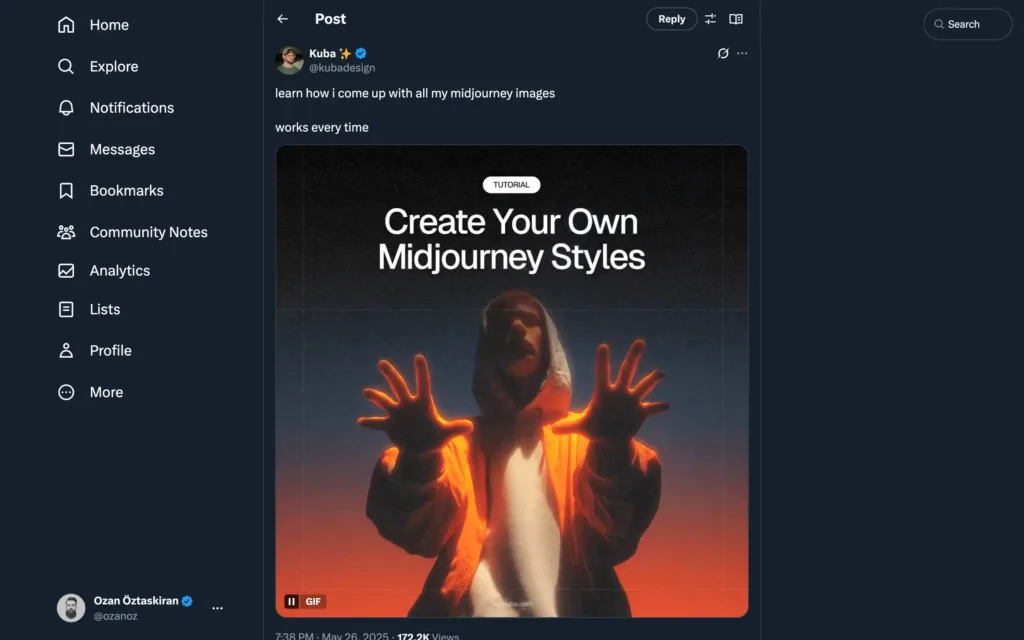
Midjourney is an independent research lab that produces some of the most visually stunning, photorealistic, and stylistically diverse AI imagery on the market. It operates primarily through a text-prompt interface, turning abstract descriptions into gallery-grade visual art.
- How it Works: Users input detailed descriptive text prompts—often specifying lighting, art style, camera lens, and artistic influences—and the AI generates a grid of four high-resolution options to upscale or vary.
- Key Features:
- Unrivaled Aesthetics: Excels at cinematic lighting, hyper-realistic textures, complex fantasy art, and abstract concepts.
- Vary Region (Inpainting): Allows users to select a specific part of an image and change only that element via text.
- Style Tuning & Character Consistency: Features dedicated parameters to keep characters or aesthetic styles consistent across multiple image generations.
Best For: Concept artists, graphic designers, book cover illustrators, and branding agencies needing high-impact visual assets. Pricing: Subscription-based only (offering various tiers based on fast rendering hours).
4. DALL·E (OpenAI) – Precision Text-to-Image Integration
DALL·E is OpenAI’s native image generator, known for its incredible adherence to complex, literal prompts. If you ask DALL·E for a highly specific scene with exact item placement, it is remarkably adept at following those instructions precisely.
- How it Works: Deeply integrated inside the ChatGPT environment, you don’t need to know complex prompt engineering or shorthand codes. You simply describe what you want in plain English, and ChatGPT translates it into a detailed visual.
- Key Features:
- Prompt Adherence: Outstanding at rendering complex scenes, text within images, and specific spatial layouts.
- In-Line Editing: You can highlight an area of a generated image within the ChatGPT chat box and ask for modifications conversationally.
- Aspect Ratio Flexibility: Easily generates widescreen, square, or vertical layouts fit for different digital platforms.
Best For: Bloggers needing exact editorial illustrations, UI/UX designers wireframing concepts, and social media managers looking for fast, custom graphics. Pricing: Integrated into ChatGPT Plus/Team/Enterprise paid plans.
5. Runway ML – Next-Generation AI Video Creation
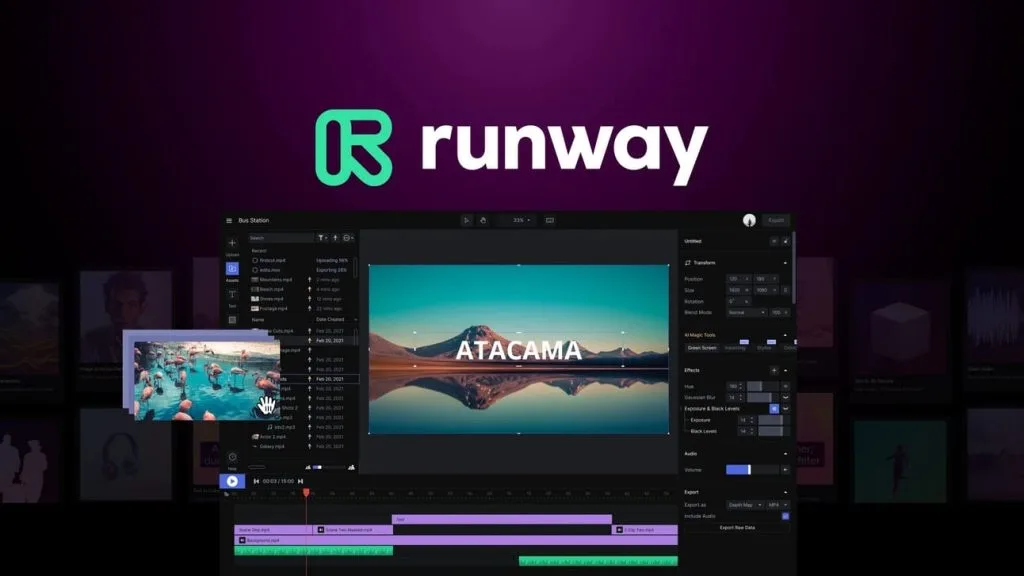
Runway is a powerhouse ecosystem focused on shifting the boundaries of AI-driven film and video generation. It bridges the gap between traditional video editing suites and text-to-video generative intelligence.
- How it Works: Runway allows users to generate entirely new video clips using nothing but a text prompt, a reference image, or a combination of both. It can also manipulate existing video files with stunning accuracy.
- Key Features:
- Text/Image-to-Video: Generates cinematic video clips from scratch, including realistic physics, camera pans, and motion tracking.
- Motion Brush: Allows you to paint over a specific static element in an image and dictate exactly how and where it should move.
- Advanced Editing Tools: Includes automated rotoscoping (removing backgrounds seamlessly), object erasure, and frame-rate interpolation.
Best For: Independent filmmakers, commercial video editors, visual effects artists, and multimedia creators. Pricing: Free trial with limited credits | Tiered monthly subscriptions for higher resolutions and unlimited rendering.
6. Descript – Audio & Video Editing via Text
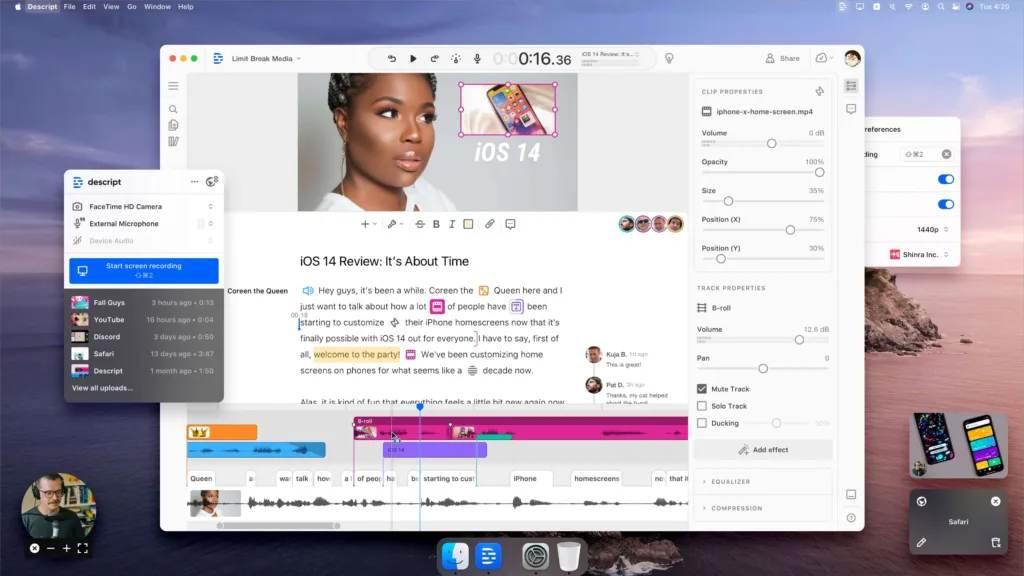
Descript reimagines the entire timeline workflow of video and podcast editing. Instead of slicing audio waveforms and video tracks manually on a timeline, Descript transcribes your media into a text document and lets you edit the video by editing the script.
- How it Works: Upload an audio or video file, and Descript automatically generates an interactive transcript. If you delete a sentence or word from the text transcript, it instantly cuts that exact moment out of the video and audio tracks.
- Key Features:
- Filler Word Removal: Automatically detects and deletes “ums,” “uhs,” “likes,” and awkward pauses with a single click.
- Overdub (AI Voice Cloning): Create a digital clone of your own voice so you can type in new text to fix a voiceover mistake without rerecording.
- Studio Sound: Instantly isolates vocals and removes intense background noise, making cheap microphones sound like they were recorded in a professional studio.
Best For: Podcasters, talking-head video creators, online educators, and webinar hosts. Pricing: Free basic tier | Paid monthly subscriptions for extended transcription hours and advanced AI features.
7. Jasper AI – The Corporate Copywriter & SEO Specialist
Jasper is an AI platform built specifically for enterprise marketing teams and agency copywriters. Unlike general models, Jasper is pre-trained on high-converting copywriting frameworks (like AIDA or PAS) to maximize consumer engagement and search engine rankings.
- How it Works: Users leverage dozens of built-in templates optimized for specific tasks—like Google Ads, Amazon product descriptions, or SEO blog posts. It integrates directly with SEO optimization platforms to ensure your content ranks well.
- Key Features:
- Brand Voice Customization: Scans your website to learn your specific company style, rules, and terminology, ensuring the AI never goes off-brand.
- Campaign Workflows: Allows you to input a single brief and instantly generate an entire marketing campaign (press release, email sequence, and social posts) simultaneously.
- SurferSEO Integration: Provides live SEO grading scores while you write inside the application.
Best For: Growth marketers, SEO agencies, e-commerce brands, and corporate communications teams. Pricing: Enterprise-focused subscription model (offering a free trial period).
8. Synthesia – Instant Video Production via AI Avatars
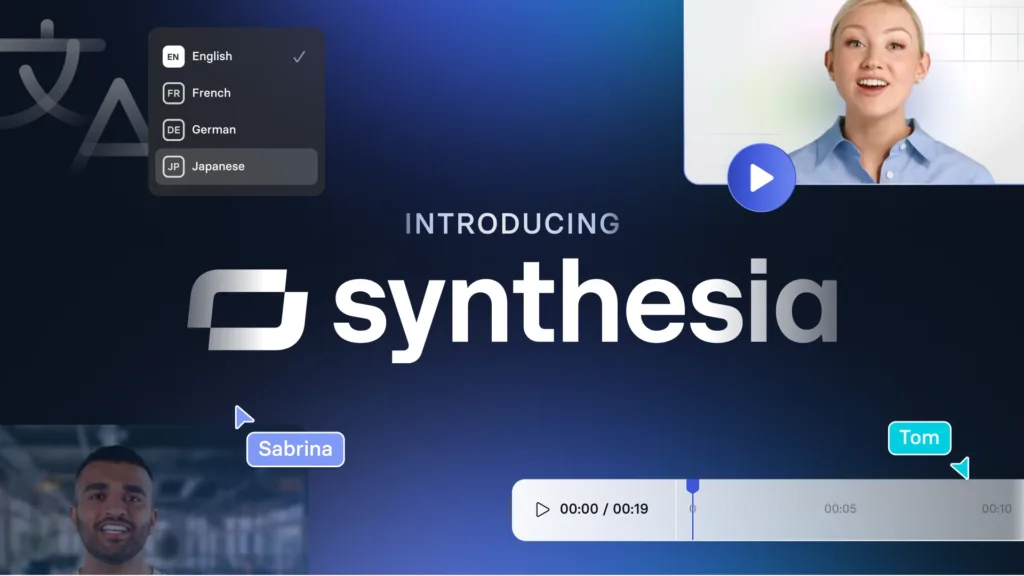
Synthesia eliminates the need for expensive cameras, actors, microphones, or studio spaces. It creates highly realistic, talking-head videos using lifelike AI avatars that read scripts in over a hundred languages.
- How it Works: You select a digital avatar from a diverse casting library, paste your written script into the text box, choose a language/accent, and the platform synthesizes a video of the avatar speaking your words with accurate lip-syncing and natural micro-expressions.
- Key Features:
- Massive Avatar Library: Access to over 150+ diverse, ethnically varied AI avatars, or option to create a custom avatar of yourself.
- Multi-Language Localization: Instantly translate and generate the same video script into over 140 languages with native-sounding voice patterns.
- Built-in Video Editor: Add text overlays, stock backgrounds, screen recordings, and transitions right alongside the script editor.
Best For: Corporate training teams, customer onboarding managers, localized international marketing, and faceless YouTube channels. Pricing: Standard and Enterprise monthly/annual subscription plans.
9. Pictory – Turning Text into Social Media Video
Pictory is a specialized video creation tool aimed at turning long-form written text assets—like blog articles, whitepapers, or scripts—into short, highly engaging videos optimized for social media feeds.
- How it Works: Give Pictory a URL or a text script. Its AI analyzes the text, extracts the most critical talking points, matches those sentences with relevant B-roll footage from a massive stock library, adds automated captions, and compiles it into a video.
- Key Features:
- URL-to-Video: Instantly repurpose an existing written blog post into a TikTok, Reel, or YouTube Short.
- Auto-Captions: Highly accurate subtitle generation with customizable styles, dynamic text highlights, and animations.
- Long-to-Short Cutting: Upload a long webinar or podcast, and the AI will auto-extract the most viral, bite-sized vertical highlights.
Best For: Content repurposers, social media managers, affiliate marketers, and active bloggers looking to expand into video format. Pricing: Limited free trial | Tiered subscription models based on video output volume.
10. Copy.ai – GTM (Go-To-Market) & Marketing Automation
Copy.ai has evolved from a simple ad-copy generator into a sophisticated AI workspace designed to automate complex marketing and sales workflows, enabling go-to-market teams to scale up production seamlessly.
- How it Works: It uses automated workflows to tackle repetitive marketing tasks. You feed it a source asset, and it can distribute variations of that asset across multiple channels based on preset automation rules.
- Key Features:
- Workflows & Infusions: Connects multiple steps together, such as scraping a LinkedIn profile, writing a personalized cold email, and logging it to a CRM automatically.
- Rich Marketing Templates: Scores of proven templates for writing high-converting landing page copy, social hooks, and promotional emails.
- Secure Team Workspaces: Built with enterprise security protocols so teams can collaborate safely on proprietary brand data.
Best For: Sales development reps (SDRs), startups looking to scale outbound marketing, and fast-paced digital ad agencies. Pricing: Free basic tier | Pro and Enterprise subscription tiers with unlimited workflow runs.
Summary Comparison Matrix
| Tool | Core Strength | Ideal Deliverable | Output Format |
| ChatGPT | Conversational flexibility & ideation | Emails, scripts, blogs, analysis | Text, Code, Data tables |
| Claude | Deep research & long-form nuance | Reports, whitepapers, massive essays | Text, Clean layout documents |
| Midjourney | Cinematic & artistic realism | Thumbnails, brand graphics, concepts | High-res Images |
| DALL·E | Precise prompt adherence | Exact illustrations, storyboards | Images with explicit elements |
| Runway ML | Generative video & clip editing | Cinematic b-roll, video effects | Video files (MP4) |
| Descript | Script-based audio/video editing | Cleaned podcasts, short-form clips | Edited Audio/Video tracks |
| Jasper AI | On-brand SEO copywriting | High-ranking blogs, ad variations | Formatted Marketing text |
| Synthesia | Scalable talking-head presentations | Training videos, global explainers | Avatar Video presentations |
| Pictory | Fast text-to-video repurposing | TikToks, Reels, YouTube Shorts | Captioned short-form videos |
| Copy.ai | GTM marketing workflow automation | Cold outreach, ad copies, campaigns | Multi-channel copy variations |
You may also like:
1) How AI is Transforming the Software Development Industry
2) 8 Key Concepts in Neural Networks Explained
3) Top 5 Essential Deep Learning Tools You Might Not Know
4) 10 Common Mistakes in AI Model Development
5) 6 Types of Neural Networks You Should Know
6) The Science Behind Fine-Tuning AI Models: How Machines Learn to Adapt
7) 7 Essential Tips for Fine-Tuning AI Models
Read more blogs from Here
Share your experiences in the comments, and let’s discuss how to tackle them!
Follow me on Linkedin
Authoritative & Forward-Looking (Best for LinkedIn or Reports)
Generative AI has evolved past the phase of novelty and is now firmly established as a permanent infrastructure for digital content. As these models become more sophisticated, the competitive advantage shifts away from who can create the fastest, and toward who can direct the tools with the most strategic intent. For modern content teams and solo creators alike, adapting to this AI-driven paradigm is no longer a path to growth—it is the prerequisite for relevance.
Frequently Asked Questions (FAQs)
1. Will using generative AI tools get my website penalized by Google for SEO?
No, not if the content is high-quality. Google’s official guidelines state that they reward high-quality content, however it is produced. They focus on the value of the content rather than whether it was written by a human or an AI. However, if you use tools like ChatGPT or Jasper to mass-produce low-effort, unedited spam just to game keywords, your site will likely suffer. The key is using AI to assist your writing, then editing it to add your unique human insights and factual verification.
2. Who owns the copyright of images and videos generated by AI?
Legally, this is still a developing area worldwide. Under current U.S. Copyright Office rulings, purely AI-generated works cannot be copyrighted by humans because they lack “human authorship.” However, from a user standpoint, most major platforms (like Midjourney, OpenAI’s DALL·E, and Runway ML) state in their Terms of Service that you own the commercial rights to the outputs you generate on paid plans. This means you can safely use them for business, merchandise, and client projects.
3. How do I choose between ChatGPT and Claude for my writing tasks?
Think of ChatGPT as your fast, multi-talented brainstorming partner and Claude as your deep-thinking, meticulous editor.
Choose ChatGPT if you need to quickly outline ideas, write catchy social media hooks, interact with custom GPT bots, or mix text generation with automated web research.
Choose Claude if you are handling long-form content (like an entire ebook or a 10-page whitepaper) or if you need to upload massive reference documents and ask the AI to synthesize them without losing context.
4. Do I need professional editing skills to use video tools like Descript or Runway?
Not at all. The main appeal of tools like Descript is that they eliminate the steep learning curve of traditional video editing software. If you know how to edit a Microsoft Word document, you can edit video in Descript by simply deleting text from the automatic transcript. Similarly, Runway handles complex visual tasks like rotoscoping (masking backgrounds) through point-and-click AI brushes, making high-end editing accessible to beginners.
5. Can these AI tools completely replace a human content team?
While AI drastically cuts down production time, it cannot replace the human elements that make content truly successful: empathy, original perspective, fact-checking, and brand strategy. AI excels at structural formatting, pattern recognition, and speed, but it lacks real-world experiences. It is also prone to “hallucinations” (confidentially making up false data). The most effective workflow is keeping a human “in the loop” to steer the strategy, verify facts, and inject a distinct brand voice.
