


The Software Development Lifecycle (SDLC) is a structured framework that guides engineering and product teams through the end-to-end process of building high-quality, scalable software. By standardizing every phase—from initial discovery through post-launch monitoring—organizations can reduce project risks, lower operational costs, and accelerate time-to-market.
Modern SDLC frameworks integrate continuous delivery pipelines, DevSecOps practices, and AI-assisted workflows to drive efficiency at scale.
The 6 Core Stages of the Software Development Lifecycle
1. Requirement Gathering and Analysis
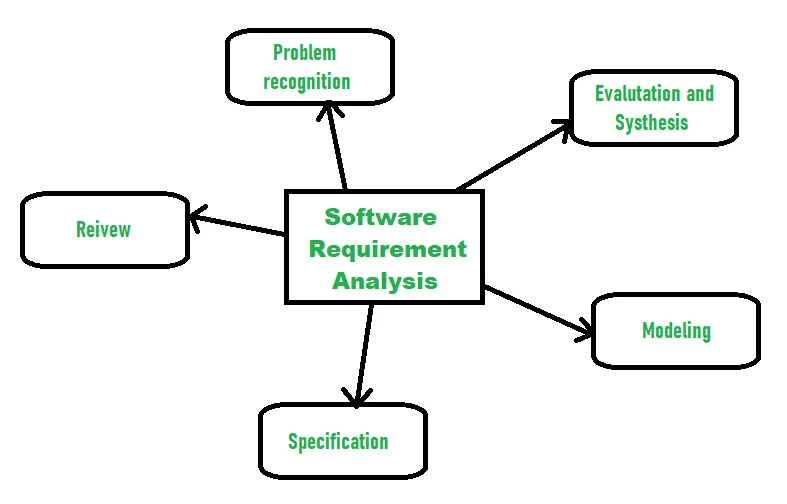
The initial phase establishes the scope, targets, and functional boundaries of the project. Stakeholders align on user needs and define strict project objectives.
- Key Activities:
- Stakeholder Interviews & Discovery: Engaging clients, end-users, and product managers to map functional requirements.
- Requirement Documentation: Writing a formal Software Requirement Specification (SRS) detailing functional and non-functional metrics (performance, security, SLA targets).
- Feasibility Analysis: Evaluating technical stack compatibility, financial ROI, and operational readiness.
- Validation & Traceability: Establishing an initial Traceability Matrix to ensure every requirement maps to future test cases.
- Primary Toolstack: JIRA, Confluence, Microsoft Visio, Lucidchart, Miro.
2. System Architecture & Design
Translates raw business requirements into a robust technical blueprint. This stage ensures system scalability, data integrity, and intuitive user experiences.
- Key Activities:
- High-Level Design (HLD): Defining broad microservices or monolithic system architectures, database schemas, and external API integrations.
- Low-Level Design (LLD): Mapping internal class structures, algorithmic flow, and specific module dependencies.
- UX/UI Prototyping: Creating wireframes and high-fidelity user interface interactive mockups.
- Primary Toolstack: StarUML, Enterprise Architect, Figma, Sketch, Balsamiq, ERD tools.
3. Implementation (Coding)
Developers translate design documents into executable source code. Modern engineering teams utilize automated style checks, trunk-based development, and peer reviews to maintain high code quality.
- Key Activities:
- Modular Programming: Writing clean, testable code aligned with domain-driven design principles.
- Peer Code Reviews: Running standard pull request approvals to check for syntax bugs, architectural drift, and security flaws.
- Automated Unit Testing: Writing local unit test suites to validate individual logic blocks before code commits.
- Primary Toolstack: Visual Studio Code, IntelliJ IDEA, Git, GitHub/GitLab, JUnit, NUnit, PyTest.
4. Quality Assurance & Testing
Systematic validation ensures software functions correctly, handles expected traffic loads, and remains safe from vulnerability exploits.
- Key Activities:
- Integration & System Testing: Testing communications between microservices and verifying overall application workflows.
- Performance & Stress Testing: Benchmarking application response times and API latency under concurrent load spikes.
- User Acceptance Testing (UAT): Verifying business flows directly with product owners and focus user groups.
- Primary Toolstack: Selenium, Cypress, JMeter, Postman, SonarQube, JIRA Service Management.
5. Deployment & Release Engineering
Deploying code to staging and production environments safely with automated continuous integration and continuous delivery (CI/CD) pipelines.
- Key Activities:
- Deployment Planning: Establishing automated rollback strategies, database migration scripts, and release schedules.
- Infrastructure Configuration: Provisioning containerized cloud environments using Infrastructure as Code (IaC).
- Progressive Rollouts: Executing blue-green or canary releases behind feature flags to minimize user downtime.
- Primary Toolstack: Jenkins, GitLab CI/CD, GitHub Actions, Docker, Kubernetes, AWS, Azure.
Read More Blog : Advanced Java Interview Questions for Experienced Developers
6. Maintenance, Observability & Support
Post-release monitoring guarantees application uptime, system security, and feature iterations based on real-world user metrics.
- Key Activities:
- Real-Time Observability: Monitoring infrastructure performance, memory utilization, and synthetic transaction logs.
- Defect Remediation: Patching software vulnerabilities (CVEs) and resolving end-user issue tickets.
- Continuous Optimization: Updating legacy dependencies and releasing iterative feature enhancements.
- Primary Toolstack: Datadog, Prometheus, New Relic, OpenTelemetry, Zendesk, ServiceNow, SCCM.
SDLC Phase Breakdown: Goals, Risks, and Artifacts
| SDLC Phase | Core Objective | Key Deliverable / Artifact | Primary Risk If Skipped |
| 1. Requirements | Define exact scope & user targets | Software Requirement Specification (SRS) | Scope creep, misaligned business features |
| 2. System Design | Create architectural & database blueprints | HLD/LLD Documents, Wireframes, Database Schema | Expensive structural rework, low scalability |
| 3. Implementation | Turn blueprints into production code | Source Code, Unit Test Suites, Pull Requests | Technical debt, unmaintainable code base |
| 4. Testing | Verify stability, security & performance | Test Reports, Bug Tracking Matrix, UAT Sign-off | Critical production bugs, security breaches |
| 5. Deployment | Release application into production safely | Automated CI/CD Pipeline, Live Environment Build | System downtime, deployment rollbacks |
| 6. Maintenance | Sustained uptime, monitoring & upgrades | System Health Metrics, Patch Logs, SLA Reports | Security vulnerabilities, platform degradation |
Build Scalable Software Faster with Enterprise SDLC Expertise
Streamline your engineering processes, integrate continuous delivery pipelines, and ship reliable software applications on schedule.
Maximize System Uptime: Deploy continuous monitoring, security scanning, and automated rollbacks.
Accelerate Delivery Timelines: Implement modern CI/CD automation and trunk-based workflows.
Reduce Technical Debt: Establish enterprise-grade high-level and low-level system designs.
Conclusion: Master the SDLC for High-Quality Software Delivery
A structured software development lifecycle (SDLC) is the foundation of any successful engineering strategy. By guiding projects seamlessly from initial requirement analysis through deployment and post-launch maintenance, adherence to a defined SDLC minimizes technical risk, controls project budgets, and consistently yields high-performing applications.
Frequently Asked Questions (FAQs)
What is the primary difference between SDLC and Agile methodology?
SDLC is an overall conceptual framework defining the mandatory phases of software creation (Planning, Design, Coding, Testing, Deployment, Maintenance). Agile is a specific operational methodology used to execute the SDLC through short, iterative cycles (sprints) rather than a linear, sequential flow.
Why is shifting security left crucial in modern SDLC?
“Shifting left” means integrating security scans, static code analysis, and vulnerability checks during the Requirement and Coding phases rather than waiting until final QA or Deployment. Identifying security flaws early in development can reduce remediation costs by up to 100x compared to fixing vulnerabilities in production.
How does continuous deployment impact the SDLC timeline?
Automated CI/CD pipelines condense manual testing and release management phases. Teams can deploy minor features and bug fixes to production multiple times per day behind feature flags, significantly shortening overall release cycles.
Which SDLC model is best for fast-growing startups?
Agile, DevOps, and modern Continuous Iteration models are ideal for startups. They allow teams to launch a functional Minimum Viable Product (MVP) rapidly, test features with real users, and pivot based on continuous feedback.
What happens if the System Design phase is rushed?
Skipping or rushing System Design leads to severe technical debt, unoptimized database queries, security bottlenecks, and application architecture that fails under peak user loads. Refactoring fundamental architectural flaws post-launch is significantly more expensive than conducting thorough design reviews upfront.
