


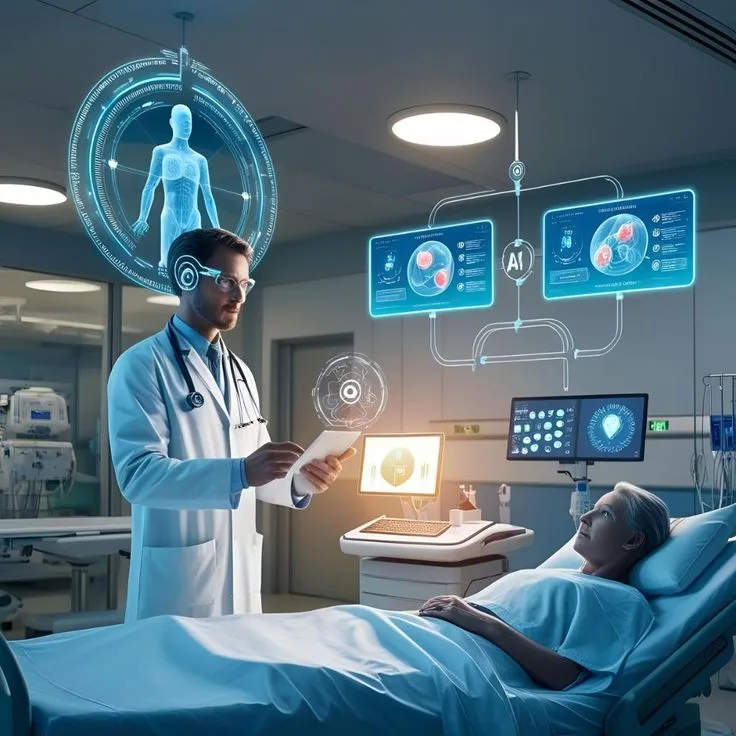
In healthcare accuracy has always been a matter of life and death. The field of medicine is experiencing the beginning of a new age with the advent of Artificial Intelligence (AI). Nowadays, AI in disease detection is not only a theoretical idea but a practical tool which is helping to save lives everyday. Hospitals, small clinics and everywhere in between, AI is transforming the manner in which diagnoses are drawn, minimizing mistakes and providing patients with quicker, more consistent responses.
The Rise of AI in Healthcare
In the last ten years, there has been a machine learning and AI application explosion in healthcare. They have been adopted by doctors and researchers to process huge volumes of patient data. AI does not come to overthrow doctors, but rather functions as an aid that offers more insight that humans can overlook. Its adoption is international, with the U.S., India, and the European states being on the forefront in the development of AI in patient care solutions.
Why Accurate Diagnosis Matters
Even one misdiagnosis may result in a delay in treatment, unnecessary procedures or even death. Research shows that millions of patients of the world are the victims of diagnostic errors every year. That is why AI enhancing the accuracy of medical treatment is so groundbreaking- machines are capable of processing thousands of data points at a time, providing doctors with a competitive advantage that their judgment alone cannot offer.
AI for Disease Detection
Among the strongest applications of AI in the healthcare sphere, there is early disease diagnosis. Neural networks trained on large medical databases are able to identify cancer, cardiovascular or neurological conditions far earlier than traditional tests. To provide an example, diabetic retinopathy is diagnosed by AI systems through eye images scan and regularly, long before the diagnosis occurs. This is turning AI in disease detection to be a revolutionary tool in preventive healthcare.
Machine Learning in Radiology
Imaging- X-rays, MRIs, CT scans has always been a key concept in radiology. Through machine learning in radiology, AI solutions can identify the presence of an abnormality such as tumor or micro-fracture, which even an experienced radiologist might fail to detect. In one example, DeepMind of Google has created AI models that can identify more than 50 eye diseases as well as the leading specialists. The way AI enhances workflow, makes diagnoses faster, and eliminates human exhaustion are already being demonstrated in radiology departments across the world.
AI Improving Medical Accuracy
AI is not just speed-assisting, but is also accuracy-enhancing. Through its study of many thousands of medical images or patient histories, AI gives doctors a second opinion which they can rely on. It does not imply the replacement of the human doctors but instead complementing them. Think of AI as a super-intelligent assistant, who whispers in the ear of a doctor and highlights something out of the ordinary that would be otherwise not be detected. This is what medical accuracy with AI means.
Predictive Healthcare Analytics
And imagine how wonderful it would be to have the ability to ensure that the illnesses are predicted before they are completely developed? Exactly what predictive healthcare analytics does. Based on the patient history, genetics, and lifestyle information, AI models predict the risk of developing a disease, such as a heart attack or a stroke. This will enable doctors to develop individual preventive care strategies, which save lives and expenses.
AI in Patient Care
In addition to diagnosis, AI is also changing treatment and patient engagement. AI in patient care involves technologies such as chatbots that respond to medical requests 24/7, wearable gadgets, which track the heart rate and blood pressure, and custom-made medication notifications. Patients do not feel isolated anymore between visits to the hospital anymore- AI makes sure that care remains constant.
Real-World Case Studies
- Mayo Clinic (USA): Predicts heart failure using AI.
- Apollo hospitals (India): Within minutes, AI-based stroke detection was implemented.
- NHS (UK): Applies AI in screening breast cancer to minimize false negativity.
These instances indicate that AI is not something experimental any more, it is life-saving and practical.
AI in Healthcare Software
All these breakthroughs are backed by what is behind the scenes, high-level AI in healthcare software solutions. These solutions, both older, such as IBM Watson health, and newer, are compatible with hospital systems. They oversee electronic health records, help in medical imaging and even prescribe treatment procedures. The smaller hospitals can now access AI at a small cost with a cloud-based system.
Challenges in AI Implementation
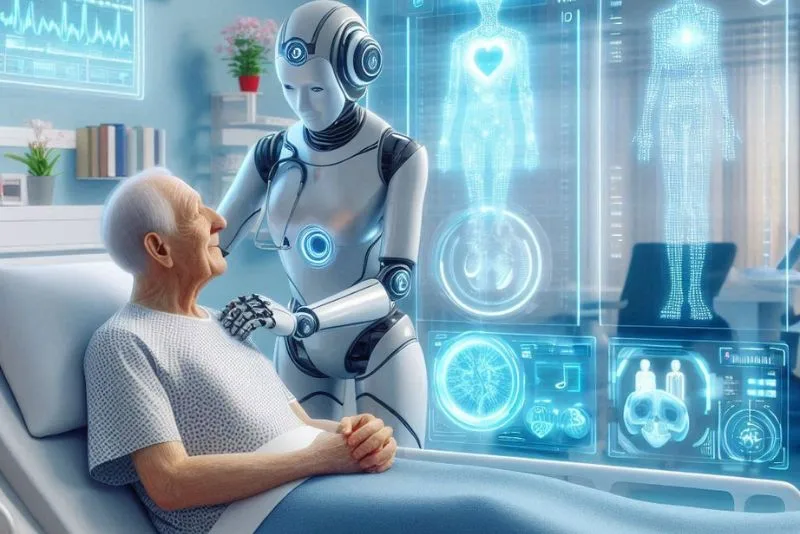
Naturally, everything does not go so smoothly. AI needs large volumes of data, and this will be a matter of patient privacy. Physicians might also be reluctant to use new technology in case they lose their jobs. There are ethical issues regarding the use of algorithms that are biased also. Nonetheless, these issues are being dealt with step by step with the right regulation and transparency practices.
The Future of AI in Healthcare
In the future, AI could only become smarter. In the coming 10 years, we will have personalized AI doctors who will be familiar with our health more than we are. Together with robotics, genetic engineering and telemedicine, the future of diagnosis has never been more accurate and patient-focused than in the past.
Unexpected Impact: AI is Transforming Stock Market Analysis
This is interesting: the same algorithms that are used in healthcare are being transferred to finance. Yes, AI is reshaping the analysis of stock markets in the same way that it is reshaping medicine. The stock market trends are also being spotted by predictive models which identify patterns of diseases. That cross over demonstrates the flexibility of AI and the strength of machine learning in any industry.
How Arunangshu Das Guide Us to This
Speaking about AI in healthcare, one cannot but refer to such thought leaders as Arunangshu Das. His leadership in the domain has given an insight on the practical implementation of AI in the healthcare sector. With his explanations, there is an increased number of professionals who are starting to believe in AI tools and apply them in practical patient care. The way he has connected healthcare with technology is what has made both hospitals and technology companies adopt innovation to achieve more.
Conclusion
The use of AI in healthcare is not just a technological trend, it is a revolution. In AI detecting diseases and machine learning in radiology, predictive healthcare analytics, and AI in patient care, it is transforming how physicians diagnose and treat their patients. The combination of machine intelligence and human experience is eliminating errors, saving lives, and providing patient-centered care. Nevertheless, the obstacles are still there, but the future is promising, and AI will become the most reliable companion of a doctor.
