


Artificial Intelligence (AI) is not a sci-fi idea anymore, it is a feasible tool that is revolutionizing modern medicine on a day-by-day basis. AI in healthcare software is transforming healthcare into something faster, smarter and more personal, not just in predicting heart attacks before they occur, but also in helping patients follow up care after the surgery. Hospitals, clinics, and startups all around the world are applying AI to reduce expenses, decrease the time to diagnose, and enhance patient experiences.
This paper will discuss how Artificial Intelligence is used in diagnostics and virtual assistants and how it is changing our perception of treatment and care. We will explore the medical diagnosis aspect of AI and also the fascinating future of chatbots among other things, and also the challenges and the success stories.
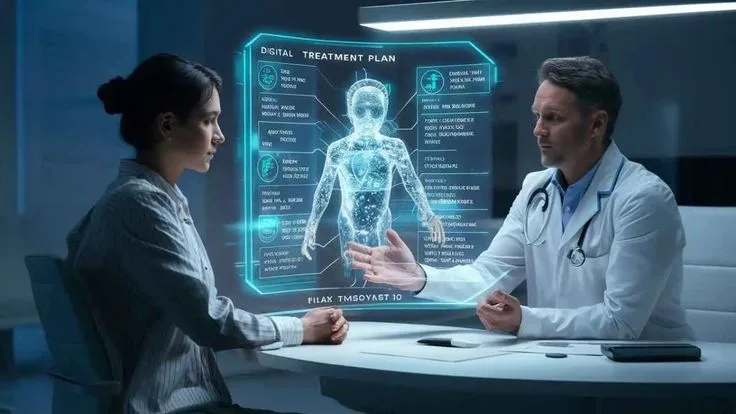
Understanding AI in Healthcare
AI is a combination of machine learning, natural language processing, and predictive analytics to do what should have been done by highly trained specialists. In medical care, it implies that Artificial Intelligence solutions will be able to filter through piles of medical records, images, and lab findings to identify trends that humans might overlook.
Consider an assistant who is tireless and never sleeps, learns constantly, and becomes wiser with an additional patient. That is what AI promises to be a system that is constantly enhanced to be supportive to doctors and nurses.
The Role of AI in Medical Diagnosis
The term Artificial Intelligence in medical diagnosis is not merely a jargon, it is a revolution. Conventional diagnosis tends to make use of experience, intuition, and time-consuming tests. That said, AI examines the data of thousands of similar cases in a few seconds.
Consider it as a virtual Sherlock Holmes. Although a human physician may examine the history of a few dozen patients, AI can examine millions of patient histories and identify subtle indicators of disease before symptoms emerge. This results in earlier identification of cancers, heart diseases, and neurological diseases, and eventually loss of lives is saved.
AI-Driven Medical Imaging
Medical imaging that is powered by Artificial Intelligence is one of the most exciting improvements. Radiologists apply AI algorithms to scan through X-rays, MRIs and CT scans and recognize irregularities with amazing accuracy.
To illustrate, Artificial Intelligence can point out small nodules on the lungs that could be an indicator of early-stage cancer an average person would not notice with the naked eye. Hospitals that apply Artificial Intelligence imaging have shorter turnaround times and reduce diagnostic errors, i.e., patients get treated sooner and more precisely.
Machine Learning in Hospitals
Machine learning in hospitals is becoming a common practice in hospitals to enhance patient care and operations. Artificial Intelligence presumes the likelihood of patients developing complications or readmission by examining trends in patient data.
Imagine a dashboard at the hospital indicating a red flag when a patient develops early signs of infection or deterioration. This predictive feature assists staff in responding to an emergency, which is why the number of intensive care stays decreases and important resources are saved.
Virtual Assistants in Healthcare
As diagnostics takes the center stage, virtual assistants in healthcare are changing how business is being conducted in a silent but gradual shift. These Artificial Intelligence assistants plan the appointments, respond to frequently asked questions of patients, and provide medication reminders.
The result? The medical personnel will be able to concentrate on complicated matters rather than documentation. Patients, in their turn, do not have to wait in lines and receive instant responses. It is a combination of an amiable, 24-hour receptionist and a nurse.
Healthcare Chatbots Powered by Artificial Intelligence
The emergence of Artificial Intelligence-based healthcare chatbots enhances the interaction between the patient and the healthcare facility to a new level. These chatbots are available 24/7, whether to give advice on the symptoms or provide advice on the next course of action.
Think of the possibility of talking to a bot at midnight and asking it about a child having fever and getting evidence-based help immediately. These chatbots are also used by hospitals to gather the history of patients prior to their appointments to save both patient and doctor time.
Chatbots Boost More Sales
Bafflingly, Chatbots Boost More Sales in healthcare, as well. They are applied in clinics to suggest high-quality services such as wellness plans, preventive check-ups, and telemedicine plans. Patients will enjoy timely notifications and tailored offers, whereas hospitals will gain more revenue, making it a win-win.
AI Is Transforming Indian Healthcare
There is hardly a place that presents the influence of Artificial Intelligence as in India. The AI Is Changing Indian Healthcare by filling the rural/urban care gaps. Startups create affordable village-level diagnostic devices because of a shortage of doctors. Telemedicine, which is AI-based, is supported by government programs to access rural regions.
As an example, mobile units with Artificial Intelligence can conduct several screening of eye diseases or cancers as part of the rural clinics, sending the results to the specialists in the large cities. This makes access democratic, and big cities are not the only location where quality healthcare is available.
Future of Chatbots
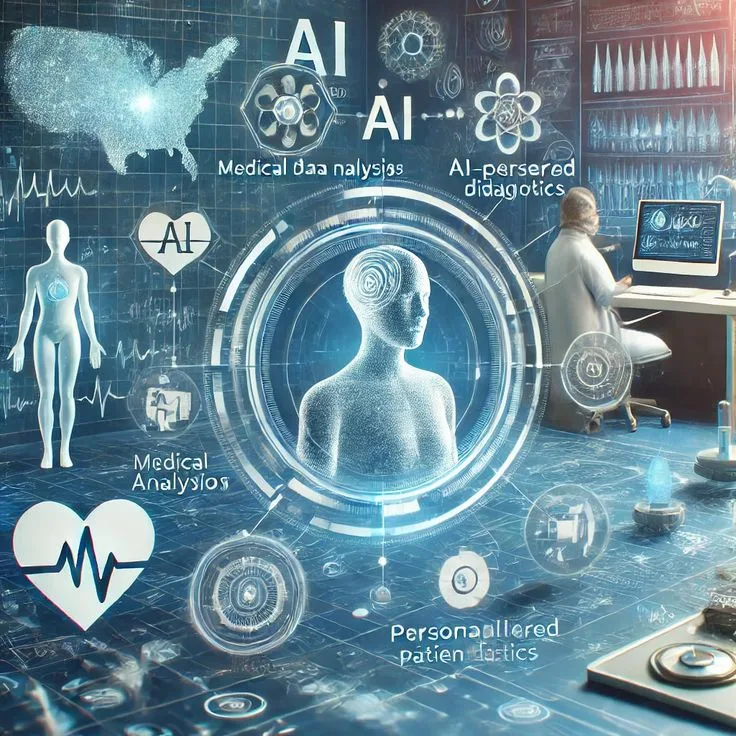
The future of chatbots is not less than exciting. In the near future, chatbots will be connected to wearables which will keep track of heart rate, blood pressure and glucose in real-time.
Consider a virtual assistant, which detects an irregular heartbeat based on your smartwatch and immediately notifies your doctor. The following generation of chatbots will not be as robot-like but as personal health companions.
Advantages of Artificial Intelligence in Diagnostics
How come AI is so rapidly becoming popular? The benefits are overwhelming:
- Speed and Accuracy: Artificial Intelligence is able to analyze test results within seconds, which decreases waiting time.
- Cost Savings: Automated diagnostics reduce the cost of operations.
- Consistency: Artificial Intelligence is consistent and has no human exhaustion or prejudice.
- Patient Satisfaction: TheQuicker Answers implies reduced anxiety and increased treatment.
These advantages are invaluable in a world where time is the factor that keeps one alive or dead.
Challenges and Ethical Concerns
Of course, Artificial Intelligence isn’t flawless. The issue of data privacy also takes the number one spot; patient records should be secured against breakages. The other challenge is algorithmic bias. Without a diverse training data, AI may fail to diagnose underrepresented patients.
The healthcare providers should focus on the principles of transparency and ethics and make sure that Artificial Intelligence supplements human judgment instead of substituting it.
Real-Life Success Stories
There are success cases that demonstrate the potential of Artificial Intelligence all around the world.
- One of the hospitals in India, Apollo Hospitals, predicts heart risk with an accuracy of 90 percent using AI.
- Mayo Clinic uses AI-based imaging to detect rare cancers.
- The application of mobile Artificial Intelligence units to diagnose malaria in rural Africa takes a few minutes, saving lives.
These demonstrations show that Artificial Intelligence is not a hype but it is a life-saving reality.
How Arunangshu Das Guide Us to This
Making technological revolutions are the visionaries who make ideas work. Arunangshu Das has played a key role in demonstrating how Artificial Intelligence-related healthcare can be carried out in a responsible manner.
He coaches hospitals and startups on how to incorporate Artificial Intelligence in diagnostics and virtual care through mentorship, workshops, and consulting. His ideas encourage healthcare leaders to embrace the latest technologies without losing the confidence of patients.
The Road Ahead
In the future, AI will be more personal and predictive. Artificial intelligence will be used to predict diseases even without symptoms and virtual nurses will transform into care coordinators.
Regulation systems will evolve, and the compromise between innovation and safety will be achieved. When used in a prudent manner, Artificial Intelligence will not displace the doctors but grant them the ability to provide superior, prompt, and more equitable care.
Conclusion
It is the future of medicine before us. It is tremendous in the case of AI-based medical imaging, which detects the tiniest abnormalities and Artificial Intelligence-based healthcare chatbots that provide patients with guidance, wherever they are. Since AI is transforming Indian Healthcare, it is very obvious that technology, together with human compassion, can provide impressive results. The following decade offers even greater exciting advances, though it is the matter of responsibility when it comes to Artificial Intelligence and keeping patients central to all innovations.
