


API monitoring tools play an important role in maintaining application performance, reliability, and availability. Businesses rely on APIs to connect applications, exchange data, process payments, and support essential services. Even a minor API failure can disrupt operations, affect customer experiences, and lead to lost revenue. The right API monitoring tools help developers identify performance issues, detect downtime, and resolve errors before they affect users.
With several monitoring solutions available, choosing the right platform can be challenging. Some tools focus on API uptime and response times, while others provide advanced testing, real-time alerts, and application performance insights. This guide explores 10 of the best API monitoring tools to help developers, startups, and businesses maintain reliable API performance in 2027.
Table of Contents
Why Do Businesses Need API Monitoring Tools?
APIs connect different software applications and allow them to communicate efficiently. However, these connections can experience unexpected failures, slow response times, authentication errors, and security issues.
API monitoring helps businesses identify these problems before they affect end users. It continuously checks API endpoints and evaluates their availability, response times, and expected outputs.
Some important benefits include:
- Improved uptime: Identify API downtime and connectivity problems quickly.
- Faster troubleshooting: Detect errors and investigate their possible causes.
- Better performance: Track response times and identify slow endpoints.
- Improved user experience: Maintain reliable communication between applications.
- Proactive alerts: Receive notifications when APIs experience unexpected problems.
10 Best API Monitoring Tools to Consider in 2027
Here are 10 popular solutions that offer different capabilities for monitoring API performance, availability, and reliability.
1. Datadog
Datadog is a popular monitoring and observability platform designed for businesses that need detailed insights into their applications and infrastructure. Its Synthetic Monitoring capabilities allow developers to create automated API tests and monitor endpoints from different geographical locations.
The platform supports HTTP, SSL, DNS, WebSocket, TCP, and other testing options. Developers can also create multi-step API tests to monitor complex workflows.
Key features:
- Automated API testing and monitoring.
- Real-time alerts and performance tracking.
- Global testing locations.
- Integration with application performance monitoring.
- Multi-step API testing.
Datadog is particularly suitable for enterprises and development teams managing complex applications. However, its extensive features may be more than smaller businesses require.
Website: https://www.datadoghq.com/
2. Postman
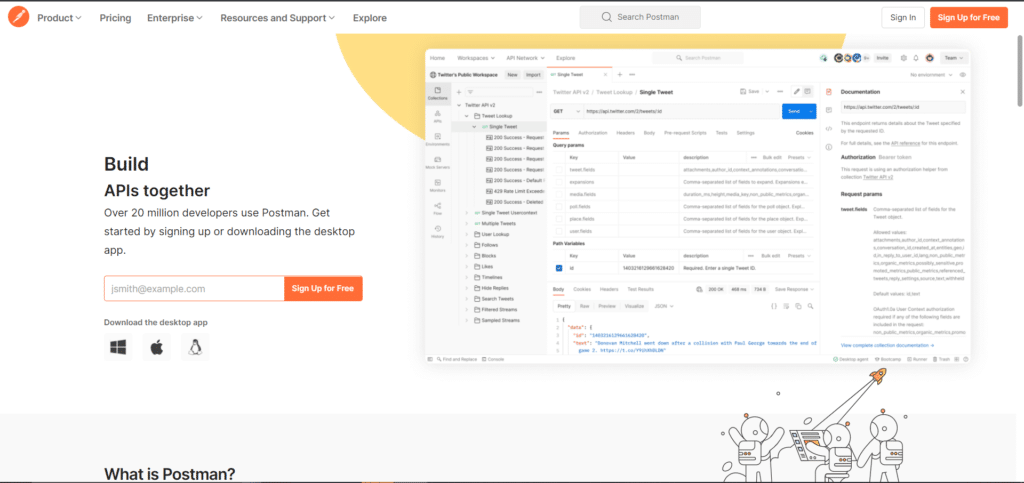
Postman is widely known for API development and testing, but it also provides monitoring capabilities through Postman Monitors. Developers can schedule automated requests to check whether APIs are functioning correctly.
The platform allows teams to reuse existing API collections and test scripts for continuous monitoring. It also provides information about response times, failed requests, and performance trends.
Key features:
- Scheduled API monitoring.
- Automated request execution.
- Response-time tracking.
- Multi-region monitoring.
- Integration with development workflows.
Postman is a suitable choice for developers who already use its API development environment and want monitoring capabilities within the same platform.
Website: https://www.postman.com/
3. Checkly
Checkly is a developer-focused monitoring platform that supports monitoring as code. It allows development teams to create API checks using JavaScript and integrate monitoring into their existing development workflows.
One of its major advantages is its ability to connect monitoring activities with CI/CD pipelines. This helps developers identify issues during deployments rather than waiting for customers to report them.
Key features:
- API and browser monitoring.
- Monitoring as code.
- Automated alerts.
- CI/CD integrations.
- Customizable API checks.
Checkly is particularly useful for engineering teams that prefer writing and managing monitoring checks through code.
Website: https://www.checklyhq.com/
4. Better Stack
Better Stack combines uptime monitoring, incident management, and status pages in one platform. It helps businesses monitor their services and identify availability issues without relying on multiple monitoring solutions.
Its monitoring capabilities allow teams to track endpoints, receive alerts, and investigate incidents. Businesses can also create public status pages to communicate service availability with customers.
Key features:
- API and uptime monitoring.
- Incident management.
- Real-time notifications.
- Public status pages.
- Team collaboration.
Better Stack is a good option for startups and growing businesses looking for a straightforward monitoring and incident management solution.
Website: https://betterstack.com/
5. UptimeRobot
UptimeRobot is a user-friendly monitoring platform designed to help businesses track website and API availability. It regularly checks monitored endpoints and sends notifications when a service becomes unavailable.
The platform is particularly useful for small businesses, independent developers, and startups that need basic monitoring without managing a complicated technical environment.
Key features:
- API and website uptime checks.
- Automated downtime notifications.
- Response monitoring.
- Status pages.
- Multiple alert integrations.
UptimeRobot is worth considering for businesses that prioritize availability monitoring and want an accessible starting point.
Website: https://uptimerobot.com/
6. New Relic
New Relic is an observability platform that provides application performance monitoring, infrastructure insights, and synthetic monitoring. Its synthetic monitoring capabilities allow developers to create automated API checks and monitor application behavior.
Teams can use the platform to identify slow requests, detect unexpected errors, and investigate performance issues using application telemetry.
Key features:
- Synthetic API monitoring.
- Application performance monitoring.
- Automated alerts.
- Performance analytics.
- Integration with infrastructure monitoring.
New Relic is particularly suitable for organizations that want to combine API monitoring with broader application performance insights.
Website: https://newrelic.com/
7. Pingdom
Pingdom is a monitoring solution from SolarWinds that helps businesses track website availability and digital performance. It provides uptime checks and synthetic monitoring capabilities that help teams identify service disruptions.
Developers can use Pingdom to monitor important endpoints and receive notifications when services become unavailable or experience performance problems.
Key features:
- Uptime monitoring.
- Response-time tracking.
- Synthetic transaction monitoring.
- Performance alerts.
- Website performance insights.
Pingdom is a practical option for businesses that want to monitor website availability alongside important API-dependent services.
Website: https://www.pingdom.com/
8. Site24x7
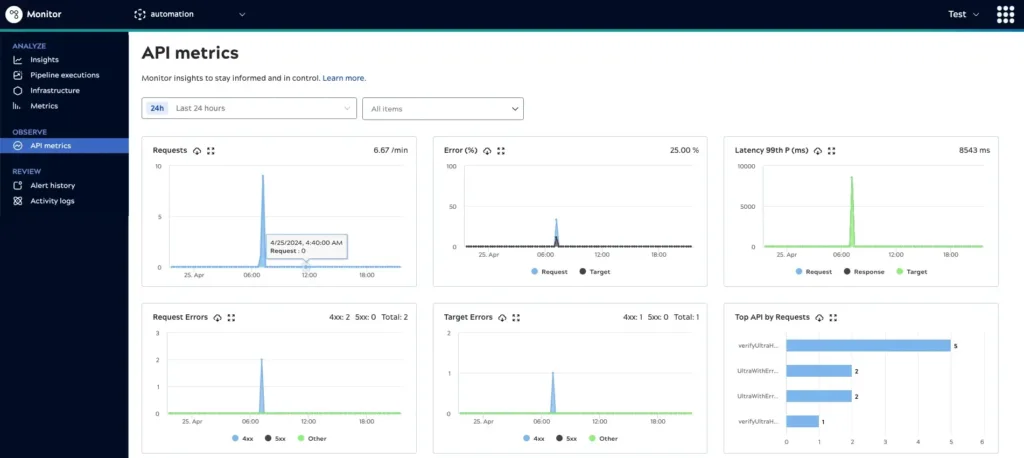
Site24x7 provides a comprehensive monitoring platform covering APIs, websites, servers, cloud infrastructure, and network performance.
Its REST API monitoring capabilities allow developers to check endpoint availability, response times, and API transaction performance. It also supports multi-step API monitoring for workflows that involve multiple requests.
Key features:
- REST API monitoring.
- Multi-step API transactions.
- Global monitoring locations.
- Response-time tracking.
- Infrastructure monitoring.
Site24x7 is a suitable option for IT teams that want to manage API and infrastructure monitoring through a centralized platform.
Website: https://www.site24x7.com/
9. Uptrends
Uptrends is a synthetic monitoring platform that helps businesses monitor websites, APIs, and digital services from multiple locations.
Its API monitoring capabilities allow developers to test endpoints, validate responses, and monitor multi-step transactions. This makes it useful for identifying problems that may occur in different geographical regions.
Key features:
- API endpoint monitoring.
- Multi-step API testing.
- Global monitoring locations.
- Performance alerts.
- SSL and availability monitoring.
Uptrends is worth considering for businesses that operate internationally and need visibility into API performance across different regions.
Website: https://www.uptrends.com/
10. Grafana Cloud
Grafana Cloud provides monitoring and observability capabilities for development and operations teams. It supports synthetic monitoring, allowing businesses to check API availability and performance through automated tests.
Its integration with the broader Grafana ecosystem makes it useful for teams that want to visualize monitoring information through dashboards and combine different sources of operational data.
Key features:
- Synthetic API monitoring.
- Custom monitoring dashboards.
- Performance visualization.
- Alerting capabilities.
- Integration with the Grafana ecosystem.
Grafana Cloud is particularly useful for technical teams that want flexible monitoring and data visualization capabilities.
Website: https://grafana.com/
How to Choose the Right API Monitoring Software
Selecting the right API monitoring software depends on your business requirements, technical environment, and monitoring budget. Before choosing a platform, consider the following factors:
1. Monitoring capabilities: Look for tools that monitor API availability, response times, status codes, and response content. Advanced monitoring may also include multi-step workflows.
2. Real-time alerts: Choose a platform that sends timely notifications through email, messaging applications, or other integrations when problems occur.
3. Integration options: Check whether the software integrates with your existing development tools, CI/CD pipelines, and observability platforms.
4. Scalability: Select a solution that can handle increasing API requests, additional endpoints, and growing infrastructure requirements.
5. Pricing: Compare free plans, usage limits, and paid subscriptions before making a decision. Some platforms charge according to the number of monitoring checks, while others use user-based or usage-based pricing.
Conclusion
Reliable APIs are essential for modern applications, and continuous monitoring helps businesses maintain their performance and availability. The right solution depends on the complexity of your infrastructure and the level of monitoring you require.
Datadog and New Relic are strong options for businesses seeking broader observability, while Postman and Checkly are suitable for developer-focused workflows. UptimeRobot and Better Stack offer accessible monitoring options for smaller teams.
Before investing in a platform, evaluate its monitoring capabilities, integrations, alerting features, and pricing. Choosing the right API monitoring solution can help reduce downtime, improve application reliability, and deliver a better experience to users.
Frequently Asked Questions (FAQs)
1. What are API monitoring tools?
API monitoring tools are software solutions that continuously check API endpoints to evaluate availability, response times, errors, and performance. They help developers identify problems and maintain reliable communication between applications.
2. Which is the best API monitoring tool?
Datadog, Postman, Checkly, New Relic, and Better Stack are popular options. The best choice depends on your requirements, such as automated testing, uptime monitoring, application observability, and budget.
3. Are there any free API monitoring tools?
Yes. Several platforms offer free plans or limited free usage, including UptimeRobot, Postman, Checkly, Better Stack, and New Relic. Their free-tier features and usage limits vary.
4. What is the difference between API monitoring and API testing?
API testing checks whether an API works correctly under specific conditions, while API monitoring continuously evaluates its availability and performance over time. Both practices help developers maintain reliable applications.
