


Every entrepreneur enjoys watching their business grow online. Seeing more website visitors, social media followers, likes, and shares can feel like a sign of success. However, these numbers don’t always translate into higher revenue or business growth. Many startups and businesses fall into the trap of tracking vanity metrics—numbers that look impressive but have little impact on actual sales performance.
If your social media engagement is increasing while your sales remain flat, it’s time to shift your focus. Instead of chasing vanity metrics, successful businesses rely on Sales KPIs (Key Performance Indicators) that measure real business outcomes, such as conversion rates, customer acquisition costs, revenue growth, and customer retention. In this blog, you’ll learn what vanity metrics are, why they can be misleading, and which Sales KPIs you should track to make smarter, data-driven decisions that drive sustainable business growth.
What Are Vanity Metrics?
Vanity metrics is the name of the type of data that might seem impressive but does not show the real state of a business. They provide a pretense of improvement that will not affect your bottom line.
Examples include:
- Number of followers in social media.
- The app downloads inactive users.
- Traffic on the websites without any conversions.
- Open rates of email messages that do not include a click through.
Such figures can be used in investor presentations or brand boasting, but they do not give you a clue as to whether your business is profitable or viable.
Why Startups Fall for Vanity Metrics
Vanity measures are a very strong psychological draw. The increased number in the bank accounts enhances the morale and hopefulness – particularly when starting the business. It seems to be progress, yet very frequently it is a deception.
The attention is synonymous with growth by many founders. The issue though is, Are these likes and clicks becoming customers? Otherwise, it is just a superficial growth.
The Problem with Vanity Metrics
Measurements of vanity are dangerous since they:
- Bias decision-making: You can increase the strategies that do not bring returns but appear effective.
- Sell trash advertising: Advertisements might not make the customers, only the clicks.
- Delay course correction: Before you even know that something is wrong, the resources are exhausted.
Simply put, vanity metrics are reassuring – but they will not pay salaries or create sustainable businesses.
Which KPI Is Most Likely to Be a Vanity Metric?
The question that arises is what KPI would most likely be a vanity metric? Here are the usual suspects:
- Website Visits: This number is of no use without the analysis of bounce rate or conversion rate.
- Social Engagement: Likes, comments, and shares will not translate to revenue.
- App Downloads: When you have users who download the app and do not use it, the metric becomes useless.
These KPIs may be very attractive in a pitch deck but usually create false optimism. A more viable solution is to go further and look at the behavioral measurements such as time spent, retention, or purchases.
Actionable Metrics: The Real Game-Changers
Whereas vanity metrics give you an idea of what has occurred, actionable metrics give you an idea of why it occurred, and what you can do about it.
Measurement of actionable information can give information about user behavior, effectiveness of the campaign, and profitability. They provide answers to such crucial questions as:
- What is the cost of acquiring a customer?
- What is the lifetime value of such a customer?
- What is our efficiency in converting leads?
These are the sales KPIs that do count as they have a direct relationship with the revenue and growth.
Core Sales KPIs That Actually Matter
1. Revenue Growth Rate
The eventual measure of your success. It indicates the growth of your sales with time and the efficiency of the scaling of your business.
2. Customer Acquisition Cost (CAC)
This KPI indicates the amount of expenditure made to acquire a paying customer. When the CAC is extremely high in relation to revenue, you should use an optimization of your business model.
3. Customer Lifetime Value (CLV)
CLV approximates the amount of the revenue one customer creates during their lifetime with your brand. Great CLV indicates that you are generating a long-term commitment.
4. Conversion Rate
This ratio is used to determine the number of leads or visits that result in paying clients. When the conversion rate is low, that is usually an indication that there is something wrong with your funnel, messaging, or offer.
5. Sales Cycle Length
The shorter the sales cycles, the faster the cash flow and efficiency. The longer ones might indicate something tricky in the process of your work or unbalanced targeting.
Bonus Metrics Worth Tracking
Besides the basic sales KPIs, there are certain bonus metrics that will enable you to maximize growth further:
- Churn Rate: What percentage of customers cease to use your product or service?
- Lead-to- Customer Ratio: It assists in identifying the quality of your leads.
- Average Deal Size: It can be used in sales forecasting and revenue planning.
As a collective, these metrics give a full picture of the performance of the business.
The Role of Technology in Tracking KPIs
The use of modern analytics tools is easy to track KPI, but it has its own challenges. An example is that the visualization of data on dashboards is less reliable when rendered by a web browser which may distort the information to give inconsistent reports.
That is why it is significant to use reliable tools such as Google Analytics, HubSpot, or Salesforce – and make sure that data would be updated in various devices. Technology assists you in overcoming the vanity metrics by converting the raw numbers into something meaningful.
How Chatbots Boost More Sales
Automation is a significant boost in conversions in the current digital ecosystem. Chatbots Boost More Sales by:
- Providing real-time answers to prospective consumers.
- Directing the customer through the purchase.
- Collecting leads 24/7
- Giving customer behavior information.
They are your online sales assistants – they are talking to customers when you and your human sales team are off. Simply put, chatbots do not only increase engagement, but they lead to action.
Building a Data-Driven Sales Strategy
Evidence based plans assist you in shifting off intuition to accuracy. You make evidence-driven decisions instead of making decisions based on gut feeling.
Start by:
- Setting clear sales goals.
- Measuring performance using actionable KPIs.
- Modification of campaigns in accordance with the performance.
By matching your marketing and sales data, you are able to anticipate the needs of the customers, minimize the churn, and enhance profitability.
KPIs for Exit Strategies for Indian Startups
Planning Exit Strategies for Indian Startups? Vanity metrics are the bane of your existence then. Investors and acquirers concentrate on measures indicating actual business worthiness – not social media buzz.
Some investor-focused KPIs include:
- Annual Recurring Revenue (ARR)
- Profit margins
- Customer retention rates
- Debt-to-equity ratio
Startups with a balanced relationship between profitability and growth have higher chances of getting good exit opportunities.
Crowdfunding Platforms and KPI Tracking
When raising capital on Crowdfunding Platforms it is even more important to know your KPIs. You can be easily distracted by the amount of campaign shares or likes, however, what is really important are:
- Number of contributors
- Average contribution size
- Transformation of campaign page visits.
You must not pursue viral fame, you should pursue meaningful engagement that will lead to success in terms of funding.
Track Sales KPIs That Drive Real Business Growth

Arunangshu Das is a business strategist and mentor who stresses the importance of being clear with data to grow. He assists entrepreneurs in identifying and following the KPIs that have the highest value — acquisition up to retention.
His strategy is such that startups will not be victims of the vanity metrics but rather work on measurable impact. Arunangshu Das can bring businesses to sustainable levels of scalability, rather than merely temporary publicity, through organised analytics and intelligent thinking.
Creating a Balanced Sales Dashboard
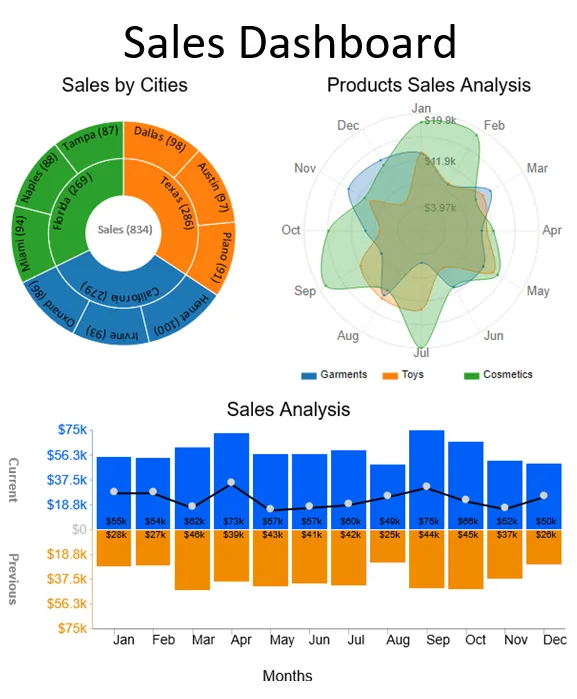
An excellent sales dashboard has an equal ratio of both performance measurements and efficiency measures. Include:
- Monthly revenue
- Conversion rates
- CAC vs CLV ratio
- Customer satisfaction rating
Avoid clutter. Be clear and contextual – a good dashboard must convey what is happening in your business immediately. Periodic reviews assist you to keep along with long-term objectives.
Conclusion
Measures of vanity are shiny objects, they can impress people but they do not make you develop. Tracking the sales KPIs that really matter can bring sustainable success- those ones that are directly linked to the conversions, profitability, and customers loyalty.
The second time you have a celebration when you have reached a milestone, ensure that it is a milestone that will make a difference in your revenue and not just your ego. Ultimately, it is not being popular that makes one business grow; it is being profitable.
1. What are vanity metrics in business?
Vanity metrics are artificial figures such as followers or impressions that appear to be impressive but do not translate into actual business growth.
2. Why are vanity metrics dangerous for startups?
They also deceive founders to believe that their business is expanding yet the sales and profits are not increasing.
3. Which KPI is most likely to be a vanity metric?
Such metrics as the visits to the websites, the installations on the apps, the interactions on the social media, etc. often belong to this category.
4. How can chatbots improve sales KPIs?
Chatbots increase interaction, automatization of replies and lead to customer conversion in a more effective fashion.
5. What metrics should startups focus on for real growth?
Target conversion rate, CAC, CLV, churn rate and revenue growth – these are the metrics that actually influence your bottom line.
