


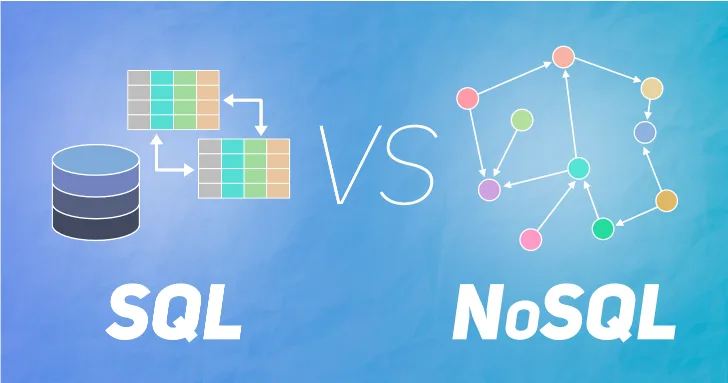
SQL vs NoSQL database hosting is an important comparison for developers, startups, and businesses choosing the right database infrastructure for their applications. Both technologies offer different ways to store, organize, and manage information, but their structures, scalability, performance, and hosting requirements can vary significantly.
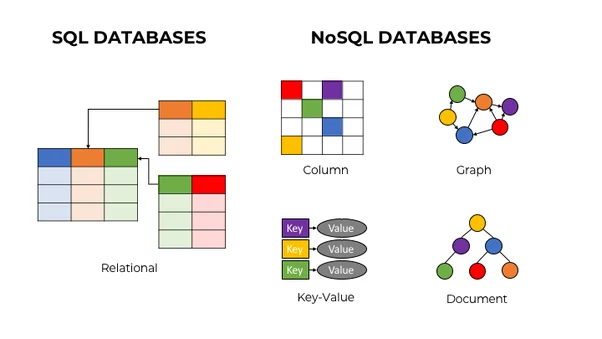
SQL databases are designed around structured data and relational tables, making them suitable for applications that require consistent transactions and complex queries. NoSQL databases support flexible data models, including documents, key-value pairs, and wide-column structures, making them useful for applications handling diverse or rapidly changing information.
Choosing the right database technology can affect application performance, infrastructure costs, and future scalability. In this guide, we compare SQL and NoSQL database hosting, explain their key differences, and explore the best hosting options for different business requirements.
Table of Contents
What Is SQL Database Hosting?
SQL database hosting refers to running relational database management systems on cloud infrastructure, virtual private servers, or dedicated servers.
SQL databases organize information into structured tables containing rows and columns. They use Structured Query Language (SQL) to retrieve, insert, update, and manage data.
Popular SQL database technologies include:
- MySQL
- PostgreSQL
- MariaDB
- Microsoft SQL Server
- Oracle Database
For example, an eCommerce website can use a relational database to manage customer accounts, product information, inventory, and orders. Relationships between tables help maintain consistency across different types of business information.
Key Features of SQL Databases:
- Structured data storage.
- Relationships between database tables.
- Support for complex queries and joins.
- Transaction management and ACID properties.
- Well-established tools for reporting and analytics.
SQL database hosting is commonly used for financial applications, eCommerce platforms, content management systems, and business applications.
What Is NoSQL Database Hosting?
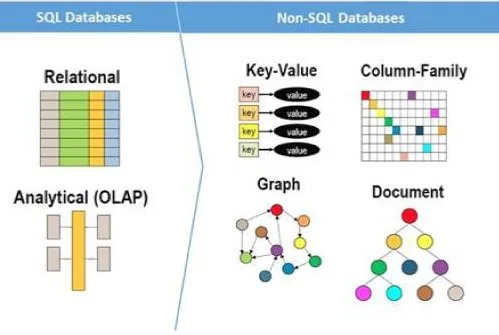
NoSQL database hosting refers to running non-relational database systems on cloud platforms or private infrastructure.
Unlike traditional relational databases, NoSQL databases support different data models, including documents, key-value pairs, wide-column stores, and graphs.
Popular NoSQL databases include:
- MongoDB
- Redis
- Apache Cassandra
- Amazon DynamoDB
- Neo4j
For example, a social media application may use a document database to store user profiles, posts, comments, and other information with flexible structures.
Key Features of NoSQL Databases:
- Flexible data models.
- Support for semi-structured and unstructured data.
- Horizontal scaling capabilities in many systems.
- Distributed database architectures.
- Flexible storage for changing application requirements.
NoSQL database hosting is useful for applications that handle large volumes of diverse data or require flexible data structures.
SQL vs NoSQL Database Hosting: Key Differences
Although both technologies store and manage information, their architectures and capabilities differ.
1. Data Structure
The biggest difference between SQL and NoSQL databases is how they organize information.
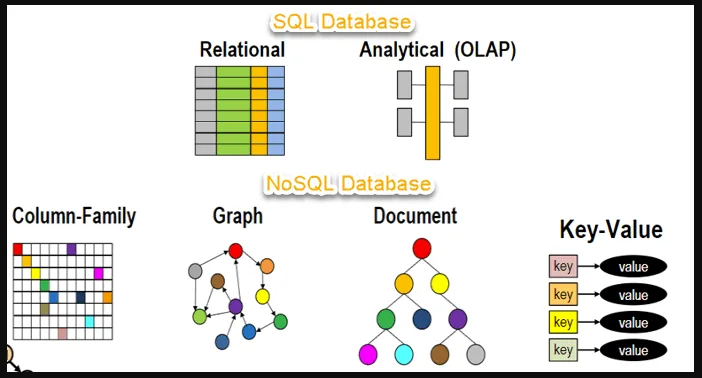
SQL databases use predefined schemas and relational tables. Each table contains specific columns, and relationships connect different tables.
NoSQL databases support more flexible structures. For example, MongoDB stores information in JSON-like documents, allowing different records to contain different fields.
Winner: SQL is suitable for highly structured data, while NoSQL is better when application data structures frequently change.
2. Performance and Query Processing
SQL databases are designed to handle structured queries, relationships, and complex transactions. They are particularly useful for applications that require joins and consistent data management.
NoSQL databases can provide efficient access patterns for specific workloads, especially when data is stored in a structure optimized for the application’s queries.
However, performance depends on database design, indexing, hardware resources, query patterns, and configuration. Neither technology is automatically faster in every situation.
Winner: SQL works well for complex relational queries, while NoSQL can be advantageous for specific high-volume and flexible data workloads.
3. Scalability
SQL databases traditionally rely heavily on vertical scaling, where additional CPU, memory, and storage resources are assigned to a database server. Many modern relational databases also support replication, partitioning, and horizontal scaling techniques.
NoSQL databases are often designed with distributed architectures and horizontal scaling in mind. This allows workloads to be distributed across multiple servers when the database supports it.
Winner: NoSQL often offers convenient horizontal scaling, although modern SQL platforms can also scale effectively.
4. Data Consistency and Transactions
SQL databases commonly support ACID transactions, which help maintain data consistency during operations.
ACID stands for:
- Atomicity
- Consistency
- Isolation
- Durability
NoSQL databases vary in their consistency and transaction models. Some support strong consistency and multi-document transactions, while others offer different consistency guarantees depending on configuration.
Winner: SQL is a natural choice for applications requiring complex relational transactions. However, modern NoSQL systems can also provide strong transactional guarantees.
5. Flexibility
SQL databases generally require a predefined schema, making them suitable for applications with clearly defined data structures.
NoSQL databases offer greater flexibility when records have changing or different structures.
For example, an application that stores different product attributes across multiple categories may benefit from a document-oriented database.
Winner: NoSQL offers more flexibility for frequently changing data structures, while SQL provides a structured approach to data management.
6. Cost and Hosting Requirements
The cost of SQL and NoSQL database hosting depends on database size, computing resources, storage, traffic, licensing, and administrative requirements.
Open-source options such as PostgreSQL, MySQL, and MongoDB Community Server can reduce software licensing expenses.
Managed hosting services may charge for computing resources, storage, backups, and additional management features.
SQL databases can be relatively straightforward to host for smaller applications. Distributed NoSQL deployments may require additional infrastructure and configuration, although managed services can simplify administration.
Winner: Neither technology is universally cheaper. The most affordable option depends on workload requirements and infrastructure design.
SQL vs NoSQL Database Hosting Comparison
The following table summarizes the major differences.
| Feature | SQL Databases | NoSQL Databases |
|---|---|---|
| Data structure | Relational tables | Documents, key-value, graph, etc. |
| Schema | Usually predefined | Often flexible |
| Query language | SQL | Varies by database |
| Transactions | Strong ACID support | Varies by platform |
| Scaling | Vertical and other methods | Often designed for horizontal scaling |
| Relationships | Supports complex joins | Often uses denormalized data or references |
| Best use case | Financial and business applications | Flexible and distributed applications |
| Examples | MySQL, PostgreSQL | MongoDB, Cassandra, Redis |
Best SQL and NoSQL Database Hosting Providers
Choosing a suitable hosting provider is just as important as selecting the database technology.
Best SQL Database Hosting Providers
1. Amazon RDS: Supports MySQL, PostgreSQL, MariaDB, Oracle, and SQL Server with managed administration, backups, and scaling options.
2. Google Cloud SQL: Provides managed MySQL, PostgreSQL, and SQL Server databases with monitoring, backups, and high-availability configurations.
3. DigitalOcean Managed Databases: Offers managed PostgreSQL and MySQL services alongside other database technologies, making it useful for developers and smaller businesses.
4. Microsoft Azure SQL Database: A managed relational database service designed for applications using Microsoft’s SQL Server ecosystem.
Best NoSQL Database Hosting Providers
1. MongoDB Atlas: A managed MongoDB platform offering automated backups, monitoring, scaling options, and multi-cloud deployment.
2. Amazon DynamoDB: A fully managed serverless NoSQL database designed for applications requiring flexible data storage and low-latency access.
3. Aiven: Provides managed open-source database services, including technologies such as Kafka and other data infrastructure tools.
4. Redis Cloud: Offers managed Redis database infrastructure for caching, real-time applications, and low-latency data access.
Which Is Better: SQL or NoSQL?
There is no universal winner because both technologies are designed for different requirements.
Choose SQL databases if your application:
- Handles financial transactions or structured business records.
- Requires complex queries and table relationships.
- Needs strong transactional consistency.
- Uses predefined data structures.
Choose NoSQL databases if your application:
- Handles large volumes of diverse information.
- Requires flexible data structures.
- Needs distributed storage and horizontal scaling.
- Supports real-time applications or high-volume data access.
For example, an online banking application may benefit from PostgreSQL because of its relational capabilities and transactional features. A content platform with flexible document structures may benefit from MongoDB.
Some businesses also use both technologies in the same application. This approach is called polyglot persistence, where different databases handle different workloads.
Frequently Asked Questions (FAQs)
1. Which is better for database hosting: SQL or NoSQL?
SQL is generally better for structured data, complex relationships, and transactional applications. NoSQL is useful for flexible data models and distributed workloads. The right option depends on application requirements.
2. Is NoSQL faster than SQL?
Not always. NoSQL databases can perform efficiently for specific workloads, but SQL databases can also deliver excellent performance. Database design, indexing, hardware, and query optimization matter more than the technology label alone.
3. Can I host SQL and NoSQL databases on the same server?
Yes. You can install multiple database systems on the same server if sufficient resources are available. However, separate infrastructure may be preferable for performance isolation, security, and easier scaling.
4. Which database is best for small businesses?
MySQL and PostgreSQL are popular choices for small businesses with structured data requirements. MongoDB can be useful for applications requiring flexible document storage. Consider technical expertise, hosting costs, and application needs before deciding.
Conclusion
SQL and NoSQL databases offer different approaches to storing and managing application data. SQL databases are suitable for structured information, relational queries, and transactional workloads, while NoSQL databases provide flexible data models and support distributed application architectures.
When comparing SQL vs NoSQL database hosting, focus on your application’s data structure, performance requirements, scalability needs, and budget.
MySQL and PostgreSQL are excellent starting points for many traditional business applications, while MongoDB and DynamoDB are worth considering for flexible and distributed workloads. Choosing the right technology and hosting provider can help build a reliable database infrastructure that supports long-term application growth.
