


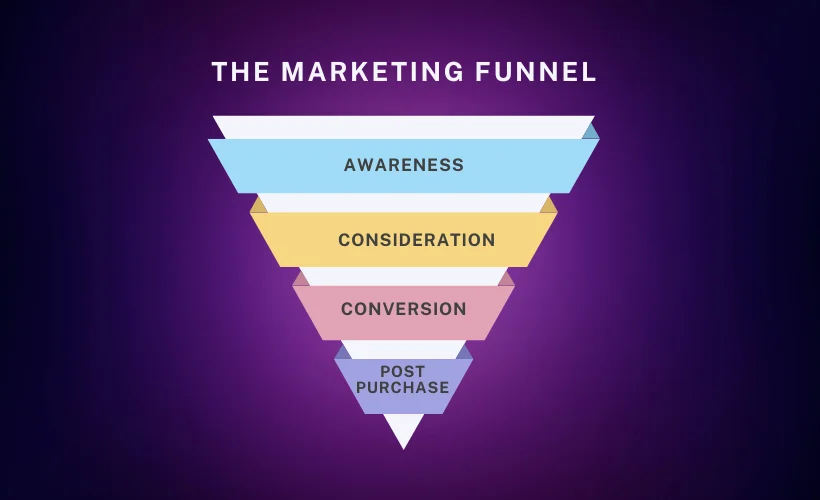
Marketing funnels that convert in 2026 look nothing like the classic funnel you learned in business school. The old model—Awareness, Interest, Desire, Action (AIDA)—assumed a linear world where customers moved predictably from first touch to purchase. That world is dead. Today’s buyers jump between TikTok, Reddit, LinkedIn, ChatGPT search, and your website in random order. They trust peer reviews over ads. They ignore email sequences. The marketing funnels that convert in 2026 are non-linear, AI-optimized, and built on micro-commitments.
According to a 2026 Gartner study, companies that have redesigned their funnels for modern buyer behavior see 3x higher conversion rates than those still using 2019-era funnels. This guide reveals the marketing funnels that convert in 2026, including the five new stages, the metrics that matter, and the specific tactics that turn strangers into paying customers. Whether you sell a $50 product or a $50,000 service, these high-converting funnels will double your conversion rates.
Table of Contents
Marketing Funnels That Convert in 2026: The 5 New Stages
Let’s break down the marketing funnels that convert in 2026 stage by stage. Each stage has a specific goal, tactic, and success metric. Do not skip stages—modern buyers need all five.
Stage 1: Zero-Click Discovery
The first stage of marketing funnels that convert in 2026 is zero-click discovery. In the past, you needed a click to start the funnel. Today, 65% of informational searches end in AI-generated answers (Google SGE, Perplexity, ChatGPT) without any clicks. Your brand must appear in those answers even if the user never visits your site.
To build high-converting funnels that work in 2026, you must optimize for Generative Engine Optimization (GEO). Write self-contained, attributable sentences with sources and dates. For example: “According to a 2026 Gartner study, companies using AI for lead scoring see 34% higher conversion rates.” When an AI engine cites your brand, you enter the funnel at stage one—zero clicks required.
Success metric: Citation frequency (how often your brand appears in AI answers for target queries).
Stage 2: Micro-Commitment
The second stage of marketing funnels that convert in 2026 replaces the old “newsletter signup.” Modern buyers will not give you their email for a generic newsletter. They will, however, make micro-commitments: taking a quiz, using a free tool, watching a 2-minute video, or saving a template.
The modern marketing funnel strategy uses micro-commitments to build trust gradually. Examples:
- “Take our 5-question SEO audit” (results in 30 seconds)
- “Try our free headline generator” (no email required)
- “Watch our 90-second explainer video” (no form)
- “Save our ROI calculator” (requires only an email for results)
The marketing funnels that convert in 2026 collect low-friction data first, then ask for email. Conversion rates from micro-commitment to email are 40-60%, compared to 5-15% from “Subscribe to our newsletter.”
Success metric: Micro-commitment completion rate (target: >30% of visitors).
Stage 3: Value-First Lead Magnet
The third stage of marketing funnels that convert in 2026 is the value-first lead magnet. Old funnels offered “10 tips” PDFs. New funnels offer immediate, usable value: a personalized report, a live demo, a free consultation, or a trial of your product.
To build high-converting funnels, your lead magnet must solve a specific problem in under 10 minutes. For a social media tool, offer “a personalized content calendar for your niche.” For a CRM, offer “a 5-minute pipeline audit with specific recommendations.” Generic ebooks no longer work.
The modern marketing funnel strategy also includes “reverse lead magnets”: give value before asking for anything. Post a detailed “how-to” thread on LinkedIn or Reddit. At the end, say “I turned this thread into a workbook—DM me for the PDF.” This passive approach converts 5-10% of readers.
Success metric: Lead magnet conversion rate (target: >25% of micro-commitment users).
Stage 4: AI-Powered Nurturing
The fourth stage of marketing funnels that convert in 2026 replaces batch-and-blast email sequences with AI-powered personalization. Old funnels sent the same email to everyone on day 3, day 7, and day 14. New funnels use high-converting funnels AI to send different messages based on behavior.
Examples of AI nurturing in marketing funnels that convert in 2026:
- If a lead visited your pricing page but didn’t buy → send a case study
- If a lead downloaded a features guide → send a demo invite
- If a lead opened 5 emails but didn’t click → send a discount code
- If a lead went dark for 30 days → send a “We miss you” survey
Tools like HubSpot AI, ActiveCampaign, and Customer.io now include predictive lead scoring. They tell you which leads are most likely to convert so you can prioritize. The modern marketing funnel strategy uses AI to send the right message at the right time, not more messages.
Success metric: Email open rate (target: >40%) and click-through rate (target: >10%).
Stage 5: Friction-Free Conversion
The final stage of marketing funnels that convert in 2026 is friction-free checkout. Every extra click, form field, or page load drops conversion rates by 15-20%. To build high-converting funnels, remove every barrier.
Specific tactics for stage five:
- Offer “Pay with Apple Pay / Google Pay / Shop Pay” (1-click checkout)
- Remove “create an account” (guest checkout only)
- Use Stripe Checkout or ReCharge (no redirects)
- Offer payment plans (4 monthly payments instead of 1 annual payment)
- Add a money-back guarantee prominently (reduces risk)
The marketing funnels that convert in 2026 also include post-purchase upsells. After checkout, offer a related product at 50% off (“Add our pro template pack for $19 instead of $39”). One-click upsells increase average order value by 20-35%.
Success metric: Checkout abandonment rate (target: <20%) and average order value (target: increasing monthly).
How to Build Marketing Funnels That Convert in 2026
Now that you understand the five stages, here is a step-by-step process to build marketing funnels that convert in 2026 for your business.
Step 1: Map your current funnel. Where do you lose people? Zero-click discovery (no AI citations)? Micro-commitments (low quiz completion)? Lead magnet (low email capture)? Nurturing (low open rates)? Checkout (high abandonment)? Your biggest leak is your first fix.
Step 2: Fix one stage at a time. Do not rebuild everything. Run a 30-day experiment on the weakest stage. For example, if your checkout abandons at 50%, add Apple Pay and a guarantee. Measure the change.
Step 3: Add AI nurturing. If you still send the same email to everyone, upgrade to behavioral triggers. Most email platforms include this at no extra cost. Set up 5-10 automation rules.
Step 4: Optimize for zero-click discovery. Publish 10 FAQ pages with self-contained, attributable sentences. Wait 60 days. Measure citation frequency using GEOmetric or PromptPulse.
Step 5: Test micro-commitments. Replace your “Subscribe” popup with a quiz or free tool. Measure the difference in email capture rates.
Common Funnel Mistakes That Kill Conversions in 2026
Avoid these three errors when building marketing funnels that convert in 2026.
Mistake #1: Asking for email too early. Modern buyers will not give their email before receiving value. Use micro-commitments first. The best high-converting funnels delay the ask until after the user has received something useful.
Mistake #2: Ignoring AI search. If your brand never appears in ChatGPT or Perplexity answers, your funnel has no top. Publish GEO-optimized content. Get cited. This is non-negotiable for modern marketing funnel strategy in 2026.
Mistake #3: Treating all leads the same. Batch-and-blast email kills conversion. Use AI to segment by behavior. A lead who viewed pricing is different from a lead who viewed a blog post. Send different sequences.
Measuring Marketing Funnels That Convert in 2026
Track these five metrics weekly for each funnel stage:
- Stage 1 (Zero-click discovery): Citation frequency (brand mentions in AI answers)
- Stage 2 (Micro-commitment): Completion rate (target >30%)
- Stage 3 (Lead magnet): Capture rate (target >25% of micro-commitments)
- Stage 4 (Nurturing): Email CTR (target >10%)
- Stage 5 (Checkout): Abandonment rate (target <20%)
Overall funnel conversion rate = (Purchases / Total visitors) × 100. The marketing funnels that convert in 2026 achieve 3-8% overall conversion, compared to 1-2% for old funnels.
Final Verdict
The marketing funnels that convert in 2026 have five stages: zero-click discovery, micro-commitment, value-first lead magnet, AI-powered nurturing, and friction-free checkout. Old funnels fail because they assume linear behavior and batch communication. New funnels succeed because they adapt to modern buyers who jump channels, trust AI answers, and reward immediate value. Audit your current funnel. Fix one stage at a time. Add AI nurturing. Optimize for zero-click discovery. Within 90 days, your conversion rates will double.
Frequently Asked Questions (FAQs)
Q1: What is the biggest difference between funnels that convert in 2026 vs 2020?
The biggest difference is zero-click discovery. In 2020, funnels started with a click (ad → landing page → email). In 2026, marketing funnels that convert start with a brand mention in an AI-generated answer (ChatGPT, Perplexity, Google SGE). The user may never click, but the brand is now top-of-mind. Later, when the user searches for a solution, they recall your name. Modern high-converting funnels include this “invisible” top stage.
Q2: Do marketing funnels that convert in 2026 work for B2B with long sales cycles?
Yes, but the stages stretch over weeks or months instead of days. For B2B modern marketing funnel strategy, Stage 2 (micro-commitment) might be “download a white paper.” Stage 3 (value-first lead magnet) might be “book a 15-minute discovery call.” Stage 4 (AI nurturing) might be a 6-email sequence with case studies and ROI calculators. Stage 5 (friction-free checkout) might be “one-click contract signing with Stripe.” The structure is the same; the timeline is longer.
Q3: How much does it cost to build marketing funnels that convert in 2026?
Micro-commitment and checkout improvements show results in 7-14 days (e.g., adding Apple Pay reduces abandonment immediately). AI nurturing improvements take 30-45 days (enough time to collect behavioral data). Zero-click discovery (GEO optimization) takes 60-90 days for citation frequency to build. Overall, plan a 90-day rollout: month 1 fix checkout and micro-commitments, month 2 add AI nurturing, month 3 optimize for zero-click discovery. The marketing funnels that convert in 2026 deliver full ROI by month 4.
