


In this world of the Internet, information is the new oil—however, raw information is not very valuable. Only in the case of businesses analyzing, interpreting, and acting upon insights derived out of the data it becomes quite powerful. Data analytics has been transformed with the emergence of Artificial Intelligence (AI) and Machine Learning. The use of AI in big data analytics, predictive analytics with AI and AI business intelligence tools has become essential in modern businesses to enable them make smarter, faster and more accurate decisions.
The blog will discuss the ways organizations are transforming large volumes of data into practical insights through AI, machine learning in data analysis, and deep learning methods. We will also address the question of whether AI is utilized responsibly, how data-driven decision making involving AI is transforming industries and even address the question that is debated so much- Could Artificial Intelligence be Dangerous?
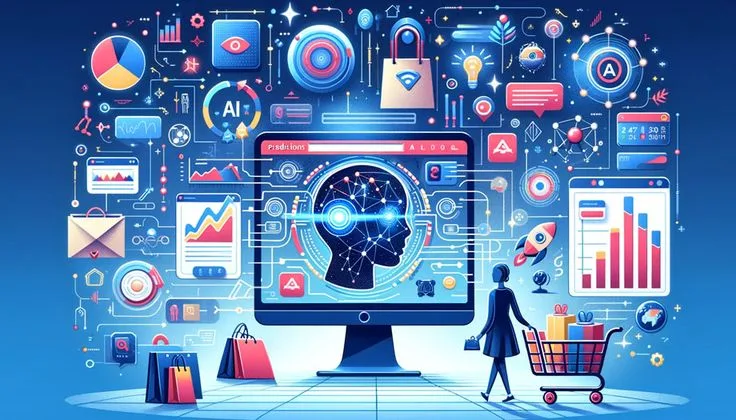
1. The Shift from Traditional Analytics to AI-Powered Analytics
The conventional data analytics were based on passive dashboards, hand-based interpretation and small-scale computing capabilities. This was effective in times when the amounts of data were lower. However, due to the burst of the internet, social media, IoT devices, and mobile applications, businesses are currently overwhelmed with petabytes of data.
Here’s where AI steps in. Compared to the conventional models, AI systems have the ability to work with large volumes of data in real-time, identify trends that humans can easily overlook, and create useful information almost immediately. To stay with a retail firm, AI business intelligence tools can be applied to anticipate customer purchasing behavior, optimize the inventory, and enhance the efficiency of the supply chain- without having to wait weeks to receive a report.
Additionally, AIs are self trained. In the case of machine learning in data analysis, the more they feed on, the smarter and more accurate they get. This transformation not only helps a business look at what has already occurred, but what will occur in the future.
2. Predictive Analytics with AI: Anticipating the Future
One of the most useful uses of AI has been predictive analytics. Through predicting the future using past trends and real time data, AI is able to make predictions with stunning precision.
As an example, financial institutions apply predictive analytics to AI to evaluate credit risks, identify fraudulent activities, and even predict movements of the stock market. Medical institutions use AI to predict disease outbreaks or determine patients who can have chronic conditions.
Predictive analytics goes a notch higher with the incorporation of deep learning and even more. The deep learning models have the ability to identify more complicated patterns, like the customer sentiment based on their posts on social media, and how a consumer will respond to a product introduction.
Such a skill to foresee the future makes businesses reactive rather than proactive. Companies are not just able to react to challenges but proactively avoid them in advance- saving money, enhancing customer experiences and making a maximum increase in profits.
3. AI Business Intelligence Tools: Empowering Smarter Decisions
Business intelligence has never been any different: it is gathering data and making meaning out of it. The sizes and types of modern datasets construction, be it structured or unstructured and real-time, have placed it almost impossible to depend on the traditional BI tools.
Introducing AI business intelligence tools. These are new advanced platforms that combine Artificial Intelligence, Machine Learning, Deep Learning and Beyond to deliver automated reporting, create insights and even offer natural language queries. This means that managers can just pose the question of what our best selling products last month were and they can retrieve this information immediately without having to browse through spreadsheets.
Microsoft Power BI that has AI integration, Tableau with natural language processing, and IBM Watson Analytics are some of the most popular AI-based BI tools. The tools enable the decision-makers to cut the time spent in data wrangling and augment attention on strategic planning.
The end result? The implementation of AI-based BI by businesses offers a great competitive edge to them through evidence-based decision making supported by AI, rather than hunch.
4. Machine Learning in Data Analysis: From Insights to Innovation
One of the most radical technologies that is taking shape in business today is machine learning in data analysis. In contrast to rule-based systems, machine learning algorithms are constantly changing as they are continuously taught new information. This will help the businesses unlock the insights that they did not even realize they were searching.
For example:
- E-commerce platforms use recommendation engines powered by machine learning to personalize shopping experiences.
- The logistics companies will optimize the routes of delivering goods in real time, saving costs and carbon footprints.
- Manufacturers anticipate equipment failures in advance helping in reducing the downtime.
As Artificial Intelligence is applied to such cases, data analysis becomes more than mere reporting – it is an innovator. AI and ML do not simply explain to businesses what transpired; instead, they propose the next steps of action.
5. Data-Driven Decision Making with AI: The Future of Business Strategy
The most remarkable implication of AI on analytics may perhaps be the fact that data-driven decision making with AI can now be performed. Decisions are no longer taken on intuition, gut feeling and old information. Businesses instead depend on precise data generated by AI which gives confidence and clarity.
One such great example is in marketing. Marketers no longer operate in the dark but employ AI technologies to find out demographics, online habits, and buying patterns of customers. This will enable them to reach the right audience, at the right time, and with the right message.
Similarly, in operations, AI-driven analytics can forecast demand, optimize supply chains, and allocate resources more efficiently. Even HR departments are using AI to analyze employee performance data, identify retention risks, and improve hiring strategies.
Essentially, AI-driven data analytics enables companies to become more responsive than proactive when it comes to solving problems, as well as strategic visionaries. The industries that the organizations that have mastered this triumph over will rule.
How Arunangshu Das Guide Us to This
Expert advice is important in the process of embracing AI-based analytics. Arunangshu Das has played a leading role in demonstrating how businesses can combine AI in big data analytics, adopt AI business intelligence applications and utilize the power of predictive analytics using AI.
His areas of expertise are in assisting organizations to navigate the complexity of Artificial Intelligence, Machine Learning, Deep Learning, and Beyond so that businesses do not just accumulate data but ultimately convert it to competitive advantage. He closes the digital divide between technology and strategy making companies successful in the data-driven economy.
If you’re looking for a mentor to guide your organization into the future of AI-powered insights, Arunangshu Das is a name you can trust.
Artificial Intelligence Be Dangerous? A Thoughtful Debate
We are rejoicing over the merits of AI in analytics, though, we also need to consider the question: Could Artificial Intelligence be Dangerous?
In the first place, Artificial Intelligence is used to automate routine work, enhance healthcare, fight climatic change, and promote economic growth. However, conversely, when abused, it will lead to ethical, security and employment issues. For example:
- The training data can be biased, and AI algorithms will give unfair results.
- The excessive use of automation may lead to decreased human control.
- The privacy of data is also an issue since AI systems handle personal data.
It is all about responsible development. In the case of ethical application of Artificial Intelligence through transparency, accountability, and fairness, it is a friend and not an enemy. Policymakers, entrepreneurs and AI scientists should collaborate to make AI work out to benefit people.
Conclusion
The future of business is a part of individuals who adopt AI-driven data analytics. Through the use of AI in big data analytics, AI predictive analytics, AI business intelligence analytics, and machine learning in data analysis, businesses will be able to use data to generate actionable insights that drive growth and innovation.
Although such questions as Artificial Intelligence be Dangerous? are not ungrounded, the advantages of the decision making process based on data and AI are much greater than the threat when used responsibly. Companies that embrace AI nowadays will not only continue to exist tomorrow, but they will also succeed in a world where data is the currency of success.
The question was not, then, whether your business is to use AI in analytics. The actual question is: in what time can you start?
1. What is AI and its role in big data analytics?
AI works faster to process large volumes of data, identify the latent trends, and present actionable recommendations that would be impossible on the current analytics tools.
2. How does predictive analytics with AI work?
It applies machine learning models to learn about past and current events and predict future events, including customer behavior or market trends.
3. Is AI business intelligence user friendly?
Yes, More recent AI-based BI applications have friendly user interfaces, natural language queries, and automated reporting, so non-technical users can use them.
4. Is Artificial Intelligence Threatening Analytics?
AI is not harmful, but its use can be dangerous in case of misuse, the absence of transparency, or unethical conduct. There is the importance of responsible development and management.
5. What does Arunangshu Das need to do to assist businesses to embrace AI analytics?
He offers professional advice on how to assign AI tools, deploy machine learning models, and develop mechanisms that can convert raw data into business value.
