


What Makes Agents Long-Running
Long-running AI agents aren’t just chatbots that stop after a few minutes. They are active for hours, days or weeks, managing tasks such as automated customer service, marketing automation or business processes. Recent research suggests that these agents continually process perception, reasoning and action to achieve goals .
They’re more project managers than data clerks. They consider their past actions, monitor progress and respond to new information. For instance, a marketing agent for AI may manage a campaign for several weeks, tracking its effectiveness, tweaking the strategy, and integrating with a CRM and email service.
And this is where the challenge lies. The longer an agent runs, the more information it must keep track of. Without a proper management of state, the agent loses track of what’s already known, takes unnecessary actions or acts inconsistently. So state management is essential to the success of long-running AI.
Why State Management Matters
It’s not just a nice-to-have, state management is essential to AI systems. Without it, it would be like speaking to a chat bot that forgot everything you had said before. Picture an agent that optimizes your marketing funnel, but forgets all your past campaign results – it would be pointlessly inefficient.
To be effective, today’s AI systems need to retain goals, actions and outcomes. Indeed “context rot” occurs when the state handling is poor and results deteriorate over time . This demonstrates the importance of state management in the long run.
Put simply, state management is about your AI agent not only being intelligent, but remaining so.
Core Components of State Management
Memory vs Context vs State
Memory, context and state get mixed up a lot, but they are different things. Context is what information the model can currently see, memory is what shall be used later, and state is what information it can know about.
Let’s simplify it:
| Component | Definition | Example |
| Context | Current input to model | User’s query and data from knowledge base |
| Memory | Stored information | Customer profile |
| State | Workflow progress | Campaign step status |
It is important to understand this difference for building scalable systems. If we mix up these layers then we get unstable and poorly debuggable agents.
Types of Agent Memory
AI agents generally utilise several types of memory:
- Working memory for short-term tasks
- Episodic memory for events
- Semantic memory for facts
- Procedural memory for workflows
This dual memory approach enables agents to act more “human-like” , memorising the important things and forgetting the irrelevant.
Context Management and Retrieval
1. Retrieval-Augmented Generation (RAG)
Context Management and Retrieval is the key element of long-running agents. Agents use retrieval systems to dynamically retrieve information, rather than memorize content within a fixed context window.
RAG systems provide agents with information from external knowledge bases, enabling agents to access much more data than fit in memory. This is crucial because AI agents have limited token counts, and there is an optimal way to include context.
Effective data retrieval ensures that only relevant data is returned, thus enhancing efficiency and accuracy. It’s like having a virtual assistant who can find the right file on your computer without a lengthy search.
2. Context Compression Techniques
With increasing context clues, it needs to be compressed. Methods include summarisation, filtering and extraction.
Studies show that compression that doesn’t preserve information can result in wrong conclusions. So sophisticated information systems mix techniques – maintaining crucial information while summarizing non-critical detail.
Reasoning Loops and Reflection
1. Agent Loop Architecture
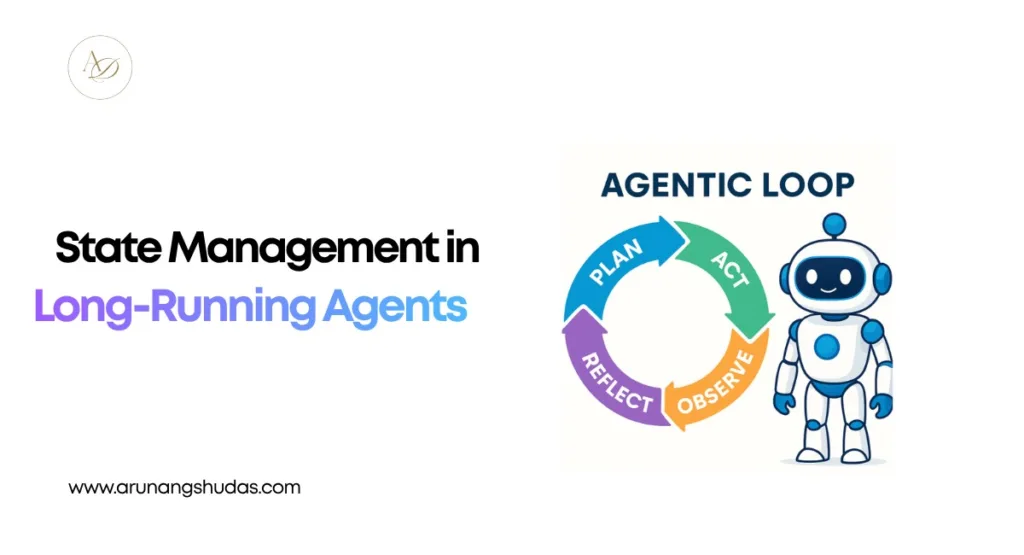
Agents implement Reasoning Loops and Reflection. All AI agents work in a loop of perceive, reason, act, learn .
This enables continuous improvement. For instance, an agent that evaluates marketing will:
- Gather campaign data
- Analyze trends
- Adjust strategy
- Measure results
And repeat until success is achieved.
2. Reflection Mechanisms in Agents
Reflection brings an extra dimension of intelligence. Agents don’t just purely follow rules and instructions; they assess their actions and learn from errors.
Recent breakthroughs demonstrate that reflection-based systems can achieve more than 10% better performance in complex tasks. Reflection is therefore integral to long-running tasks.
Tool Calling for Agents
1. Role of External Tools
As the name implies, Tool Calling for Agents allows agents to use external APIs, databases and apps. Agents without tools can only generate text.
By adding tools, they can:
- Fetch real-time data
- Send emails
- Update CRM systems
- Execute workflows
This makes agents proactively solve problems.
2. Tool-State Persistence
Results of tool calls need to be persisted. Otherwise, the agent could forget what it did or never does anything twice.
Storing tool data guarantees consistency and avoids redundant calculations. This is why we save our game: we don’t want to play all over again.
State Management in Marketing Agents
1. Use Cases in Marketing Automation
Marketing Agents are a powerful use for AI These agents manage campaigns, segment customers, and optimise results.
For instance, a marketing agent can:
- Track user behavior
- Personalize email campaigns
- Optimize ad spend
- Analyze conversion rates
This all demands good state management to ensure campaign continuity.
2. Benefits for Businesses
Businesses benefit from:
- Increased efficiency
- Better decision-making
- Personalized customer experiences
- Scalable operations
Effectively managing state means marketing agents can run on their own and drive ROI.
Challenges in Long-Running Agents
1. Context Rot and Memory Drift
A major issue is context rot. Over time, unnecessary data is introduced, impacting performance.
Research indicates that poor context management results in mistakes and delays. That’s where managing contexts dynamically is crucial.
2. Scalability Issues
Long-running agents scaling requires a balance between cost, speed and accuracy. If not properly designed, they are costly and sluggish.
Best Practices for Effective State Management
1. Hybrid Memory Systems
Use multiple types of memory for flexibility and efficiency. Hybrid systems use storage and retrieval methods.
2. Observability and Governance
Monitoring agent behavior is crucial. Logging, monitoring and auditing are essential for reliability and compliance.
Real-World Example of Agent Workflow
Let’s consider a marketing agent for a product launch. It begins with market analysis, develops a strategy for advertising campaigns, places ads, monitors their effectiveness and optimises the outcomes.
Each phase uses state management for accuracy and consistency.
Expert Guidance by Arunangshu Das
Arunangshu Das offers practical guidance for mastering state management in AI agents. His approach revolves around constructing memory layers, improving Context Management and Retrieval, and effective Reasoning Loops and Reflection cycles.
His principles are valuable because they emphasise scale and business results. Rather than viewing AI as a tool, he shows how Tool Calling for Agents can automate tasks particularly in areas like Marketing Agents where personalization and automation can be combined. His methodologies enable the transition from prototype AI systems to robust, scalable production systems with reliable outcomes.
Conclusion
To build sustainable AI agents, state is crucial. It’s the difference between a coherent and consistent agent, and one that operates without context. Through the integration of memory, efficient information retrieval, reasoning circles and tools, developers can create long-running agents that perform optimally over time.
The future of AI doesn’t just lie in the development of better models, but also better systems that can manage information.
FAQs
1. What do you mean by state management?
It is the management of storing, tracking and reusing information over interactions to provide continuity.
2. Why is context management important?
It helps select the right information, increasing effectiveness and efficiency.
3. What are reasoning loops?
These involve agents perceiving, reasoning, acting and learning in a loop.
4. How do marketing agents manage state?
They track campaigns, analyze performance, and optimize strategies over time.
5. What is tool calling in AI agents?
It enables agents to call external tools, such as APIs, databases and applications.
