
Close Menu
Arunangshu Das Blog
  • SaaS Tools
    • Business Operations SaaS
    • Marketing & Sales SaaS
    • Collaboration & Productivity SaaS
    • Financial & Accounting SaaS
  • Web Hosting
    • Types of Hosting
    • Domain & DNS Management
    • Server Management Tools
    • Website Security & Backup Services
  • Cybersecurity
    • Network Security
    • Endpoint Security
    • Application Security
    • Cloud Security
  • IoT
    • Smart Home & Consumer IoT
    • Industrial IoT
    • Healthcare IoT
    • Agricultural IoT
  • Software Development
    • Frontend Development
    • Backend Development
    • DevOps
    • Adaptive Software Development
    • Expert Interviews
      • Software Developer Interview Questions
      • Devops Interview Questions
    • Industry Insights
      • Case Studies
      • Trends and News
      • Future Technology
  • AI
    • Machine Learning
    • Deep Learning
    • NLP
    • LLM
    • AI Interview Questions
    • All about AI Agent
  • Startup

Subscribe to Updates

Subscribe to our newsletter for updates, insights, tips, and exclusive content!

What's Hot

Securing IoT Devices in Smart Hospitals: A Comprehensive Guide

November 11, 2025

6 Popular Automation Tools and Their Notable Drawbacks

February 23, 2025

5 Best WhatsApp Automation Tools for Businesses

May 27, 2026
X (Twitter) Instagram LinkedIn
Arunangshu Das Blog Friday, September 18
  • Write For Us
  • Blog
  • Stories
  • Gallery
  • Contact Me
  • Newsletter
Facebook X (Twitter) Instagram LinkedIn RSS
Subscribe
  • SaaS Tools
    • Business Operations SaaS
    • Marketing & Sales SaaS
    • Collaboration & Productivity SaaS
    • Financial & Accounting SaaS
  • Web Hosting
    • Types of Hosting
    • Domain & DNS Management
    • Server Management Tools
    • Website Security & Backup Services
  • Cybersecurity
    • Network Security
    • Endpoint Security
    • Application Security
    • Cloud Security
  • IoT
    • Smart Home & Consumer IoT
    • Industrial IoT
    • Healthcare IoT
    • Agricultural IoT
  • Software Development
    • Frontend Development
    • Backend Development
    • DevOps
    • Adaptive Software Development
    • Expert Interviews
      • Software Developer Interview Questions
      • Devops Interview Questions
    • Industry Insights
      • Case Studies
      • Trends and News
      • Future Technology
  • AI
    • Machine Learning
    • Deep Learning
    • NLP
    • LLM
    • AI Interview Questions
    • All about AI Agent
  • Startup
Arunangshu Das Blog
  • Write For Us
  • Blog
  • Stories
  • Gallery
  • Contact Me
  • Newsletter
Home » Software Development » Mastering Network Analysis with Chrome DevTools: A Complete Guide
Software Development

Mastering Network Analysis with Chrome DevTools: A Complete Guide

Arunangshu DasBy Arunangshu DasDecember 25, 2024Updated:August 31, 2026No Comments5 Mins Read
Facebook Twitter Pinterest Telegram LinkedIn Tumblr Copy Link Email Reddit Threads WhatsApp
Follow Us
Facebook X (Twitter) LinkedIn Instagram
Share
Facebook Twitter LinkedIn Pinterest Email Copy Link Reddit WhatsApp Threads
Mastering Network Analysis with Chrome DevTools A Complete Guide

Network performance directly impacts page speed, Core Web Vitals, user retention, and search engine visibility. Google Chrome DevTools provides a built-in suite of diagnostic tools designed to inspect, debug, and optimize network requests in real time.

Understanding how to record requests, evaluate waterfall charts, simulate slow network conditions, and identify high-latency API calls allows developers and technical SEO specialists to isolate performance bottlenecks quickly.

Getting Started: Opening and Navigating the Network Panel

To open the Network panel in Google Chrome:

  • Windows / Linux: Press Ctrl + Shift + I or F12, then select the Network tab.
  • macOS: Press Cmd + Option + I, then click Network.
  • Context Menu: Right-click anywhere on the webpage and select Inspect.
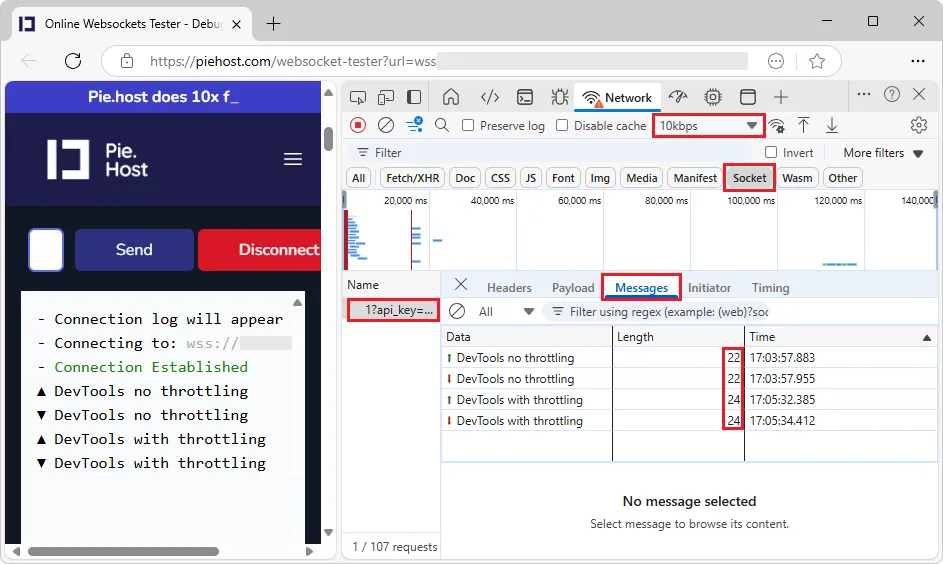
image 17
credits

Core Controls in the Network Toolbar

  • Record Button (Red Circle): Toggles live network event recording on and off.
  • Clear Log (Prohibited Symbol): Removes all captured requests from the current log.
  • Disable Cache: Forces the browser to download all resources directly from the server on refresh rather than serving local cache assets.
  • Preserve Log: Prevents DevTools from clearing the network history across page navigations and redirects.
  • Throttling Dropdown: Emulates slower network environments such as Fast 3G, Slow 3G, or custom latency profiles.

Anatomy of the Requests Table

Every resource downloaded by the page appears as a row in the requests table. You can customize which columns are visible by right-clicking any column header.

Column NamePrimary FunctionTroubleshooting Focus
NameResource name and file pathIdentifies specific scripts, stylesheets, or images
StatusHTTP response code (e.g., 200, 301, 404, 500)Identifies broken links, failed API payloads, and redirect chains
TypeMIME type (Document, Script, Fetch/XHR, Font, Img)Filters requests by asset type
InitiatorThe script, parser, or process that triggered the callTraces render-blocking chains and third-party script injectors
SizeTransferred size vs. uncompressed resource sizePinpoints uncompressed assets and missing Gzip/Brotli encoding
TimeTotal elapsed time from request start to completionFlags high-latency dependencies
WaterfallVisual breakdown of request phasesAnalyzes DNS, TLS, TTFB, and download duration

Read more blog : The Significance of HTTP Methods in Modern APIs

Decoding the Waterfall Chart

The Waterfall view breaks each HTTP request into distinct connection phases. Reading these phases reveals whether performance issues stem from server delays, network congestion, or browser queueing.

1. Queuing and Stalled

  • Queued: The browser delays a request because higher-priority assets take precedence, or because the browser reached its limit of 6 simultaneous TCP connections per host (under HTTP/1.1).
  • Stalled: Time spent waiting for an available socket connection, disk cache allocation, or proxy negotiation.

2. DNS Lookup and Initial Connection

  • DNS Lookup: The time required to resolve the server IP address. High DNS times indicate slow name servers or an excessive number of unique third-party domains.
  • Initial Connection (TCP Handshake & SSL/TLS): The time required to establish a TCP connection and negotiate SSL certificates.

3. Waiting (Time to First Byte – TTFB)

  • TTFB: The duration from when the browser sends the request until it receives the first byte of response data from the server.
  • Common Causes of High TTFB: Slow database queries, unoptimized server-side rendering, inadequate server resources, or lack of a Content Delivery Network (CDN).

Read more blog : How does a Content Delivery Network (CDN) improve performance?

4. Content Download

  • Content Download: The time spent receiving the full response body.
  • Optimization: High download times on small files point to poor network connections, while high times on large files indicate the need for image compression, minification, or payload splitting.

Advanced Network Diagnostics Workflows

Filtering and Searching Requests

Use the Filter box to isolate specific resources:

  • status-code:404 or status-code:500 finds failing endpoints.
  • domain:example.com restricts the view to first-party assets.
  • larger-than:500k identifies large files that impact Largest Contentful Paint (LCP).
  • is:running monitors active long-polling or WebSocket connections.

Blocking Specific Request URLs or Domains

  1. Press Ctrl + Shift + P (or Cmd + Shift + P on macOS) and run Show Network Request Blocking.
  2. Click Add pattern and enter a domain or script pattern (e.g., *analytics.js*).
  3. Reload the page to test how the site functions and renders without heavy third-party tags.

Read more blog : WordPress PHP Interview Questions for Web Developers

Is Slow Network Performance Hurting Your Core Web Vitals

Exporting and Sharing HAR Files

HTTP Archive (HAR) files store complete network logs for offline sharing and remote debugging.

  • Click the Export HAR icon (downward arrow) in the toolbar to save the current session.
  • To analyze an external capture, drag and drop the .har file directly into the Network panel.

Frequently Asked Questions

What is the difference between Transferred Size and Resource Size?

Transferred size represents the actual bytes sent over the network, including compression (Gzip/Brotli) and HTTP headers. Resource size is the uncompressed size of the file after the browser extracts it into memory. If both numbers are identical, text compression is not active on your server.

Why do some requests show up in red?

Requests highlighted in red indicate network failures, such as client errors (4xx), server errors (5xx), CORS policy violations, or connections blocked by client-side browser extensions.

How does HTTP/2 affect request queueing in DevTools?

HTTP/2 uses multiplexing over a single TCP connection, removing the browser limit of 6 concurrent connections per host. This drastically reduces Queued and Stalled times compared to HTTP/1.1.

AI Ai Apps AI for Code Quality and Security AIinDevOps API Gateway for microservices API Privacy Practices Apps Artificial Intelligence Automation in App Development Backend Development benefits of serverless business Business Automation Tools Caching Computer Vision Cybersecurity by Design Dangerous Deep Learning Deployment how to implement serverless Natural language processing working
Follow on Facebook Follow on X (Twitter) Follow on LinkedIn Follow on Instagram
Share. Facebook Twitter Pinterest LinkedIn Telegram Email Copy Link Reddit WhatsApp Threads
Previous ArticleComprehensive Integration Tests for a Full-Stack Node.js Application
Next Article Top 10 Questions in Software Development Interviews and How to Answer Them
Arunangshu Das
  • Website
  • Facebook
  • X (Twitter)

Trust me, I'm a software developer—debugging by day, chilling by night.

Related Posts

Document Object Model Examples: Practical Ways to Work With the DOM in JavaScript

September 11, 2026

Document Object Model (DOM): Understanding How Web Pages Are Structured

September 10, 2026

Data Analyst Interview Questions and Answers for Freshers

September 9, 2026
Add A Comment
Leave A Reply Cancel Reply

You must be logged in to post a comment.

Top Posts

How to Migrate Your Website to a Better Hosting Service?

October 6, 2025

Best Task and Project Management Tools for Startup Teams in 2026

January 12, 2026

AI Hardware Boom: GPUs, Chips, and Market Trends in 2025

September 9, 2025

7 Types of Database Indexes Explained

February 22, 2025
Don't Miss

Advanced .NET Interview Questions for Experienced Developers

August 10, 20269 Mins Read

Planning for older students.You must know the syntax and frameworks to be a NET role,…

The 2026 Backend Developer Roadmap: A Strategic Guide

January 20, 2025

VGG Architecture: 7 Key Concepts of Deep Learning

April 15, 2024

7 Essential Tips for Scalable Backend Architecture

February 5, 2025
Stay In Touch
  • Facebook
  • Twitter
  • Pinterest
  • Instagram
  • LinkedIn

Subscribe to Updates

Subscribe to our newsletter for updates, insights, and exclusive content every week!

About Us

I am Arunangshu Das, a Software Developer passionate about creating efficient, scalable applications. With expertise in various programming languages and frameworks, I enjoy solving complex problems, optimizing performance, and contributing to innovative projects that drive technological advancement.

Facebook X (Twitter) Instagram LinkedIn RSS
Don't Miss

What is Cybersecurity? An Amazing Beginner’s Introduction

May 28, 2025

Best Accounting Software for Startups

August 30, 2025

How to Set Up Your First WordPress Website on Cloudways? (Step-by-Step for Beginners)

June 19, 2025
Most Popular

Why AI Agents Will Become Core Infrastructure for Fintech Companies

July 21, 2026

Bootstrap or Seek Funding? A Financial Modeling Guide for Sustainable Growth

October 9, 2025

BERT : The Ultimate Guide 2026

May 14, 2024
Arunangshu Das Blog
  • About Us
  • Contact Us
  • Write for Us
  • Advertise With Us
  • Privacy Policy
  • Terms & Conditions
  • Disclaimer
  • Article
  • Blog
  • Newsletter
  • Media House
  • Arunangshu Das
© 2026 Arunangshu Das. Designed by Arunangshu Das.

Type above and press Enter to search. Press Esc to cancel.

Ad Blocker Enabled!
Ad Blocker Enabled!
Our website is made possible by displaying online advertisements to our visitors. Please support us by disabling your Ad Blocker.