


SaaS tools are fundamentally reshaping the landscape of financial services, driving a wave of efficiency, innovation, and customer-centricity that is transforming legacy operations. For an industry once defined by on-premise data centers, manual processes, and
rigid software, the shift to cloud-based Software-as-a-Service (SaaS) models represents a seismic change. These SaaS tools offer financial institutions—from global banks to fintech startups and credit unions—a pathway to modernize their infrastructure, enhance security, and deliver superior value.
The adoption of these solutions is not merely a technological upgrade; it is a strategic imperative for staying competitive, agile, and secure in a rapidly evolving digital economy. This article explores the profound impact of these tools and how they are revolutionizing core financial services operations.
Read more blog : Ultimate Guide to SaaS Tools: Boost Your Business Efficiency
Unlocking Core Benefits: The Strategic Value of SaaS in Finance
The migration to SaaS is driven by tangible advantages that directly address the unique challenges and regulatory demands of the financial sector. Moving away from “siloed” legacy systems allows institutions to operate with a level of precision that was previously impossible. The key benefits of SaaS provide a compelling case for adoption by focusing on three strategic pillars:
1. Cost Rationalization (From CapEx to OpEx)
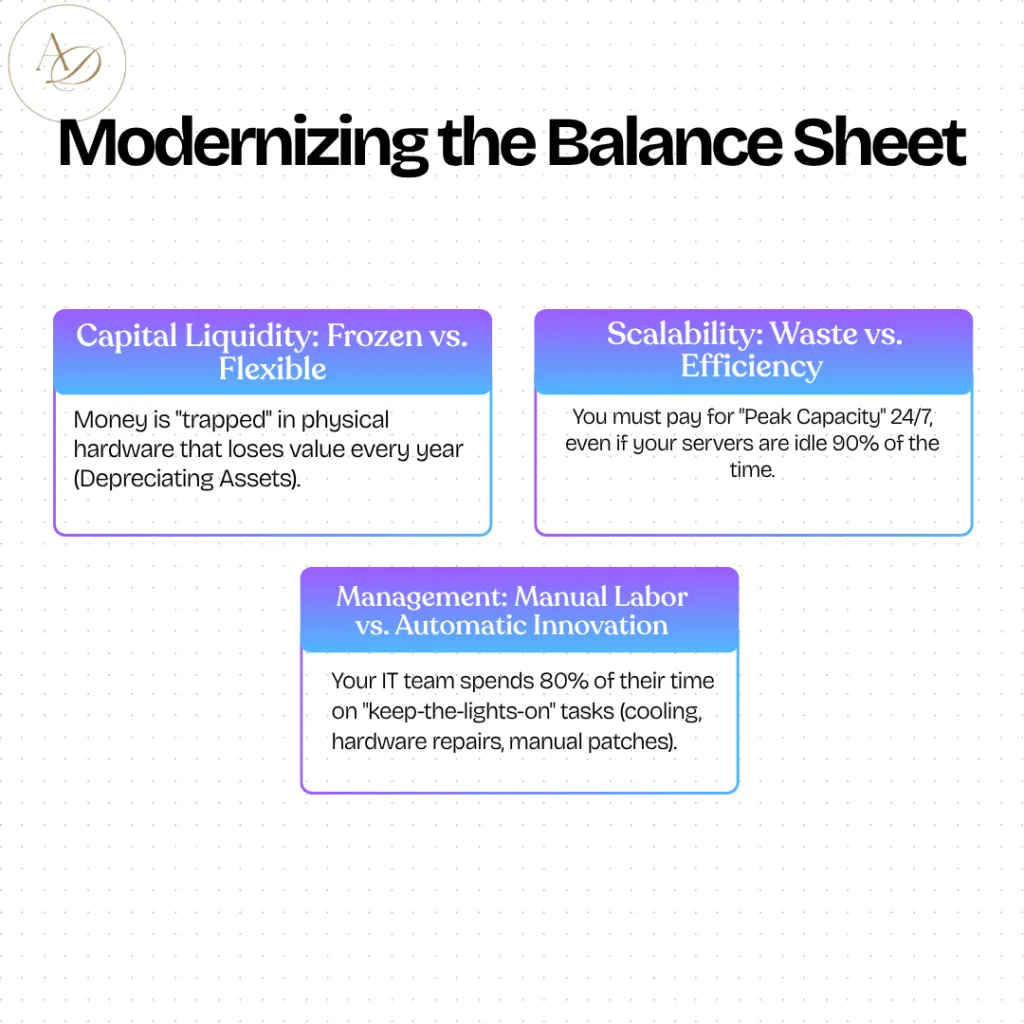
Legacy infrastructure requires massive upfront capital expenditure (CapEx) for hardware and licensing. SaaS flips this model into a predictable operational expenditure (OpEx). By paying only for what they use, financial firms can redirect frozen capital toward market-facing innovations and customer acquisition.
2. Seamless Regulatory Alignment
In an industry where compliance rules change overnight, SaaS tools offer a “live” advantage. Because the software is hosted in the cloud, updates regarding GDPR, AML (Anti-Money Laundering), and local financial regulations are pushed automatically by the vendor. This ensures the institution is always running on the most compliant version of the software without manual patches.
3. Data Democratization
Legacy systems often trap data in departmental “vaults.” SaaS platforms act as a unified data layer, allowing risk, marketing, and accounting teams to access a single version of the truth. This transparency is the foundation for the “360-degree client view” that modern fintech customers expect.
The migration to SaaS is driven by tangible advantages that directly address the unique challenges and regulatory demands of the financial sector. The key benefits of SaaS provide a compelling case for adoption.
Comparison of SaaS Transformation Across Financial Roles
| Financial Function | Leading SaaS Examples | Transformation Impact |
| Client Management | Salesforce, HubSpot | 360-degree client view & personalized advice. |
| Compliance (RegTech) | Alloy, ComplyAdvantage | Automated AML flags & real-time watchlist screening. |
| Accounting | BlackLine, FloQast | Accelerated financial close & automated reconciliation. |
| Risk & Analytics | Databricks, Snowflake | Real-time fraud detection & predictive risk modeling. |
| Lending & Onboarding | nCino, Blend | Seamless, paperless mobile account opening. |
1. Enhanced Agility and Accelerated Innovation
The financial market moves quickly, and customer expectations evolve even faster. Legacy systems can take months or years to update. SaaS tools, however, allow institutions to deploy new applications, features, and compliance updates in a fraction of the time.
With the vendor managing the underlying infrastructure, internal IT teams are freed to focus on strategic initiatives, such as developing new digital products or improving customer experience, rather than maintaining outdated systems.
2. Superior Scalability and Cost Efficiency
Financial services are subject to fluctuating demands, from peak trading hours to seasonal loan applications. The cloud-native architecture of SaaS platforms allows resources to scale up or down elastically, ensuring performance during high-volume periods without paying for idle capacity during lulls.
This shifts IT spending from a large capital expenditure (CapEx) to a predictable operational expenditure (OpEx), a significant operational transformation that improves financial forecasting and frees up capital for other strategic investments.
3. Robust Security and Compliance
Contrary to outdated perceptions, modern SaaS platforms often provide security that surpasses what many individual institutions can achieve on their own. Leading SaaS providers invest heavily in state-of-the-art cybersecurity, including encryption, intrusion detection, and continuous monitoring.
Furthermore, many SaaS solutions are built with compliance in mind, offering features that help institutions adhere to regulations like GDPR, SOX, and PCI DSS, and can be updated instantly to reflect new regulatory requirements.
4. Fostering Collaboration and a Unified View
Financial services often involve complex, cross-departmental workflows. SaaS tools, with their centralized, cloud-accessible nature, break down information silos. Whether it’s a relationship manager, a risk analyst, or a compliance officer, teams can access the same real-time data from anywhere, fostering better collaboration and enabling a single, unified view of the customer and overall operations.
Transformative Use Cases: SaaS in Action Across Financial Services
The practical application of SaaS tools is revolutionizing specific functions within financial institutions.
1. Customer Relationship Management (CRM)
Platforms like Salesforce Financial Services Cloud are specialized SaaS CRMs that provide a 360-degree view of the client.
- Transformation: They consolidate client data from various touchpoints, track interactions, and manage leads. This enables personalized financial advice, proactive service, and improved client retention, moving beyond transactional relationships to holistic financial guidance.
2. Regulatory Technology (RegTech)
Compliance is a massive cost center for financial firms. SaaS-based RegTech solutions automate and streamline compliance tasks.
- Transformation: These tools can automatically monitor transactions for anti-money laundering (AML) flags, screen clients against global watchlists, and generate regulatory reports. This reduces manual labor, minimizes human error, and significantly lowers the cost and complexity of compliance, a critical aspect of modern financial services operations.
3. Automated Accounting and Financial Close
SaaS solutions like BlackLine and FloQast automate the tedious and error-prone processes of account reconciliation and the financial close.
- Transformation: By automating repetitive tasks, these tools accelerate the close cycle, improve accuracy, and provide a clear audit trail. This gives finance leaders real-time visibility into the company’s financial health and allows accounting teams to focus on analysis rather than data entry.
4. Risk Management and Analytics
Powerful SaaS analytics platforms can process vast amounts of data to model risk, detect fraud, and identify market trends.
- Transformation: Instead of relying on historical reports, institutions can use these tools for predictive analytics. They can detect fraudulent credit card transactions in real-time, assess the credit risk of loan applicants with greater accuracy, and model the potential impact of market shifts on their portfolio.
5. Digital Onboarding and Lending
The entire customer journey is being reshaped by SaaS. Digital onboarding platforms and automated lending engines create a seamless, paperless experience.
- Transformation: Customers can now open an account or apply for a loan in minutes from their mobile device, using e-signatures and digital identity verification. This drastically improves customer satisfaction, reduces drop-off rates, and allows the institution to process a higher volume of applications efficiently.

Conclusion: The Future is SaaS-Driven
The evidence is clear: SaaS tools are the engine of modern financial services operations. They are no longer just supporting players but are central to achieving strategic goals of growth, security, and customer excellence.
The operational transformation they enable—through cost reduction, enhanced agility, and powerful automation—is creating a new generation of financial institutions that are more resilient, responsive, and innovative. For any financial organization looking to thrive in the digital age, the strategic integration of a curated SaaS stack is not an option; it is the definitive path forward.
Frequently Asked Questions (FAQs)
1. Are SaaS tools secure enough for highly sensitive financial data?
Yes, reputable SaaS providers serving the financial industry typically adhere to security standards that exceed what many individual firms can maintain. They offer enterprise-grade encryption, rigorous access controls, and undergo independent third-party audits.
2. How do we handle integration with our existing legacy core systems?
This is a common challenge. Most modern SaaS tools are built with APIs (Application Programming Interfaces) that are designed for integration. A phased approach is often best, starting with a single department or process (like CRM or RegTech) to demonstrate value and work out integration kinks before a wider rollout.
3. What is the total cost of ownership (TCO) for adopting SaaS tools?
While subscription fees are clear, TCO should also include costs for implementation, integration, training, and change management. However, when compared to the TCO of legacy systems—which includes server hardware, software licenses, dedicated IT staff for maintenance, and upgrade projects—SaaS solutions often prove to be more cost-effective over the long term due to their predictable pricing and reduced internal resource burden.
