


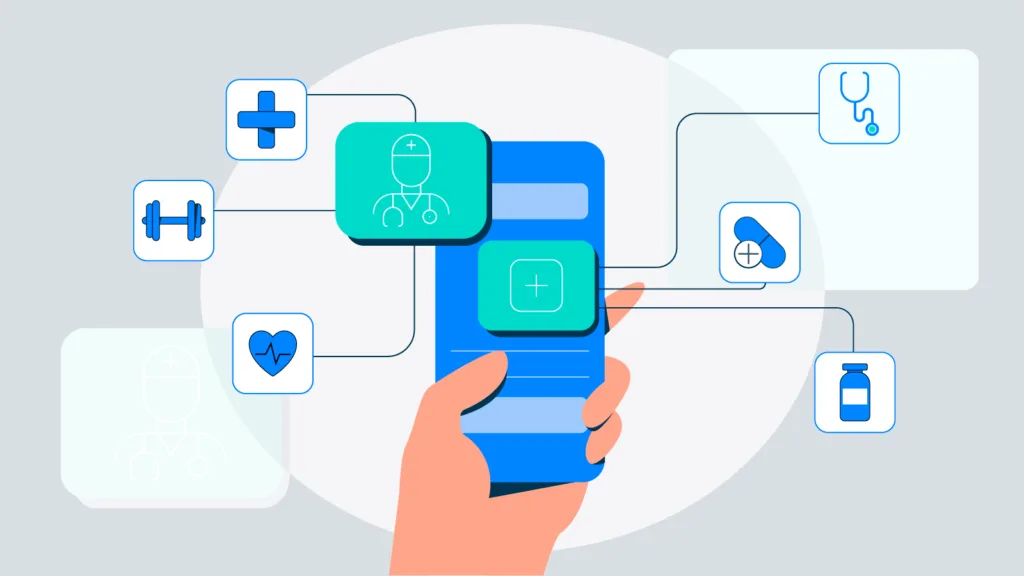
Future of Healthcare IoT is moving toward a more connected, intelligent, and patient-focused healthcare system. Internet of Things (IoT) technology is already changing how doctors monitor patients, hospitals manage equipment, and healthcare providers deliver care outside traditional clinical settings. As connected devices become more advanced, 2026 is expected to bring new innovations that make healthcare more personalized, predictive, and efficient.
From AI-powered monitoring devices to smart hospitals and remote patient care, the combination of IoT, artificial intelligence, cloud computing, and advanced analytics is creating new possibilities. Understanding these developments can help healthcare organizations prepare for a future where real-time data plays a central role in medical decision-making.
Table of Contents
What Is the Future of Healthcare IoT?
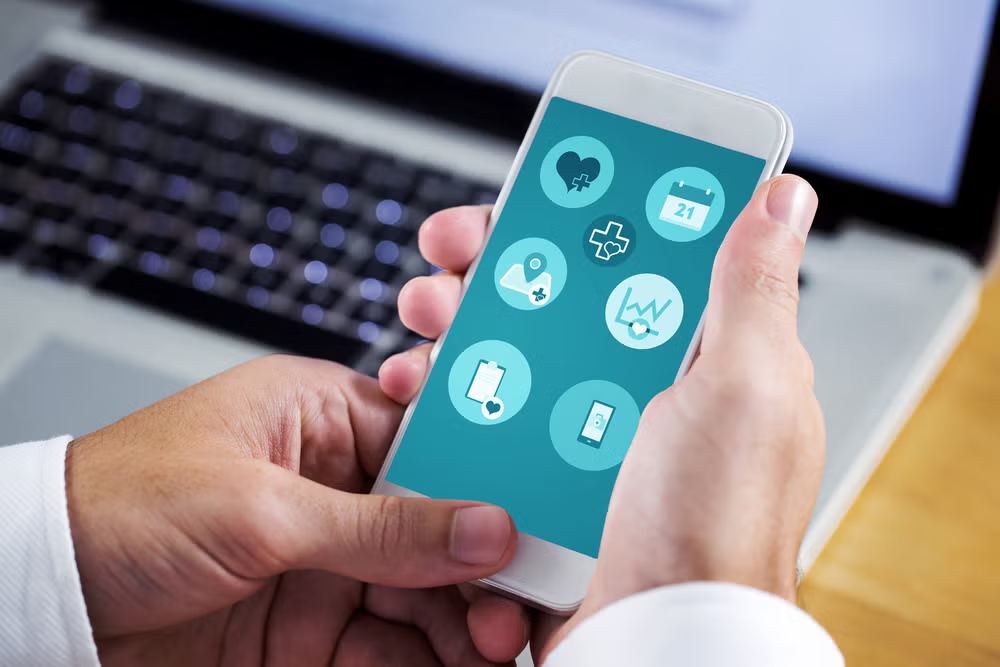
The Future of Healthcare IoT involves connecting medical devices, wearable technologies, hospital equipment, sensors, and software platforms so they can collect and exchange health-related data.
Instead of relying only on occasional checkups, healthcare professionals can use connected devices to receive continuous information about a patient’s condition. This approach can support earlier intervention, better chronic disease management, and more convenient healthcare services.
Healthcare IoT is also moving beyond basic data collection. Modern systems increasingly combine IoT data with artificial intelligence and machine learning to identify patterns and provide useful insights.
1. AI-Powered Healthcare IoT Devices
One of the biggest trends shaping the Future of Healthcare IoT is the integration of artificial intelligence. IoT devices can collect large amounts of health data, while AI can analyze that information and identify meaningful patterns.
For example, wearable devices may continuously track heart rate, blood oxygen levels, sleep patterns, or physical activity. AI algorithms can analyze this information and potentially identify unusual changes that deserve further attention.
This combination of IoT and AI could help healthcare professionals move from reactive treatment toward more predictive care.
2. Growth of Remote Patient Monitoring
Remote patient monitoring will remain an important part of healthcare technology in 2026. Connected blood pressure monitors, glucose monitors, ECG devices, pulse oximeters, and wearable sensors can allow patients to share health information without visiting a hospital or clinic for every measurement.
Healthcare IoT makes it possible to collect data from patients at home and transmit it to healthcare providers. This can be particularly valuable for people managing chronic conditions.
As remote healthcare continues to develop, IoT devices may become smaller, easier to use, and more accurate, making continuous monitoring more practical for patients.
3. Smarter Wearable Health Technology
Wearable technology is expected to become increasingly sophisticated. Smartwatches and fitness trackers already monitor metrics such as heart rate, activity, sleep, and blood oxygen levels.
Future devices may offer more advanced health monitoring capabilities and provide healthcare professionals with additional information when integrated into clinical systems.
Healthcare IoT will increasingly connect these wearable devices with cloud platforms and healthcare applications. This can create a more complete picture of a patient’s health over time rather than relying on isolated measurements.
4. Smart Hospitals and Connected Infrastructure
Smart hospitals are another major trend in the Future of Healthcare IoT. Hospitals can use connected sensors to monitor medical equipment, patient rooms, temperature, humidity, inventory, and facility operations.
For example, IoT sensors can help track the location and status of medical equipment. Connected systems can also provide alerts when equipment requires maintenance or when certain environmental conditions change.
These applications can improve operational efficiency while helping healthcare organizations make better use of their resources.
5. Predictive Healthcare and Early Detection
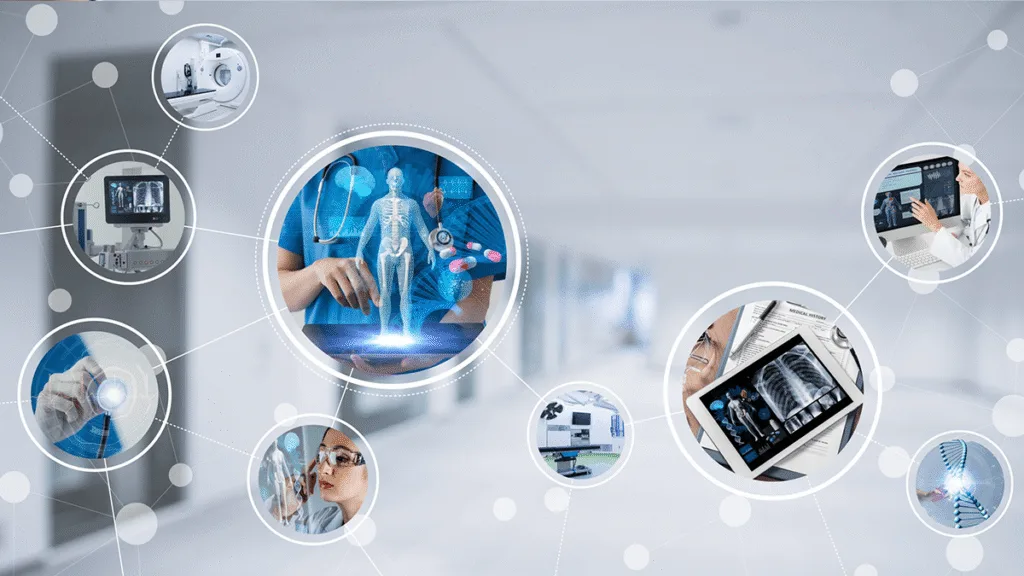
IoT-generated data can contribute to predictive healthcare by providing continuous information about patients. Instead of analyzing health information only during appointments, healthcare professionals can potentially identify changes over days, weeks, or months.
AI systems can analyze trends in data and flag unusual patterns. For example, changes in heart rate, activity levels, sleep, or other measurements could indicate that a patient’s condition requires additional evaluation.
While IoT cannot replace professional medical judgment, predictive analytics can provide healthcare professionals with additional information for decision-making.
6. IoT-Enabled Medication Management
Medication management is another area where healthcare IoT could have a significant impact. Connected medication dispensers and reminder systems can help patients follow prescribed medication schedules.
These systems may provide reminders when medication needs to be taken and, in some cases, record whether a scheduled dose was accessed.
For patients taking multiple medications, connected solutions could make medication routines easier to manage while giving caregivers or healthcare professionals additional visibility when appropriate.
7. Better Healthcare Data Integration
One challenge for healthcare organizations is that information can be distributed across different systems and devices. The Future of Healthcare IoT will increasingly depend on better interoperability.
Connected devices need to communicate effectively with electronic health records, hospital management platforms, mobile applications, and cloud systems.
Improved integration can help healthcare professionals access relevant information more efficiently. It can also reduce the need to manually transfer data between disconnected systems.
8. Edge Computing for Faster Healthcare Decisions
Edge computing is expected to play a growing role in healthcare IoT. Instead of sending every piece of data to a remote cloud server for processing, some information can be analyzed closer to the device where it is generated.
This can reduce latency and support faster responses.
For applications that require near-real-time monitoring, such as connected medical equipment or critical patient monitoring, faster data processing can be particularly useful.
9. Stronger Healthcare IoT Security
As more medical devices become connected, cybersecurity will become increasingly important. Healthcare organizations handle highly sensitive information, making connected medical systems attractive targets for cyberattacks.
Future healthcare IoT solutions will need stronger authentication, encryption, access controls, device monitoring, and software updates.
Privacy will also remain a major concern. Organizations will need to ensure that patient data is collected, stored, transmitted, and accessed responsibly.
10. Personalized and Preventive Healthcare
Another important direction for the Future of Healthcare IoT is personalized healthcare. Connected devices can provide information about individual behaviors, health conditions, and responses to treatments.
When combined with analytics, this information can help healthcare professionals develop more individualized approaches to patient care.
IoT can also support preventive healthcare by encouraging people to monitor important health indicators and make healthier lifestyle decisions before serious problems develop.
Challenges Facing Healthcare IoT in 2026
Despite its potential, healthcare IoT still faces several challenges.
Data privacy and security: Connected medical devices can create additional cybersecurity risks.
Interoperability: Different devices and healthcare platforms may use different standards and communication systems.
Cost: Advanced IoT infrastructure can require significant investment in hardware, software, connectivity, and maintenance.
Data accuracy: Incorrect measurements or unreliable sensors could lead to misleading information.
Connectivity: IoT systems depend on reliable networks, which can be difficult to guarantee in every location.
Staff training: Healthcare professionals need appropriate training to understand and use increasingly complex technologies.
Addressing these challenges will be essential for healthcare IoT to achieve widespread adoption.
The Role of AI in the Future of Healthcare IoT
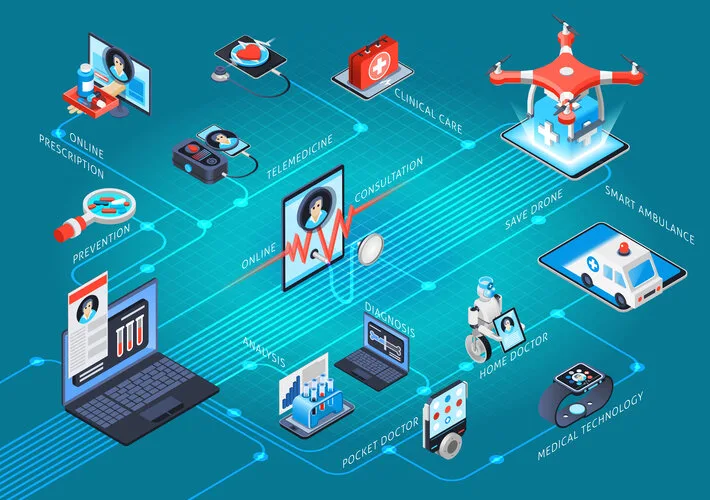
AI will likely remain one of the most important technologies supporting healthcare IoT. While IoT devices primarily collect and transmit information, AI can help interpret that information.
Machine learning algorithms can identify patterns in large datasets, while generative AI may help summarize information and support communication between healthcare professionals and patients.
The combination of AI and healthcare IoT could create systems that continuously monitor patients, identify potential concerns, and provide actionable insights. However, human oversight will remain essential, particularly for medical decisions.
What to Expect from Healthcare IoT After 2026
The development of healthcare IoT is unlikely to stop in 2026. Future systems may include more advanced wearable sensors, connected implants, intelligent hospital infrastructure, AI-powered diagnostics, and increasingly automated healthcare workflows.
Healthcare IoT may also become more accessible outside hospitals. Homes, pharmacies, rehabilitation centers, and assisted-living environments could increasingly use connected technology to support patients.
The long-term goal is not simply to connect more devices. It is to create healthcare systems that use real-time information intelligently to improve patient outcomes, efficiency, and accessibility.
Conclusion
The Future of Healthcare IoT is centered around smarter devices, continuous monitoring, AI-powered analytics, connected hospitals, and personalized patient care. In 2026, technologies such as remote monitoring, wearable devices, edge computing, predictive analytics, and smart healthcare infrastructure are expected to play increasingly important roles.
At the same time, healthcare organizations must address cybersecurity, privacy, interoperability, cost, and data-quality challenges. If these issues are managed effectively, healthcare IoT can become an important foundation for a more connected and proactive healthcare system.
FAQs
1. What is the future of healthcare IoT?
The future of healthcare IoT involves more intelligent connected devices, AI-powered analytics, remote patient monitoring, smart hospitals, and personalized healthcare services.
2. How will AI improve healthcare IoT?
AI can analyze data collected by connected healthcare devices, identify patterns, detect unusual changes, and provide insights that may support healthcare professionals.
3. What are the biggest healthcare IoT trends in 2026?
Major trends include AI integration, remote patient monitoring, smart hospitals, advanced wearable devices, edge computing, predictive healthcare, and stronger cybersecurity.
4. What are the challenges of healthcare IoT?
Key challenges include data security, patient privacy, interoperability, device reliability, connectivity, implementation costs, and staff training.
