


Understanding what an ERP system and why businesses need it is essential for any growing organization. An ERP (Enterprise Resource Planning) system is integrated software that manages all your core business processes in one place—finance, HR, inventory, supply chain, sales, and customer relationships. But knowing the definition is not enough.
The real question is: what is an ERP system and why businesses need it to survive in 2026? The answer is simple. Without an ERP, your data lives in silos. Your finance team uses QuickBooks, your operations team uses spreadsheets, your sales team uses Salesforce, and none of them talk to each other. Decisions are based on outdated, conflicting information. Growth becomes chaotic.
According to a 2026 Gartner report, companies that implement a modern ERP system reduce operational costs by 23% and improve decision-making speed by 45%. This guide explains what an ERP system and why businesses need it, the core modules you should look for, the signs you have outgrown your current systems, and how to choose the right ERP for your business.
Whether you are a growing mid-market company or a large enterprise, understanding enterprise resource planning is the first step to operational excellence.
Table of Contents
What Is an ERP System and Why Businesses Need It: Core Modules Explained
Let’s break down what an ERP system and why businesses need it means in practice. A modern ERP system typically includes these interconnected modules.
1. Financial Management

The first module of any ERP system and why businesses need it is financial management. This includes general ledger, accounts payable, accounts receivable, fixed assets, and financial reporting. Unlike standalone accounting software, ERP financials connect to inventory (so cost of goods sold updates automatically), sales (so revenue syncs instantly), and procurement (so purchase orders flow to payables).
For example, when your sales team closes a deal, the ERP creates an invoice, updates inventory levels, records the revenue, and posts the cost of goods sold—all without manual entry. This is why enterprise resource planning is essential for companies with complex operations. The ERP software benefits include real-time financial visibility, faster month-end close (from 10 days to 3 days), and audit-ready reports.
2. Supply Chain & Inventory Management
The second module of an ERP system and why businesses need it is supply chain management. For product-based businesses, this is where ERP delivers the most value. The system tracks inventory levels, purchase orders, supplier performance, and warehouse locations in real time.
When a customer places an order, the ERP checks inventory availability, reserves the units, generates a pick list for the warehouse, updates the shipping carrier, and notifies the customer—all automatically. The ERP software benefits in supply chain include reducing stockouts by 40%, lowering carrying costs, and improving supplier negotiation with better data.
3. Human Resources & Payroll
The third module of an ERP system and why businesses need it is human capital management. This includes employee records, payroll, benefits administration, time tracking, and performance management. Integrated HR means your payroll runs based on time tracking data from the same system, and headcount planning connects to budget forecasting.
For multinational companies, the ERP software benefits in HR include multi-currency payroll, compliance with local labor laws, and centralized employee data across countries. No more spreadsheets for vacation tracking or benefits enrollment.
4. Customer Relationship Management (CRM)
The fourth module of an ERP system and why businesses need it is CRM. While many companies use standalone CRMs (Salesforce, HubSpot), integrated CRM within ERP offers advantages. When a sales rep updates a deal stage, that information flows to finance (for forecasting), operations (for capacity planning), and inventory (for demand planning).
The enterprise resource planning approach means everyone sees the same customer data. Sales sees the customer’s payment history. Support sees the customer’s purchase history. Operations sees the customer’s delivery preferences. The ERP software benefits of integrated CRM include unified customer view, accurate forecasts, and faster issue resolution.
5. Business Intelligence & Reporting
The final module of an ERP system and why businesses need it is business intelligence. This is the dashboard layer that pulls data from all modules to give executives real-time visibility into KPIs: cash flow, inventory turnover, order fulfillment rates, employee productivity, and customer satisfaction.
Unlike manual reporting (where you pull data from 5 systems into Excel), ERP reporting is automatic and live. This is one of the most important ERP software benefits because it enables data-driven decisions. You know your most profitable products, your best-selling channels, and your most efficient suppliers—all from one dashboard.
Signs Your Business Needs an ERP System
How do you know when you need an ERP system and why businesses need it applies to your situation? Look for these seven warning signs.
1. Spreadsheet chaos. You have 20+ spreadsheets tracking inventory, sales, and finance. Multiple versions exist. No one knows which is current.
2. Manual data re-entry. Your team types the same data into 3-4 different systems. Each entry introduces errors and wastes time.
3. Siloed departments. Finance does not trust sales numbers. Operations does not trust finance numbers. No one agrees on the “truth.”
4. Delayed reporting. You get monthly financial reports 3-4 weeks after month-end. Decisions are made on stale data.
5. Inventory problems. You are frequently out of stock on popular items or overstocked on slow movers. You cannot predict demand.
6. Customer complaints. Customers receive wrong items, delayed shipments, or duplicate invoices. Your systems cannot keep up with order volume.
7. Growth pains. You are growing 20%+ year-over-year, but profitability is not keeping pace. Complexity is eating margins.
If you checked 3+ of these signs, you need to understand what an ERP system and why businesses need it for your specific company. The cost of inaction is higher than the cost of implementation.
How to Choose an ERP System
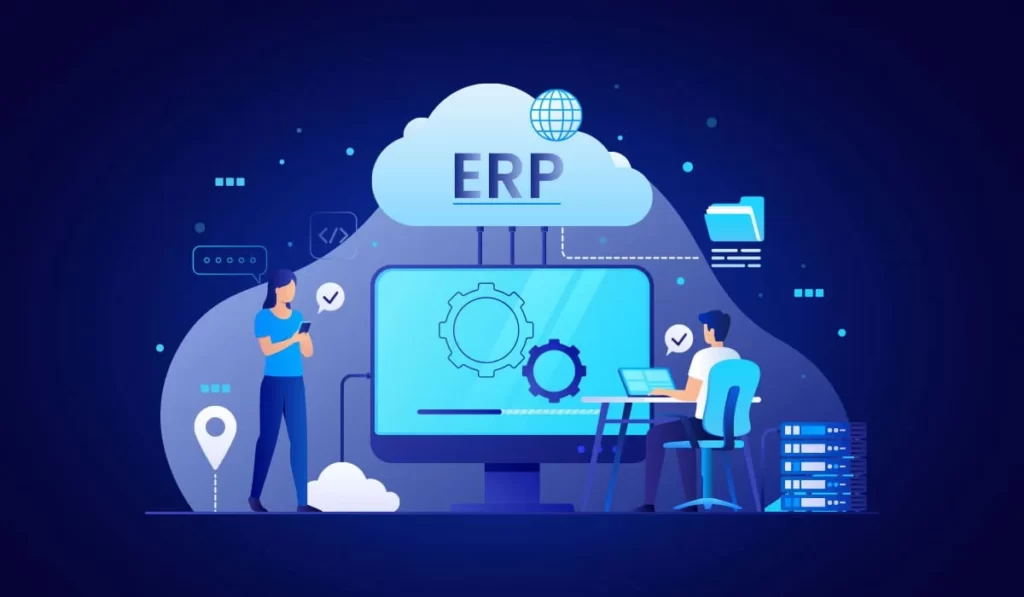
When selecting an ERP system and why businesses need it, follow this framework.
Step 1: Define your requirements. Map your current processes. Identify which modules you need today and which you will need in 2-3 years. Do not overbuy—start with core financials + inventory, add modules later.
Step 2: Choose between cloud vs. on-premise. Cloud ERP (NetSuite, SAP S/4HANA Cloud) has lower upfront cost, faster deployment, and automatic updates. On-premise (Oracle, SAP on-premise) offers more customization but higher total cost of ownership. For most businesses in 2026, cloud is the better choice.
Step 3: Evaluate vendors. Top ERP vendors in 2026 include:
- NetSuite (best for mid-market, 100-2,000 employees)
- SAP S/4HANA (best for enterprises, 2,000+ employees)
- Microsoft Dynamics 365 (best for companies already using Microsoft stack)
- Odoo (best for small businesses, open-source option)
- Acumatica (best for manufacturing and distribution)
Step 4: Ask vendors for references in your industry. A great ERP for manufacturing may be terrible for professional services. Request 3 customer references with similar business models.
Step 5: Budget for implementation, not just license costs. Implementation is typically 3-5x annual license fees. Plan for 3-12 months depending on complexity.
Implementation Best Practices
To realize the full ERP software benefits, follow these five implementation rules.
1. Clean your data before migration. Deduplicate customers, standardize product codes, and validate supplier information. Garbage in, garbage out.
2. Appoint an internal project lead. This person owns the project, communicates with the vendor, and champions change internally. Make it a senior role.
3. Run parallel systems for 30-90 days. Keep your old systems running while you validate the new ERP. Do not cut over until accuracy is proven.
4. Train, train, train. The best enterprise resource planning system fails if users do not adopt it. Budget 2-4 hours of training per user. Create “super users” who can train others.
5. Start with a pilot. Deploy the ERP in one department or one location first. Learn lessons. Then roll out company-wide.
The Future of ERP Systems
By 2028, ERP systems will be AI-native. Predictive analytics will automatically flag inventory risks. Autonomous agents will reorder supplies when stock hits thresholds. Natural language interfaces will let you ask “What is our cash flow forecast for next quarter?” and get an instant answer. Cloud ERP will be the default—on-premise will be legacy-only. The ERP software benefits will expand from operational efficiency to strategic foresight.
Final Verdict
Understanding what an ERP system and why businesses need it is critical for any growing organization. An ERP consolidates finance, inventory, HR, CRM, and reporting into one integrated platform. It eliminates spreadsheet chaos, siloed data, and manual re-entry. The signs you need an ERP include inventory problems, delayed reporting, and customer complaints. Choose a cloud ERP (NetSuite, SAP S/4HANA, Dynamics 365) based on your company size. Budget 3-5x license fees for implementation. Clean your data. Train your team. Start with a pilot. The ROI—23% lower operational costs, 45% faster decisions—is worth the investment.
Frequently Asked Questions (FAQs)
Q1: What is the difference between an ERP system and standalone accounting software?
Standalone accounting software (QuickBooks, Xero) manages only finance: invoices, bills, bank reconciliation. An ERP system and why businesses need it includes finance PLUS inventory, supply chain, HR, CRM, and reporting—all integrated. For example, in standalone accounting, you manually update inventory after a sale. In an ERP, the sale automatically reduces inventory, updates costing, and triggers a reorder if stock is low. The ERP software benefits are integration and automation that standalone tools cannot provide. If you only need accounting, standalone is fine. If you need cross-departmental data, you need an ERP.
Q2: How much does an ERP system cost for a small business?
For small businesses (under 100 employees), cloud ERP solutions like Odoo (starting at $25/user/month), Acumatica (starting at $1,000/month for 5 users), and NetSuite (starting at $999/month + $99/user) are accessible. However, implementation costs are 3-5x annual license fees. For a $12,000 annual license, expect $36,000-$60,000 in implementation. Total first-year cost: $48,000-$72,000 for a 10-user system. This is significant but pays back through reduced errors, faster reporting, and improved inventory management. Most small businesses recover the cost in 12-18 months. This is why understanding what an ERP system and why businesses need it is critical before committing.
Q3: How long does ERP implementation take?
Implementation timeline depends on company size and complexity. For a small business (under 100 employees), 3-6 months. For mid-market (100-2,000 employees), 6-12 months. For enterprise (2,000+ employees), 12-24 months. Factors that speed up implementation: cloud deployment, standardized processes (not customizing too much), and dedicated internal project lead. Factors that slow it down: on-premise deployment, heavy customization, dirty data, and limited internal resources. The enterprise resource planning vendor should provide a detailed timeline before you sign.
Q4: Can an ERP system work with my existing CRM or other tools?
Yes, most modern ERPs have open APIs that integrate with best-of-breed tools. For example, you can keep Salesforce (CRM) and integrate it with NetSuite (ERP) via middleware like Celigo or Workato. However, integration adds cost ($10k-$50k) and maintenance complexity. The ERP software benefits are strongest when you use the built-in CRM module—no integration required. Evaluate: is your current CRM a strategic asset (custom workflows, deep history) or just a contact list? If the former, integrate. If the latter, migrate to the ERP’s native CRM.
