



The transition to Google Analytics 4 (GA4) has been a pivotal moment for digital marketers worldwide. While GA4 offers a powerful, event-driven model focused on user privacy and cross-platform tracking, its complexity, interface, and specific data philosophy have led many professionals to explore other options.
Evaluating Google Analytics alternatives is no longer a niche exercise but a critical part of building a resilient, insightful, and compliant marketing tech stack. This guide will explore why marketers consider other tools, provide a direct comparison of popular Google Analytics alternatives, and offer a framework for selecting the right platform for your specific needs.
Table of Contents
Why Marketers Are Exploring Google Analytics Alternatives
Google Analytics, especially the free GA4 version, is a robust and industry-standard tool. However, several key factors drive the search for alternatives:
- Complexity & Usability: GA4’s interface and data model represent a steep learning curve. For many marketers and small business owners, deriving simple, actionable insights can be unnecessarily time-consuming compared to more intuitive platforms.
- Data Privacy & Compliance: With stringent regulations like GDPR and CCPA, some organizations seek tools that offer greater data ownership or are based in specific jurisdictions. Many Google Analytics alternatives are built with privacy-by-design principles, store data within chosen regions, or do not rely on cookie-based tracking to the same extent.
- The Need for Simpler, Real-Time Insight: Some teams prioritize clean, real-time dashboards that answer immediate business questions (e.g., “How many people are on my site right now and what are they doing?”) without complex configuration.
- Specific Feature Gaps: GA4 may lack specific out-of-the-box reports that other tools provide natively, such as detailed subscription analytics, e-commerce funnels tailored for specific platforms, or more nuanced video engagement tracking.
- Data Sampling and Limitations: In the free version of GA4, sampling can occur in exploratory reports, potentially skewing data for high-traffic websites. Some paid alternatives provide un-sampled data at lower price points.
Direct Comparison: GA4 vs. Leading Alternatives
Understanding how alternatives differ from GA4’s core approach is essential. Here is a focused comparison based on common marketer priorities.
ToolCore Philosophy & Best ForKey Difference from GA4
Google Analytics 4 (GA4) Free, powerful, event-based future-proofing. Ideal for deep integration with Google Ads and those committed to Google’s ecosystem. The benchmark. Complex but infinitely flexible; focuses on predictive metrics and cross-device user journeys.
Adobe Analytics Enterprise-level, real-time customer journey analytics. Best for large corporations needing deep segmentation and custom integration. More powerful segmentation and calculated metrics out-of-the-box; significantly higher cost and complexity.
Matomo (formerly Piwik) Open-source, privacy-centric, data ownership. Ideal for privacy-first organizations, governments, and those who must host their own data. You own 100% of your data. Can be cloud-hosted or self-hosted; offers a GDPR-compliant cookieless option.
Plausible Analytics Extreme simplicity, lightweight, and privacy-compliance. Perfect for bloggers, small businesses, and anyone who wants a clear, simple dashboard. A stark contrast in simplicity. No personal data collection, under 1 KB script size, and a dashboard focused on top-level metrics.
Fathom Analytics Privacy-focused, simple, business-centric metrics. Great for SaaS companies, agencies, and businesses that value speed and compliance. Similar to Plausible but with added features like optional revenue tracking, custom dashboards, and UTM tagging made simple.
Evaluating the Top Google Analytics Alternatives for Marketers
Let’s delve deeper into the most compelling alternatives, examining what each brings to the table for different marketing use cases.
1. Matomo: The Champion of Data Ownership
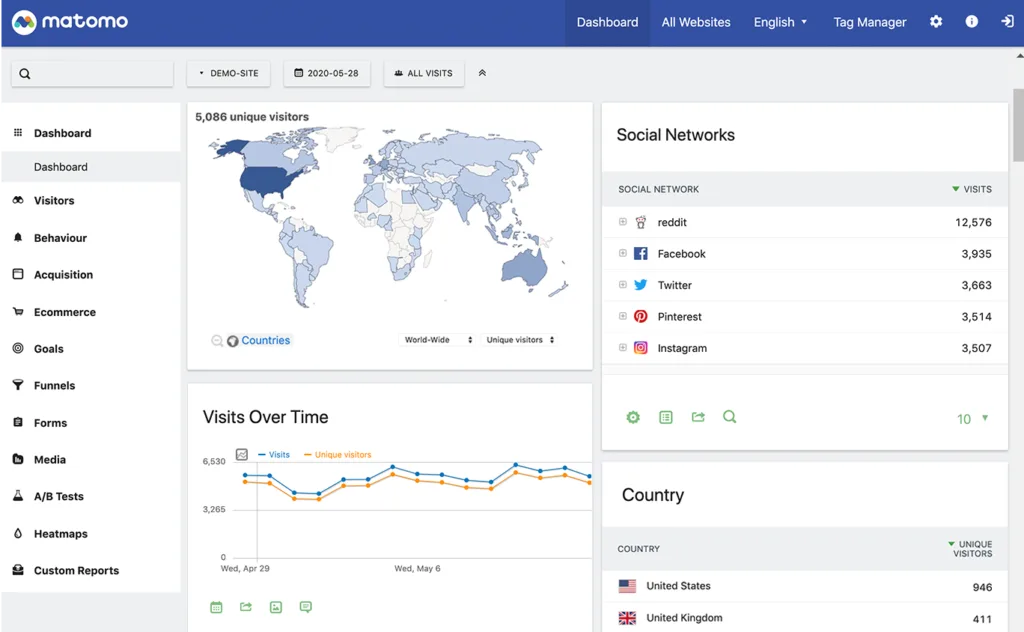
Matomo is a leading open-source alternative. It offers a cloud version for ease and a self-hosted version for complete data control.
- Marketer Benefits: Provides all the familiar reports of traditional analytics (acquisition, behavior, conversions) without data sampling. Its “Heatmaps & Session Recordings” add-on is a powerful tool for understanding user behavior qualitatively.
- Best For: Marketers in regulated industries, tech companies with development resources (for self-hosting), and anyone for whom data sovereignty is non-negotiable.
2. Plausible & Fathom: The Privacy-First, Minimalist Duo
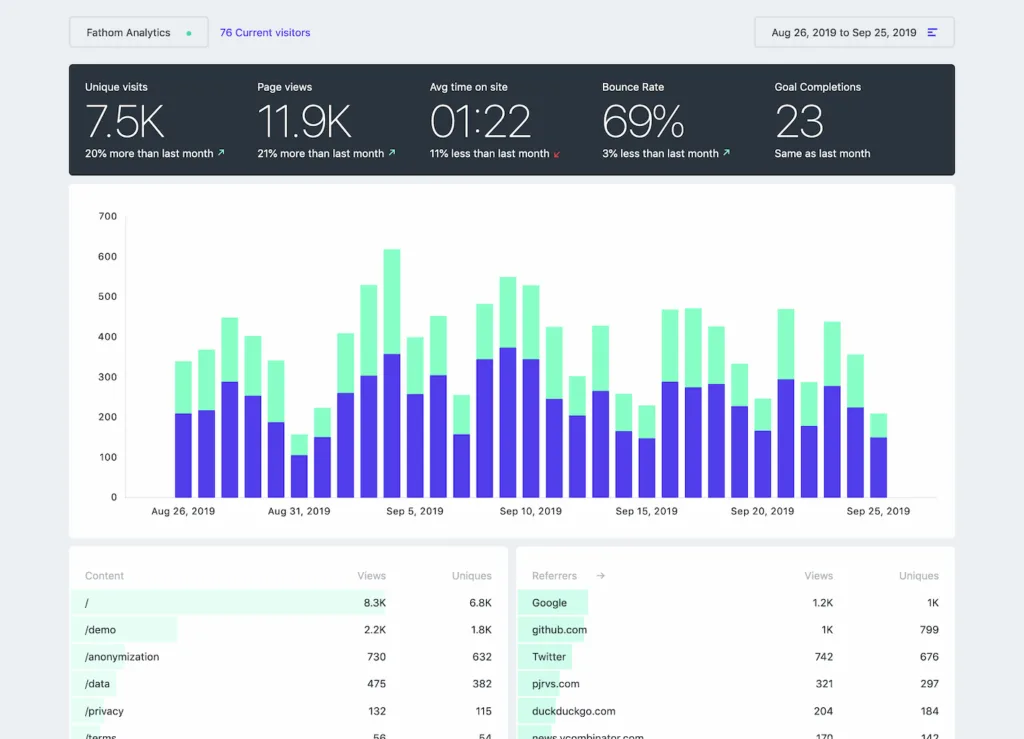
These tools represent a paradigm shift—away from the surveillance model and towards simple, aggregated measurement.
- Marketer Benefits: Incredibly easy to set up and understand. Dashboards load instantly and show key metrics at a glance: visitors, pageviews, bounce rate, top pages, and sources. They respect visitor privacy, which can simplify compliance. They have almost no performance impact on your website.
- Best For: Content marketers, bloggers, small business owners, and any marketer who needs to answer “how much traffic and from where?” quickly without wading through complex reports.
3. Adobe Analytics: The Enterprise Powerhouse
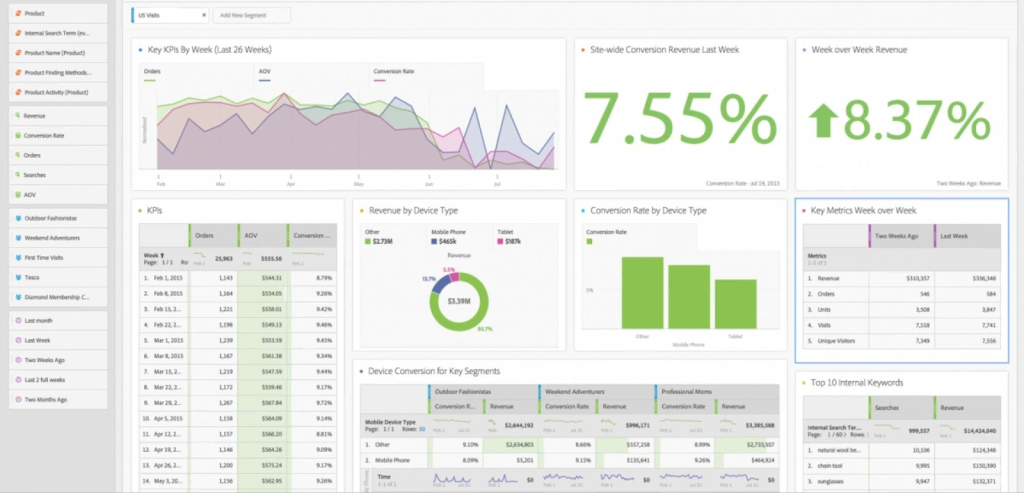
Part of the Adobe Experience Cloud, this tool is built for large-scale, sophisticated digital marketing operations.
- Marketer Benefits: Unparalleled ability to create complex, custom segments and perform deep cross-channel analysis in real-time. It excels at tying online behavior to offline data, providing a holistic customer view.
- Best For: Enterprise marketing teams with dedicated analysts, large e-commerce brands, and companies running sophisticated, multi-touchpoint digital campaigns.
4. Microsoft Clarity: The Free Behavioral Insight Tool
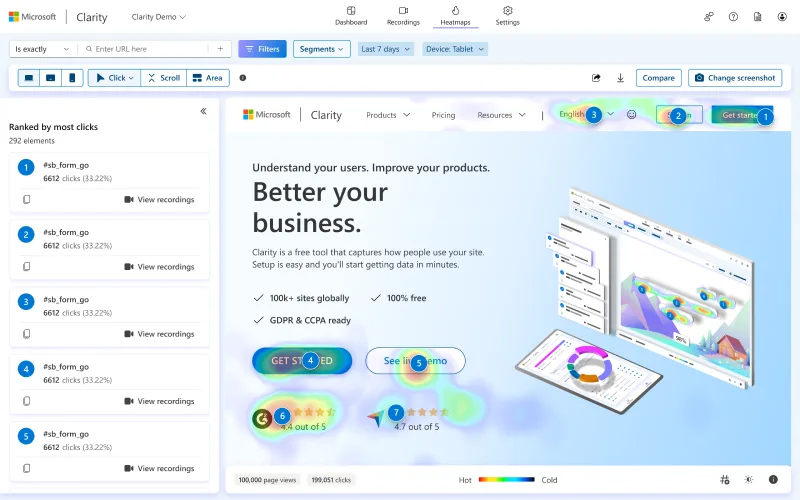
While not a full GA4 replacement, Microsoft Clarity is a fantastic complementary free tool that focuses on how users interact with your site.
- Marketer Benefits: Provides session recordings, heatmaps (click, scroll, attention), and insights into frustrating user experiences (like dead clicks or rage clicks). It’s invaluable for UX optimization and conversion rate improvement.
- Best For: All marketers, as a supplement to any quantitative analytics tool. Use GA4 or another alternative for the “what,” and Clarity for the “why.”
How to Choose the Right Analytics Platform for Your Needs
Selecting the best tool requires aligning platform capabilities with your business context. Follow this decision framework:
- Define Your Primary Goal: Is it privacy compliance (choose Matomo, Plausible, Fathom), deep customer journey analysis (Adobe, GA4), or simple, fast reporting (Plausible, Fathom)?
- Audit Your Resources: Do you have the technical team to manage a self-hosted solution (Matomo)? What is your budget? Plausible and Fathom offer simple, flat-rate pricing, while enterprise tools require custom quotes.
- Consider Your Ecosystem: Does the tool need to integrate with your CRM, email platform, or data warehouse? Check native integrations and API availability.
- Try Before You Commit: Nearly all these tools offer free trials or free tiers. Run one of them (like Plausible or Matomo Cloud) alongside GA4 for 30 days. Compare not just the data, but the experience of getting answers.
Conclusion: Diversifying Your Analytics Approach
The landscape of Google Analytics alternatives is rich and varied, offering solutions for every priority—from uncompromising data ownership to elegant simplicity. GA4 remains a powerful, free choice, particularly for those invested in the Google ecosystem. However, tools like Matomo, Plausible, and Fathom address growing concerns around complexity, privacy, and user-centric design.
The optimal strategy for many modern marketers may not be a single replacement, but a diversified stack: using a privacy-focused tool for core traffic metrics, GA4 for Google Ads integration and forward-looking modeling, and a behavioral tool like Microsoft Clarity for qualitative insight. This multi-layered approach provides both clarity and depth, empowering data-driven decisions without compromise.
Frequently Asked Questions (FAQs)
Q1: Is it necessary to completely replace GA4 with an alternative?
Not necessarily. Many marketers run an alternative tool in parallel with GA4. This “dual-tagging” approach provides a backup data source, mitigates privacy risks, and allows you to compare insights. You might use a simpler tool like Fathom for day-to-day performance checks and GA4 for deeper, event-based analysis and advertising integration.
Q2: Are these alternative tools compliant with GDPR and other privacy laws?
Tools like Matomo, Plausible, and Fathom are built specifically with privacy law compliance in mind. They often do not collect personal data, avoid cookies by default, or provide easy mechanisms for user consent management. However, it remains your responsibility to configure them correctly and ensure your overall website compliance.
Q3: What is the biggest downside to switching from GA4 to a simpler alternative?
The primary trade-off is the loss of granular, user-level data and deep integration with the Google marketing platform (e.g., Google Ads). Simpler tools focus on aggregated trends to protect privacy. If your marketing relies heavily on creating detailed audience segments in Google Ads based on specific on-site behavior, moving entirely away from GA4 can be challenging.
Q4: Can I import my historical Google Analytics data into an alternative?
This is a major consideration. Most alternatives cannot import your historical Universal Analytics or GA4 data. You would start fresh from the date of installation. It’s crucial to ensure your GA4 instance is properly configured and that you export or archive any historical data you need for year-over-year reporting before relying solely on a new platform.
