


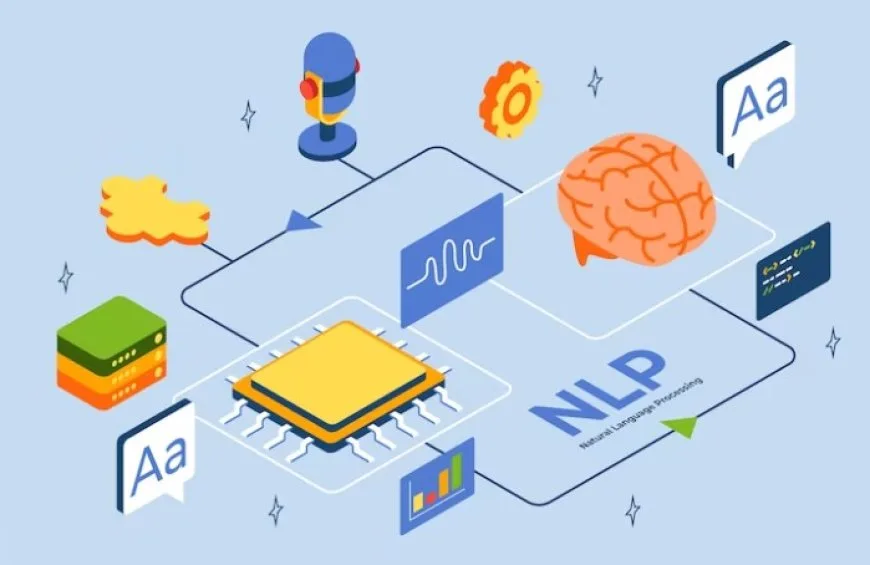
In the age of digital opinion, understanding public sentiment is not just advantageous—it’s essential for business survival. This is where the role of NLP in AI-based sentiment analysis becomes paramount.
Natural Language Processing (NLP) provides the foundational intelligence that allows artificial intelligence (AI) systems to move beyond mere word counting to genuinely comprehend opinions, emotions, and attitudes expressed in human language.
By transforming unstructured text into structured insight, sentiment analysis using NLP empowers organizations to listen at scale, turning tweets, reviews, and surveys into a strategic asset.
Table of Contents
The Critical Role of NLP in AI-Based Sentiment Analysis
At its core, AI sentiment analysis is a text classification problem: determining whether a piece of writing is positive, negative, or neutral. However, human language is complex, nuanced, and often contradictory. Simple keyword-based systems (e.g., counting “good” or “bad”) fail spectacularly with context, sarcasm, idioms, and comparative statements.
This is where NLP in AI-based sentiment analysis acts as the crucial differentiator. NLP provides the toolkit for machines to parse grammar, understand context, resolve ambiguity, and detect subtle emotional cues. Without the sophisticated capabilities of NLP, AI sentiment analysis would be a blunt instrument, incapable of handling the richness of human expression.
How NLP Powers Sentiment Analysis: Core Techniques?
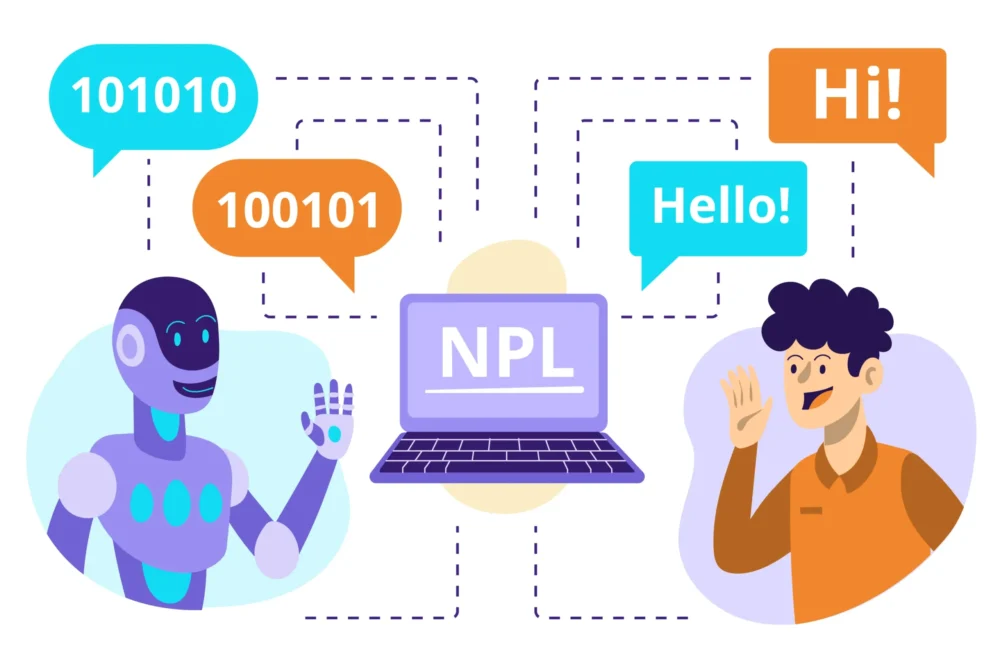
The process of sentiment analysis using NLP involves a multi-stage pipeline that deconstructs and analyzes text. Here’s how NLP techniques specifically enable accurate sentiment detection:
- Text Preprocessing & Tokenization: The first step in natural language processing for sentiment is to clean and prepare the raw text. NLP tasks here include:
- Tokenization: Breaking down a sentence into individual words or tokens (e.g., “The product is great, but delivery was late” becomes [“The”, “product”, “is”, “great”, “,”, “but”, “delivery”, “was”, “late”]).
- Normalization: Converting text to lowercase, removing punctuation and special characters.
- Handling Negations: A critical step where NLP identifies negation words (e.g., “not,” “never,” “isn’t”) and modifies the sentiment of subsequent words. For example, “not good” should be tagged as negative, not positive.
- Feature Extraction: This is where NLP converts text into a numerical format that machine learning models can understand. Key methods include:
- Bag-of-Words (BoW) & TF-IDF: These traditional methods represent text based on word frequency, helping identify prominent sentiment-laden terms.
- Word Embeddings (e.g., Word2Vec, GloVe): This advanced NLP technique represents words as dense vectors in a multidimensional space. Crucially, it captures semantic meaning—words like “excellent” and “superb” have similar vector representations, allowing the model to generalize sentiment understanding.
- Sentiment Classification with ML & Deep Learning: This is the analytical heart of the system. NLP features feed into various AI models:
- Traditional Machine Learning Models: Algorithms like Naïve Bayes, Support Vector Machines (SVM), and Logistic Regression are trained on labeled data (text preprocessed with NLP) to classify sentiment.
- Deep Learning Models: These represent the cutting edge of AI sentiment analysis. Recurrent Neural Networks (RNNs) and, more importantly, Transformer models (like BERT) use NLP to understand the context of every word in relation to all others in a sentence. This allows them to masterfully interpret sarcasm (“What a great idea…”), mixed sentiments, and complex sentence structures that stump simpler models.
Moving Beyond Polarity: Advanced NLP for Nuanced Sentiment
The role of NLP in AI-based sentiment analysis extends beyond simple positive/negative/neutral tagging. Advanced applications include:
- Aspect-Based Sentiment Analysis (ABSA): Here, NLP doesn’t just identify overall sentiment but pinpoints it for specific aspects or features. For example, in a restaurant review—”The food was fantastic, but the service was terribly slow”—NLP would identify positive sentiment for “food” and negative sentiment for “service.” This granular insight is invaluable for product development and service improvement.
- Emotion Detection: Going beyond polarity, sophisticated natural language processing for sentiment can detect specific emotions like joy, anger, sadness, or frustration, often using advanced lexicons and deep learning.
- Intent Analysis: NLP helps determine the writer’s intent—are they expressing a complaint, making a query, stating a desire, or offering a suggestion? This is crucial for routing customer feedback effectively.
Real-World Applications of NLP-Driven Sentiment Analysis
The fusion of NLP in AI-based sentiment analysis drives decision-making across sectors:
- Brand & Reputation Management: Companies monitor social media, news, and forums in real-time using sentiment analysis using NLP to gauge public perception, manage PR crises, and measure campaign impact.
- Customer Experience (CX) & Product Development: Analyzing customer reviews, support tickets, and survey responses with AI sentiment analysis reveals actionable insights into feature requests, pain points, and overall satisfaction, directly guiding roadmaps.
- Financial Markets: Hedge funds and traders analyze sentiment from financial news, earnings reports, and social media chatter to inform market predictions and trading algorithms.
- Political & Social Research: Campaigns and researchers gauge public opinion on policies, candidates, and social issues by analyzing sentiment in news articles and online discourse.
Challenges and the Future of NLP in Sentiment Analysis
Despite its power, natural language processing for sentiment is not without challenges. Sarcasm, irony, and cultural context remain difficult for even advanced models. The meaning of words evolves over time (e.g., “sick” meaning “cool”), and handling multiple languages or industry-specific jargon requires specialized models.
The future of NLP in AI-based sentiment analysis lies in:
- Multimodal Analysis: Integrating text with visual and audio cues (e.g., sentiment from a video’s speech tone and facial expressions).
- Context-Aware Models: Leveraging even larger language models with broader world knowledge to better understand implicit meaning.
- Bias Mitigation: Actively using NLP to identify and correct biases in training data that could skew sentiment results.
Conclusion
The role of NLP in AI-based sentiment analysis is both foundational and transformative. It is the essential technology that allows machines to decode the complexities of human opinion, turning vast oceans of unstructured text into clear, actionable insights.
From basic polarity detection to nuanced aspect-based analysis, sentiment analysis using NLP continues to evolve, driven by advances in deep learning. As a cornerstone of AI sentiment analysis, NLP ensures that businesses, researchers, and institutions don’t just collect data—they truly understand it, enabling more empathetic and data-driven engagement with the world.
Frequently Asked Questions (FAQs)
1. Can sentiment analysis using NLP accurately detect sarcasm?
This is one of the most challenging areas. While traditional sentiment analysis using NLP often fails at sarcasm, advanced deep learning models, particularly Transformer-based models like BERT and RoBERTa, have significantly improved. These models analyze the full context of a sentence and can sometimes detect contradictory cues that indicate sarcasm (e.g., “Oh, great, another meeting.”).
2. What’s the difference between lexicon-based and machine learning-based sentiment analysis?
A lexicon-based approach relies on a pre-built dictionary of words tagged with sentiment scores (e.g., “happy” = +0.8, “terrible” = -0.9). It calculates sentiment by summing scores. It is rule-based and doesn’t require training data but fails with context and complex phrasing. Machine learning-based AI sentiment analysis uses NLP to extract features and trains a model on labeled examples.
3. How do you measure the accuracy of an NLP sentiment analysis model?
The accuracy of natural language processing for sentiment models is typically measured using standard ML metrics on a held-out “test” dataset of human-labeled text. Common metrics include:
Accuracy: The percentage of total predictions (positive/negative/neutral) that were correct.
Precision & Recall: Particularly important for imbalanced datasets (e.g., more positive reviews than negative). Precision measures how many of the predicted negatives were actually negative. Recall measures how many of the actual negatives were correctly identified.
F1-Score: The harmonic mean of precision and recall, providing a single balanced metric. For nuanced tasks like aspect-based analysis, these metrics are calculated per aspect category.
