



If you are looking to explore Metaverse Investments and invest in metaverse platforms, you are entering a digital ecosystem that has matured significantly. Driven by advancements in spatial computing, blockchain technology, and AI-integrated virtual environments, metaverse investing provides exposure to the next phase of the internet—often called Web3..
How to Invest in Metaverse Assets
For those wondering how to invest in metaverse opportunities effectively, the market is generally divided into three main avenues:
- Virtual Real Estate: Purchasing land in decentralized worlds like The Sandbox or Decentraland.
- Digital Assets & NFTs: Trading unique, blockchain-verified items, from digital fashion to utility-based tokens.
- Infrastructure Stocks: Investing in the “picks and shovels” of the industry—companies like NVIDIA, Unity, or Meta that build the hardware and engines powering these worlds.
The Potential Rewards
The appeal of these trading opportunities lies in their power to diversify a portfolio beyond traditional markets. Key drivers for growth include:
- Rapid Asset Appreciation: Early movers in promising virtual spaces can see significant gains as user adoption increases.
- Secure Ownership: Blockchain technology ensures transparent ownership and secure peer-to-peer transactions, providing a layer of credibility to this emerging market.
- Institutional Adoption: Major brands and financial institutions are increasingly establishing “digital twins” and virtual storefronts, legitimizing the space.
Read more blog : How Blockchain Technology is Reshaping Business Security
Navigating the Risks
While the upside is high, the metaverse market remains speculative. Investors must weigh the excitement against substantial risks:
- Volatility: Asset prices can fluctuate wildly based on social trends and platform popularity.
- Regulatory Uncertainty: Frameworks for digital assets are still evolving globally, which can impact liquidity and legal protections.
- Technical Barriers: Adoption is still tied to hardware comfort and internet infrastructure, such as 5G and low-latency edge computing.
Evaluating these factors is crucial for maximizing returns while managing exposure. Understanding both the technological shifts and market sentiment is essential for any trader aiming to navigate this evolving landscape effectively.
Understanding Metaverse Investing: Opportunities and Risks

Metaverse investments provide exposure to a rapidly expanding digital ecosystem that combines virtual reality, digital assets, and blockchain technology. For those looking to invest in metaverse platforms, the market offers opportunities in virtual real estate, NFTs, and metaverse-focused companies. These trading opportunities allow for strategic portfolio diversification and direct exposure to an emerging market.
The potential rewards of metaverse investing are significant. Digital assets and virtual real estate can appreciate quickly, while companies building the underlying infrastructure may experience substantial revenue growth. Blockchain technology ensures secure ownership, transparent transactions, and verifiable records, strengthening the credibility of these digital investments.
However, risks remain a key factor. The metaverse is highly speculative, with inherent volatility in asset prices. Success depends on broader technological adoption, regulatory developments, and the evolving nature of virtual platforms. Current investor trends indicate both enthusiasm and caution, emphasizing the need for thorough research and careful capital allocation.
Understanding both the opportunities and risks is essential for anyone looking to navigate metaverse investments effectively and identify genuine trading opportunities in this emerging space.
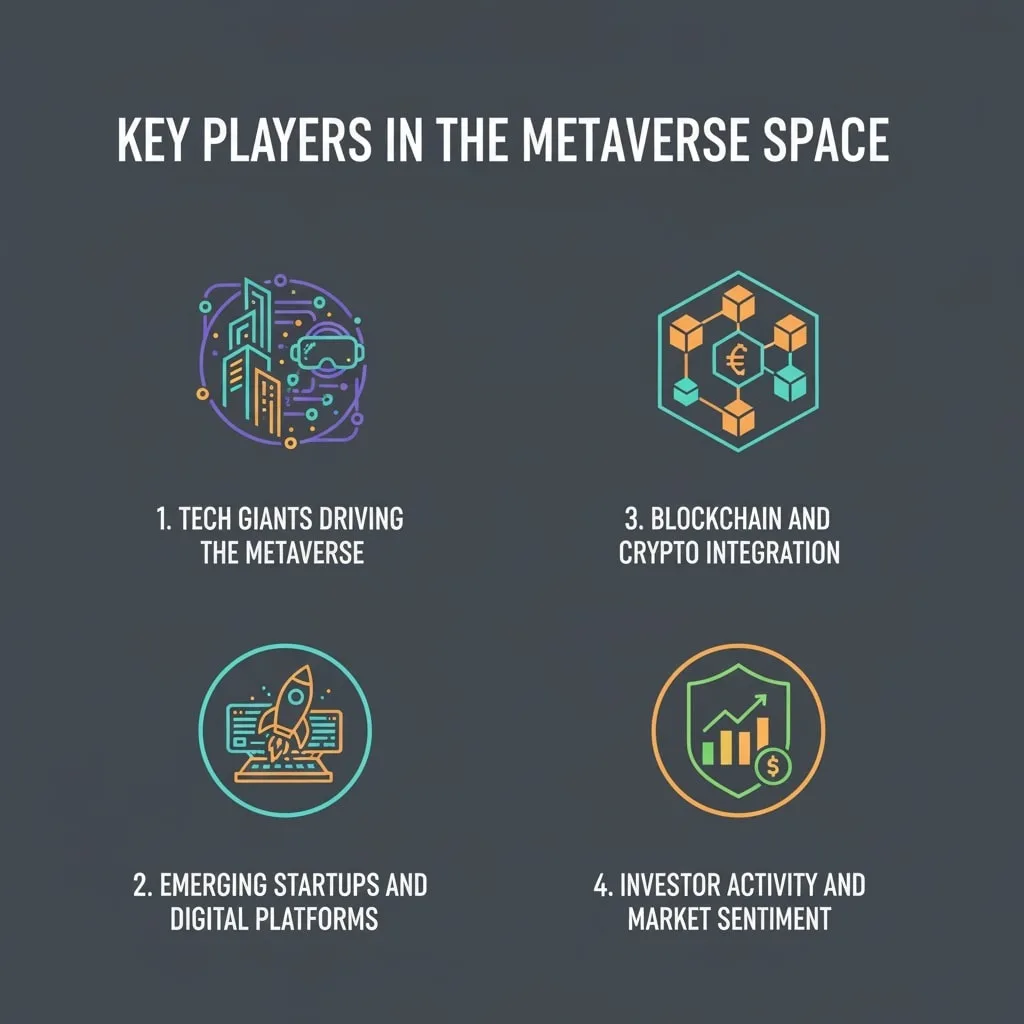
Key Players in the Metaverse Space
Tech Giants Driving the Industry
Major companies such as Meta, Microsoft, and NVIDIA are investing heavily in virtual reality infrastructure, AI-powered platforms, and cloud systems. Their initiatives provide more stable avenues for metaverse investing and demonstrate the market’s long-term potential.
Emerging Startups and Digital Platforms
Numerous startups are developing immersive experiences, NFT marketplaces, and interactive worlds. While these companies offer high growth potential for those looking at how to invest in metaverse startups, they carry more volatility compared to established firms.
Blockchain and Crypto Integration
Blockchain technology underpins digital ownership, NFT transactions, and decentralized trading opportunities. Digital assets and tokenized economies are integral to metaverse investing strategies and overall market potential.
| Category | Key Examples | Risk Level | Primary Focus |
| Tech Giants | Meta, NVIDIA, Microsoft | Low – Medium | Infrastructure, VR/AR Hardware & Cloud |
| Blockchain Platforms | Decentraland, The Sandbox | High | Virtual Land, Governance Tokens (MANA, SAND) |
| Digital Assets | NFTs, Tokenized Items | Very High | In-game utility, Digital Collectibles & Art |
| Service Providers | Unity, Roblox | Medium | Development Tools & Social Gaming Engines |
Market Trends in Metaverse Investments
The landscape of metaverse investments continues to evolve rapidly. Key trends highlight where trading opportunities and digital assets are gaining momentum:
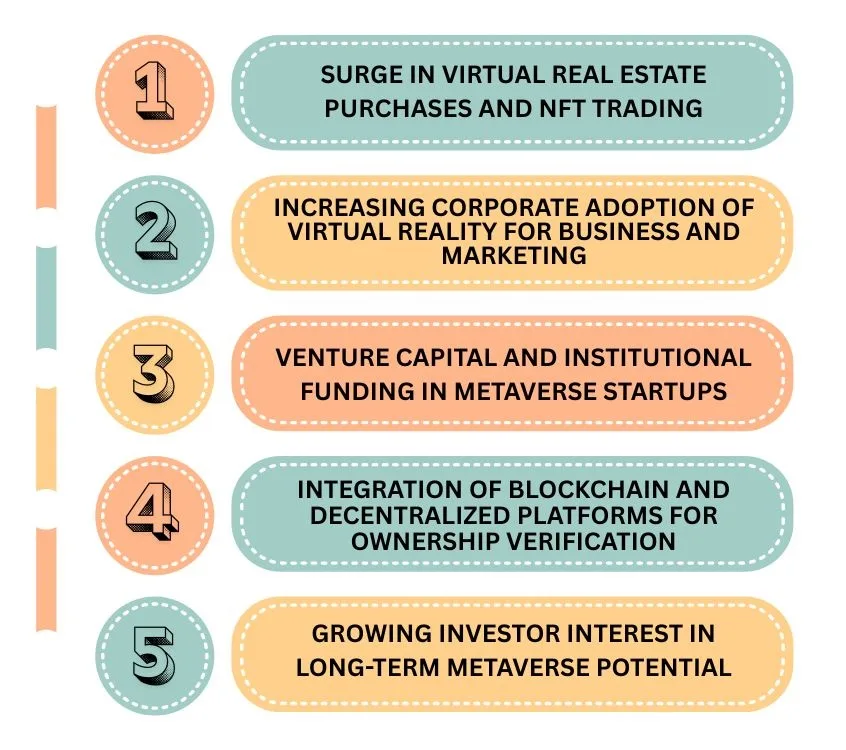
- Surge in Virtual Real Estate Purchases and NFT Trading
Virtual real estate platforms and NFT marketplaces are attracting investors, with high demand for unique digital properties. These assets offer portfolio diversification and long-term growth potential.
- Increasing Corporate Adoption of Virtual Reality for Business and Marketing
Companies are integrating virtual reality into operations, marketing campaigns, and customer engagement. This corporate interest supports the market potential for metaverse-focused investments.
- Venture Capital and Institutional Funding in Metaverse Startups
Startups developing immersive platforms and digital ecosystems are receiving significant VC backing. Institutional funding accelerates growth and validates the viability of metaverse business models.
- Integration of Blockchain and Decentralized Platforms for Ownership Verification
Blockchain technology ensures secure, transparent transactions for NFTs and digital assets, which builds trust among investors and drives adoption of metaverse trading opportunities.
- Growing Investor Interest in Long-Term Metaverse Potential
Investor trends indicate increasing confidence in the sustainability of the metaverse, encouraging both early adopters and institutional players to explore digital asset exposure.
These trends demonstrate how metaverse investments are becoming a structured, evolving market rather than just hype.
Challenges and Risks of Metaverse Trading
Metaverse trading is not without hurdles. Market volatility is high, and prices of digital assets can fluctuate dramatically, affecting both short-term and long-term returns. Regulatory uncertainty adds another layer of risk, as governments are still defining rules for virtual assets and NFT ownership.
Cybersecurity concerns also pose threats to investors, as breaches or platform vulnerabilities can lead to loss of digital assets. Technological adoption barriers exist too, as widespread use of virtual reality and metaverse platforms is still in early stages.
The speculative nature of early-stage metaverse companies means valuations can swing based on hype rather than fundamentals. Investors can mitigate these risks by conducting thorough research, diversifying holdings, and monitoring investor trends and platform developments. Understanding these challenges is critical to making informed decisions in metaverse investments.
A Strategic Approach for the Cautious Investor
So, is it hype or a real opportunity? The answer is likely both. The metaverse represents a genuine technological evolution with long-term potential. However, the current market is dominated by speculation. A prudent strategy is essential. Treat metaverse investments as a high-risk, high-reward portion of your portfolio—allocating only what you are prepared to lose entirely.
Conduct thorough research on platforms, their teams, and their roadmaps. Diversify within the space itself; don’t put all your capital into one land parcel or token. Most importantly, focus on the long-term horizon. This is not a market for day-trading but for patient capital betting on the gradual development of Web3. By balancing excitement with caution, investors can explore this new frontier without falling victim to its hype.
Are Metaverse Investments Sustainable?
The future of metaverse investments depends on adoption trends, technological advances, and the maturation of digital asset markets. Increasing integration of blockchain technology and robust virtual reality platforms may stabilize market growth.
Investor trends suggest cautious optimism, with interest in both short-term trading opportunities and long-term digital asset exposure. Companies building infrastructure, marketplaces, and immersive experiences are likely to see continued growth, offering real potential beyond the hype.
Sustainable adoption and regulatory clarity will be key drivers. Serious investors who focus on research, portfolio diversification, and credible platforms can capitalize on trading opportunities while mitigating risk. Over time, metaverse investments may evolve from speculative bets into mainstream assets with tangible market potential.
Frequently Asked Questions
Beyond buying virtual land, what are concrete ways to invest in the metaverse?
nvestors can focus on the “picks and shovels”—the companies building the infrastructure. This includes:
Tech Giants: Investing in hardware and cloud leaders like NVIDIA or Microsoft.
Metaverse ETFs: Buying shares of themed ETFs that hold a diversified basket of metaverse-related stocks.
Cryptocurrency & NFTs: Buying tokens that power digital economies (like MANA or SAND) or NFTs with specific utility.
What are the biggest risks that make it seem like “hype”?
The risks are substantial: the technology is still immature, and the regulatory environment for digital assets remains unclear. When you invest in metaverse projects, you must account for high volatility. Many projects could fail, and a popular virtual world today could become obsolete tomorrow. It is a speculative bet on a future that is not yet guaranteed.
How can a cautious investor tell a real opportunity from pure speculation?
Focus on tangible value and utility. Before committing capital, ask: Does this project solve a real problem or provide a unique experience? Does it have a strong development team and a clear roadmap? Understanding how to invest in metaverse assets safely requires looking at fundamentals—investing in companies that “enable” the metaverse is often more secure than buying speculative digital land.
