


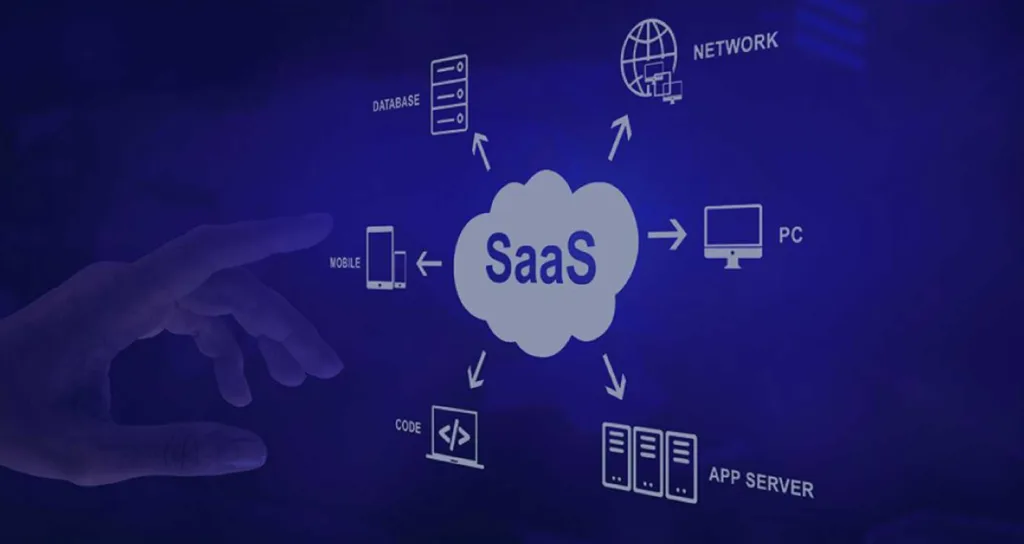
SaaS Architecture is the invisible engine powering the modern digital workplace. From the project management tool your team uses daily to the CRM system driving sales, these applications are delivered not as bulky software packages but as sleek, on-demand services over the internet.
Understanding the foundational design principles of SaaS architecture is key to appreciating its agility, scalability, and economic impact. This article breaks down the core components, design models, and delivery mechanisms that make Software-as-a-Service the dominant force in today’s cloud landscape.
Table of Contents
What is SaaS Architecture?
At its core, SaaS architecture refers to the specific design principles and structural framework that enable software to be hosted centrally in the cloud and delivered to customers on a subscription basis via the internet. Unlike traditional, on-premise software installed on individual machines, SaaS applications are accessed through a web browser or thin client.
The provider manages the entire stack—from the application code and data to the servers, storage, and networking—freeing the customer from complex IT overhead. This model hinges on several key architectural tenets: multi-tenancy, scalable infrastructure, and automated provisioning.
The Heart of the Model: Multi-Tenancy

The most defining characteristic of modern SaaS architecture is the multi tenant SaaS architecture. Imagine a secure, luxurious apartment building. A single, well-constructed building (the application) houses many individual tenants (customers).
Each tenant has their own private, configurable unit (their data and configuration), but they all share the foundational infrastructure—the foundation, plumbing, and electrical systems (the server hardware, application codebase, and database).
In a multi tenant SaaS architecture, a single instance of the software and its underlying database serves all customers. This is radically different from the single-tenant model, where each customer gets a completely separate, siloed instance. The benefits are profound:
- Cost Efficiency: Shared resources drastically reduce operational costs for the provider, savings often passed to the customer.
- Simplified Maintenance: A single codebase means updates, security patches, and new features are deployed universally and instantly for all tenants.
- Efficient Scalability: Adding a new customer is often a matter of configuring a new tenant in the database, not spinning up new servers.
Tenancy can be implemented at different levels—database, schema, or table—with varying degrees of data isolation and complexity, but the principle of shared core resources remains constant.
Building for Scale: The SaaS Infrastructure Backbone
Robust, elastic SaaS infrastructure is what makes the promise of on-demand software a reality. This infrastructure is built on top of major public cloud platforms like AWS, Azure, or Google Cloud and is designed for resilience and growth. Key components include:
- Microservices: Modern SaaS applications are increasingly built as a suite of loosely coupled, independently deployable services (e.g., a user authentication service, a billing service, a notification service). This allows teams to develop, scale, and update parts of the application without disrupting the whole system.
- APIs (Application Programming Interfaces): Everything in a SaaS ecosystem communicates via APIs. They connect internal microservices, allow for third-party integrations (like connecting your SaaS CRM to your email marketing tool), and enable mobile and desktop clients to interact with the core application.
- Automated DevOps & CI/CD: Continuous Integration and Continuous Delivery pipelines automate testing and deployment, ensuring new features can be shipped reliably and frequently. Infrastructure as Code (IaC) manages and provisions the cloud infrastructure through machine-readable definition files.
- Data Management & Security: In a multi tenant SaaS architecture, data segregation is paramount. Tenant isolation must be rigorously enforced at the application logic level. This is complemented by robust encryption (both at rest and in transit), comprehensive backup strategies, and strict compliance protocols.
From Theory to Practice: Software as a Service Examples

To see these architectural principles in action, consider these ubiquitous software as a service examples:
- Salesforce: The quintessential SaaS pioneer, built on a multi tenant SaaS architecture. Every company using Salesforce operates on the same core platform, with metadata and configurations defining their unique workflows, objects, and data security rules. Its vast ecosystem is powered by APIs.
- Slack: This collaboration tool exemplifies modern microservices-based SaaS architecture. Its real-time messaging, file sharing, and voice/video calling are handled by different, scalable backend services. Its powerful integration directory is a testament to its API-first design.
- Zoom: Delivering low-latency, high-quality video globally requires a massively scalable SaaS infrastructure. Zoom leverages a combination of cloud data centers and strategic edge computing to dynamically route traffic and ensure performance, showcasing infrastructure designed for elastic, peak-time demand.
These software as a service examples highlight how thoughtful architecture directly translates to user experience, reliability, and global reach.
Why the Architecture Matters
For customers, a well-architected SaaS product means seamless access, automatic updates, and worry-free scaling. For businesses building SaaS, the architectural choices around tenancy, service design, and infrastructure dictate operational costs, development velocity, security posture, and ultimately, the ability to compete and innovate.
Choosing a multi tenant SaaS architecture over a single-tenant model involves trade-offs between efficiency and customization. Investing in a microservices-based, API-driven design accelerates future growth but increases initial complexity. Ultimately, modern SaaS architecture is not just about building software; it’s about crafting a scalable, secure, and sustainable service delivery engine.
Conclusion
SaaS architecture is the blueprint for the software revolution. By mastering concepts like multi tenant SaaS architecture, leveraging elastic cloud SaaS infrastructure, and learning from leading software as a service examples, we can understand how technology is consumed in the 21st century.
It’s a shift from product to service, from installation to instant access, all made possible by a sophisticated, cloud-native architectural foundation. As businesses continue their digital transformation, the principles of SaaS design will only become more central to the technology landscape.
Frequently Asked Questions (FAQs)
1. What is the biggest advantage of a multi-tenant SaaS architecture?
The primary advantage is operational efficiency and cost-effectiveness. By serving all customers from a single, shared application instance and codebase, the SaaS provider significantly reduces hardware, maintenance, and update costs. This efficiency often allows for more competitive pricing and allows providers to roll out improvements, security patches, and new features to all users simultaneously and instantly.
2. How does SaaS infrastructure ensure my data is secure and private?
Reputable SaaS providers implement multiple security layers within their SaaS infrastructure. This includes strict tenant isolation logic within the multi tenant SaaS architecture, robust encryption for data both at rest and in transit, regular security audits, and compliance with standards like SOC 2, ISO 27001, and GDPR. Customers should always review a provider’s security whitepapers and compliance certifications.
3. Can a SaaS application be customized if it’s a shared, multi-tenant system?
Yes, extensively. While the core application code is shared, modern SaaS architecture is built for configurability. Providers offer a range of customization options through admin panels, configurable workflows, custom data fields, and white-labeling. For deeper integration and customization, platforms expose powerful APIs and developer tools that allow businesses to build custom extensions, connect to other systems, and tailor the application to their specific processes without affecting the shared codebase for other tenants.
