


SaaS pricing models play a major role in determining how much revenue a software business can generate from its customer base. A great SaaS product can still struggle to grow if its pricing is confusing, poorly positioned, or disconnected from the value customers receive.
For SaaS companies, pricing is more than choosing a monthly subscription amount. It involves deciding what customers pay for, how much they pay, how frequently they are billed, and which features or usage levels belong in each plan. The right SaaS pricing strategy can increase conversions, improve customer retention, raise average revenue per user, and create a clearer path for expansion.
Different businesses require different approaches. A project management platform may charge per user, while an AI software product may charge according to usage. A CRM may combine user-based pricing with feature tiers, while an enterprise platform may rely on custom contracts.
Understanding the most common SaaS pricing models can help you choose a structure that balances customer value with sustainable revenue growth.
Table of Contents
What Are SaaS Pricing Models?
SaaS pricing models define how a software company charges customers for access to its product. Unlike traditional software, where customers might pay a large upfront license fee, SaaS businesses commonly use recurring billing.
The most common structures include subscription-based pricing, tiered pricing, per-user pricing, usage-based pricing, and freemium models. Companies can also combine multiple approaches to create hybrid pricing.
The best model depends on factors such as product value, customer size, usage patterns, costs, competition, and the level of predictability your business needs.
SaaS Pricing Models That Maximize Revenue
1. Tiered Pricing
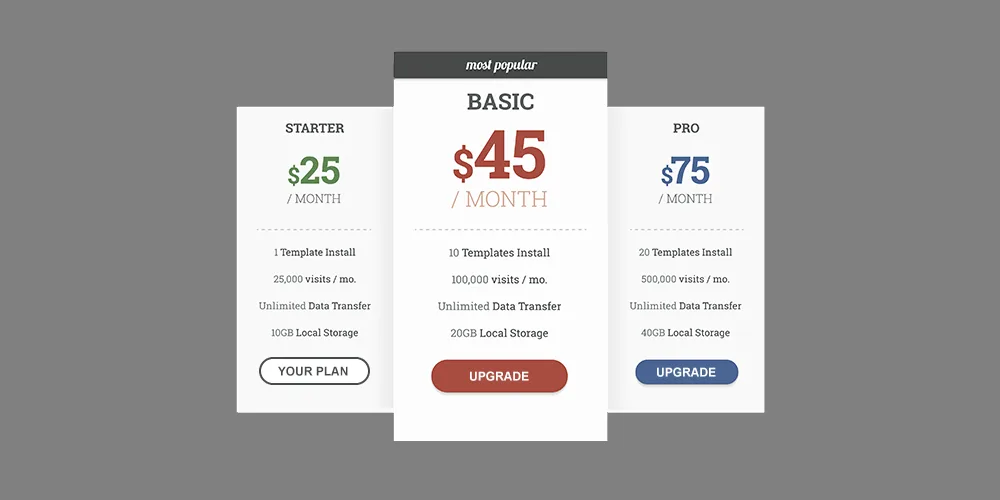
Tiered pricing is one of the most widely used SaaS pricing models. Customers are offered several plans with different feature sets, usage limits, or service levels.
For example:
- Starter — $19/month
- Professional — $49/month
- Business — $99/month
- Enterprise — Custom pricing
Tiered pricing allows customers to choose a plan that matches their needs while giving the company opportunities to increase revenue as customers grow.
A strong tiered structure usually has meaningful differences between plans. If the plans are too similar, customers have little reason to upgrade. If the differences are too large, lower-priced customers may feel that essential functionality has been intentionally removed.
Three or four plans are often easier for customers to understand than a long list of options.
2. Per-User Pricing
Per-user pricing charges customers according to the number of people using the software.
This model works particularly well for collaboration tools, CRM systems, project management platforms, communication software, and other products where value increases as more employees use the platform.
For example, a company could pay $15 per user per month. A five-person team would pay $75, while a 50-person team would pay $750.
One advantage is that revenue can grow naturally as the customer’s organization expands. However, businesses should avoid making pricing feel punitive when customers want to invite additional users.
Some SaaS companies therefore offer volume discounts or team-based pricing at higher user counts.
3. Usage-Based Pricing
Usage-based pricing, sometimes called consumption-based pricing, charges customers based on how much of a product they consume.
Possible usage metrics include:
- API calls
- Storage
- Transactions
- Messages
- AI tokens
- Video minutes
- Data processed
This model can work especially well when usage closely correlates with customer value.
For example, an AI platform might charge based on the number of API requests or tokens processed rather than charging every customer the same monthly subscription amount.
The key challenge is predictability. Customers may hesitate to adopt a product when they cannot estimate their monthly bill.
A good SaaS pricing strategy should therefore provide usage estimates, spending alerts, caps, or clear calculators where appropriate.
4. Freemium Pricing
Freemium combines a free plan with paid premium features.
The free version allows potential customers to experience the product before paying. Paid plans then provide additional functionality, higher limits, advanced support, or greater usage.
Freemium can create rapid user acquisition because there is little initial friction. It can be particularly effective when the product is easy to adopt and customers can experience its value quickly.
However, free users still consume infrastructure and support resources. A freemium model can therefore become expensive if only a very small percentage of users convert to paid plans.
The free plan should provide enough value to encourage adoption while leaving a clear reason to upgrade.
5. Flat-Rate Pricing
Flat-rate pricing offers one product at one price, usually with limited complexity.
For example:
All features — $49/month.
This approach makes buying decisions extremely simple. Customers do not have to compare multiple plans or understand feature restrictions.
Flat-rate pricing can work well for products with a relatively consistent customer base and a straightforward value proposition.
The disadvantage is limited monetization flexibility. A small business and a large enterprise may receive the same product for the same price even though the larger customer gets substantially more value.
6. Per-Feature Pricing
Per-feature pricing allows customers to pay for particular capabilities.
For example, a SaaS product might provide a core platform at one price and charge additional fees for advanced analytics, automation, integrations, or security features.
This model can increase average revenue by allowing customers to purchase only the functionality they need.
However, too many individual add-ons can create pricing complexity. Customers may feel that they are being charged repeatedly for capabilities they consider part of the core product.
7. Value-Based Pricing
Value-based pricing focuses on what the product is worth to the customer rather than simply calculating a price from development or operating costs.
Suppose a SaaS platform helps a company save 100 employee hours every month. Charging based on the value created may support a higher price than simply charging based on infrastructure costs.
This is one of the strongest approaches for maximizing revenue because it aligns pricing with customer outcomes.
The challenge is measuring value accurately. Companies need a strong understanding of customer economics, willingness to pay, and the outcomes their product creates.
How to Choose the Right SaaS Pricing Strategy
Choosing among different SaaS pricing models starts with understanding your customers.
Ask three fundamental questions:
How do customers receive value from the product?
If value increases with the number of employees, per-user pricing may make sense. If customers benefit according to usage, consumption-based pricing may be more appropriate.
Who is the ideal customer?
A freelancer and a large enterprise may have completely different expectations. Segmented pricing allows businesses to serve multiple customer groups without forcing everyone into one plan.
How predictable are costs and usage?
If customers experience unpredictable usage, they may prefer subscription pricing. If usage varies significantly and value follows consumption, usage-based pricing may be more appropriate.
The most effective SaaS pricing strategy often comes from matching the pricing metric to the way customers perceive value.
Common SaaS Pricing Mistakes to Avoid

Even a strong product can lose revenue because of poor pricing decisions.
One common mistake is underpricing. Companies sometimes assume that lower prices will attract more customers, but extremely low prices can reduce perceived value and make it difficult to support the product sustainably.
Another mistake is creating too many plans. Ten pricing options may technically provide flexibility, but they can create decision fatigue.
SaaS businesses should also avoid pricing plans that don’t clearly communicate the difference in value. Customers need to understand why one plan costs more than another.
Finally, don’t set pricing once and forget about it. Customer expectations, competitors, product capabilities, and operating costs change over time.
How to Increase SaaS Revenue Through Pricing
Pricing optimization can increase revenue without requiring a proportional increase in customer acquisition.
One approach is to improve the upgrade path. Make sure higher-priced plans provide features that growing customers genuinely need.
Another strategy is to introduce annual billing. Offering an annual subscription at a small discount can improve cash flow and reduce churn caused by monthly cancellation decisions.
Add-ons can also increase revenue when they represent meaningful additional value.
Companies should regularly analyze metrics such as:
- Average revenue per user
- Conversion rate
- Customer lifetime value
- Churn
- Expansion revenue
- Upgrade rates
- Revenue by plan
These metrics can reveal which parts of the pricing structure are working and which need improvement.
A/B Testing Your SaaS Pricing
Pricing should be treated as an ongoing experiment rather than a permanent decision.
Companies can test changes to packaging, price points, free trials, annual discounts, feature limits, and plan names.
However, simply testing whether a higher price produces more revenue from new customers isn’t enough. You should also examine conversion rates, retention, expansion revenue, refunds, and long-term customer value.
For example, increasing the price by 20% could reduce conversions but still increase total revenue if the remaining customers generate significantly more value.
Testing should therefore focus on overall business outcomes rather than individual metrics.
The Future of SaaS Pricing
SaaS businesses are increasingly experimenting with hybrid pricing structures that combine subscriptions, user counts, and usage.
This is particularly relevant for AI-powered software. A product might charge a base subscription for access to the platform while adding consumption fees for expensive AI operations.
As software becomes more automated and outcome-oriented, pricing may gradually shift from charging for access toward charging for measurable results or successful outcomes.
This evolution means SaaS companies will need to understand not just what their product does, but how customers experience its value.
Final Thoughts

The right SaaS pricing models can turn a good software product into a highly profitable recurring-revenue business. Tiered pricing, per-user subscriptions, usage-based billing, freemium, flat-rate plans, and value-based pricing all have advantages depending on the product and customer.
The most effective approach is to connect the pricing metric with customer value, make the plans easy to understand, and provide a natural path for customers to upgrade as their needs grow.
There is no universal pricing formula. The best SaaS pricing strategy is one that balances customer willingness to pay, perceived value, competitive positioning, and sustainable business economics.
FAQs About SaaS Pricing Models
1. What is the best SaaS pricing model?
There is no single best model. Tiered pricing is widely used because it gives customers choices and creates opportunities for expansion, while usage-based pricing can work especially well when customer value closely follows consumption.
2. How can SaaS companies maximize revenue?
Companies can maximize revenue by aligning pricing with customer value, optimizing plan tiers, improving upgrade paths, testing prices regularly, offering annual billing, and monitoring metrics such as churn, conversion, and expansion revenue.
3. Is freemium good for SaaS businesses?
Freemium can work well when the free product encourages adoption and a meaningful percentage of users eventually upgrade. However, companies must ensure that the cost of supporting free users does not outweigh the revenue generated by paid customers.
4. Should SaaS companies use one pricing model or combine several?
Hybrid pricing can be effective when different elements represent different aspects of value. For example, a SaaS company might combine a base subscription with per-user charges or usage-based fees. The structure should remain simple enough for customers to understand.
