


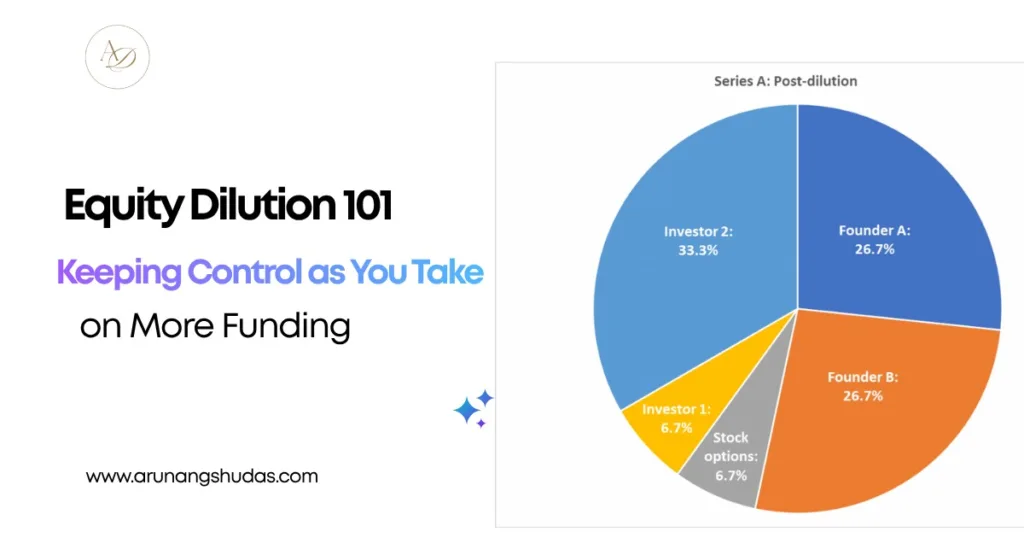
What is Equity Dilution?
Starting a business and being 100% of the company is a heady experience. However, as soon as you want to fund the company, your ownership starts to decline. This is where the concept of equity dilution meaning comes into play. Put simply, equity dilution occurs when a company issues new shares, diluting the stake of existing shareholders. That’s not necessarily a bad thing – it’s often the cost of growth – but it’s important to do it right.
Let’s think of a startup as a pizza. Your pizza is a whole pie. You cut into slices to share with fundraising investors. You may lose some of your slice but hopefully, the pie gets much bigger. That’s why entrepreneurs take that hit to grow their venture.
Why Dilution Happens in Startups
Startups require funding for various activities: for example, to build a team, develop a product, or expand a delivery. To get funds from investors, they need to own some of the company, which causes dilution. Here’s a tangible example of the dilution of shares meaning, where more shares are issued, and your ownership of the company is reduced.
But dilution isn’t just about dilution. It’s about getting money, expertise and connections. It’s about achieving a balance between control and growth. Those who recognise this early in their ventures are better prepared for better deals and retention of control.

Breaking Down Key Concepts
1. Equity dilution meaning
Understanding the equity dilution means appreciating the changes in control of the company. New shareholders not only bring capital; they bring power. This can change the board, the decisions made, and potentially the trajectory of the company.
For instance, if you own 100% of a company and issue 20% to a new investor, you’ll now own 80%. Doing this again and again might mean a large drop in ownership. So it’s important to understand the impact of the dilution meaning early into a company’s journey.
2. Dilution of shares meaning
Dilution of shares meaning is specifically increased share capital issued by a company. This results in the existing shares having claim to a smaller portion of the company.
If your startup began with 1,000 shares and you own 100%, If you then sell 500 shares to investors, you now have 1,500 shares. Your shares are now 66.6% of the business. This is unavoidable mathematics for founders.
3. What are diluted shares?
Diluted shares are the total number of shares that can be created from the potential exercise of stock options, convertible notes or warrants. These provide a true picture of equity. Too often, founder owners are blissfully unaware until it’s too late, and then they find their ownership is not what they expected.
How Equity Dilution Works in Real Scenarios
1. Example of Founder Dilution
Suppose you start a new business and have 100%. In the first round of funding, you give away 25%. Now you own 75%. In the following round you give another 20% away, so your share is even smaller. This compounding can lead to substantial dilution.
However, if the value of the company increases from ₹1 crore to ₹50 crore, then you will have a higher absolute value. So, dilution doesn’t necessarily mean bad. It’s about substance, not form.
2. Impact Across Funding Rounds
New investors in each round lead to higher dilution. Seed, Series A, Series B – each comes with different dilution rates. The founders must anticipate this and how much they can afford to be diluted.
This is explained in the table below:
| Funding Round | Ownership Before | Ownership After | Dilution % |
| Seed | 100% | 75% | 25% |
| Series A | 75% | 60% | 15% |
| Series B | 60% | 45% | 15% |
Measuring Dilution Effectively
1. Using a dilution calculator percent
The dilution calculator percent is a very useful resource for the founder. It allows you to predict how much you will dilute in each raise. You can enter the valuation, investment, and ownership structure to see what will happen.
It’s not only a technical aid, however, it’s also a bargaining tool. That founder can negotiate effectively and eliminate surprises while raising funds.
2. Key Metrics to Track
When calculating dilution, look at the:
- Post round ownership
- Pre-Money and Post-Money valuation
- Fully dilated share count
By staying ahead of these metrics, you’re staying in control in the long term.
How to Ensure You’ve Got the Funds in Control
1. Smart Equity Allocation
An effective strategy to keep dilution away is considered equity distribution. Don’t give away too much too soon. Early dilution is compounded and can be damaging.
So raise as much as you need to reach the next milestone. That means you can raise further funding at higher valuations, thus diluting less.
2. Negotiating Investor Terms
Percentage is not everything – control is everything. Even if you have less of a stake, you can control:
- Board seat agreements
- Voting rights
- Founder-friendly clauses
Founders lose (or keep) power during negotiation. Consider more than just value.
Funding Options Beyond Traditional Equity
1. Get Funding for Startup through Alternatives
There are alternatives to equity for funding. Eager entrepreneurs are seeking alternative methods to Get Funding for their startups without huge dilution. Alternative financing such as revenue-based funding, grants, and debt can get you funding without needing to give up equity.
This is particularly helpful in the early stages when valuations are low. Afterall, why dilute by so much now?
2. Crowdfunding Platforms for Startups
Another new trend is the use of Crowdfunding Platforms for Startups These platforms offer a way to raise funds from a large audience. Not only does it provide an alternative to venture capital, but attracts early customers.
Crowdfunding also means founders are not giving up as much control as VC, making it an attractive option for startups.
How Arunangshu Das Helps Founders
The issue of equity dilution can be challenging and this is where advice is crucial. Arunangshu Das has played a pivotal role in educating founders on dilution, financing approaches and control strategies. And it’s not abstract – it’s practical, with an emphasis on practical examples and implications.
He offers tailored strategies for startups to pursue growth without dilution. From funding rounds to a dilution calculator percent and even alternative sources of funding, his advice helps founders stay informed. His advice can help any founder looking to grow without giving up control.

Conclusion
Dilution can be part of the game in the startup process but control can’t. By knowing the meaning of equity dilution, strategically timing funding rounds, and considering other funding options, entrepreneurs can hit the win-win of growth and control. It all comes down to being proactive, educated and forward-thinking.
FAQs
1. What is equity dilution in simple terms?
Equity dilution is the loss of percentage ownership when shares are sold to investors.
2. Is there such a thing as bad dilution?
Not necessarily. Dilution reduces founder equity, but increases company value, leading to capital gain.
3. How do I calculate the percent of my dilution?
This dilution calculator percent will give you this percentage by inputting the current number of shares, number of shares to be issued and the value of the company.
4. Is there a way to raise funds without dilution?
Yes, you can secure funding without raising equity stakes, through means such as debt and Crowdfunding Platforms for Startups.
5. How much equity should co-founders hold?
There is no rule of thumb, but founders should aim to retain as much control as possible (often, more than 50% in the early years).
