


VPS hosting options represent the critical performance tier for growing websites and applications. When a shared hosting environment becomes too restrictive and a dedicated server is overkill or too expensive, a Virtual Private Server (VPS) offers the perfect balance of power, control, and cost.
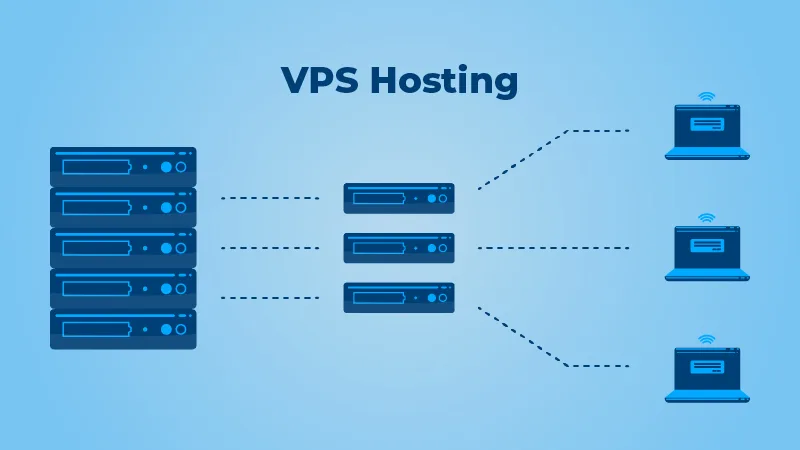
The right VPS hosting solution provides dedicated resources (CPU, RAM, storage) within a virtualized environment, ensuring your site’s performance isn’t impacted by other users on the same physical machine.
For businesses experiencing growth, developers needing a stable sandbox, or any project demanding consistent speed and reliability, choosing from the highest-performance VPS hosting options is the most strategic upgrade you can make.
Table of Contents
What Defines a High-Performance VPS Host?
Not all VPS solutions are created equal. True performance is dictated by several underlying technological factors:
- Hardware Foundation: The use of modern, high-clock-speed CPUs (like AMD EPYC or Intel Xeon), fast NVMe SSDs (versus traditional SATA), and ample RAM.
- Virtualization Technology: Hypervisors like KVM are generally superior to OpenVZ for true resource isolation and performance consistency, as they provide a fully virtualized private server.
- Network Uptime and Speed: A high-speed network backbone (often 1 Gbps or higher) with low latency and a guaranteed 99.9%+ uptime.
- Management Level: While unmanaged VPS offers raw power, managed VPS hosting options provide performance optimization, security hardening, and expert support, which can significantly impact real-world results.
Top 7 VPS Hosting Options for Maximum Performance
The following providers have distinguished themselves by offering VPS solutions built on premium hardware, with robust networks and configurations designed to deliver top-tier speed and reliability.
1. Liquid Web / Nexcess
Liquid Web is synonymous with premium managed hosting. Their VPS offerings are built for serious business applications, featuring high-performance Intel processors, all-SSD storage, and a cloud-integrated infrastructure. What sets them apart is their fully managed “Heroic Support,” which includes proactive monitoring, security patching, and performance optimization. For users who need enterprise-grade power without the sysadmin burden, this is a top-tier VPS hosting choice.
2. A2 Hosting (Turbo Boost & Core VPS)

A2 Hosting brings its “Turbo” speed philosophy to its VPS lineup. Their top-tier plans utilize NVMe drives and offer the option for Turbo servers, which use a lightweight software configuration to deliver page loads up to 20x faster. They provide both unmanaged and managed VPS hosting options, giving users flexibility. With a commitment to high-performance hardware and optimized software stacks, A2 is ideal for speed-centric websites and applications.
3. Cloudways Platform
Cloudways uniquely delivers managed VPS hosting options by partnering with top cloud infrastructure providers like DigitalOcean, Linode, Vultr, Google Cloud, and AWS. This model allows you to select the underlying hardware and data center location for your needs. Cloudways adds value through its managed layer: easy scaling, automated backups, built-in caching (Breeze for WordPress), firewalls, and 24/7 support. It’s the ultimate blend of raw cloud VPS power with user-friendly management.
4. InMotion Hosting
InMotion Hosting provides high-performance VPS solutions with a strong emphasis on business use. Their plans feature fast SSDs, free cPanel/WHM licenses on many tiers, and a high level of resource allocation. They offer both self-managed and fully managed VPS hosting, backed by their reliable, US-based customer support. InMotion is a robust choice for those seeking a balance of performance, useful features, and strong support from a long-standing provider.
5. DreamHost VPS
DreamHost offers straightforward, performance-oriented VPS hosting with a commitment to open source. Their servers use 100% SSDs and provide scalable RAM. A significant advantage is their custom control panel, which is clean and intuitive for server management. While they offer unmanaged plans, their support is accessible and helpful. DreamHost’s VPS is a great option for developers and WordPress users who prefer a simplified yet powerful environment.
6. Hostwinds

Hostwinds stands out for its flexibility and customizable VPS configurations. Users can tailor CPU cores, RAM, storage (SSD or NVMe), and bandwidth during ordering. They offer both managed and unmanaged VPS hosting options, with instant scalability and an impressive 99.999% uptime guarantee on their enterprise-tier plans. This level of customization allows users to build a server that precisely matches their performance requirements and budget.
7. GreenGeeks VPS
While famous for eco-friendly hosting, GreenGeeks’ VPS services are built for power. Their plans utilize energy-efficient, high-performance hardware, including Intel Xeon processors and RAID-10 SSD storage for speed and redundancy. They offer fully managed VPS hosting with features like a free cPanel license, automated daily backups, and real-time power monitoring. For those seeking a performance VPS with a strong environmental ethos, GreenGeeks is a compelling option.
Choosing the Right High-Performance VPS for Your Needs
Selecting among these VPS hosting options requires aligning the provider’s strengths with your project’s demands. Consider your need for management: a managed VPS from Liquid Web or Cloudways saves immense time and expertise. If raw, customizable power is the priority, an unmanaged option from Hostwinds or A2 Hosting provides maximum control.
Always evaluate based on the specific hardware (NVMe vs. SSD, CPU type), the quality of the network, and the transparency of the provider’s uptime commitments. Investing in a high-performance VPS is an investment in your website’s user experience, search engine ranking potential, and overall operational resilience.
Frequently Asked Questions (FAQs)
1. What is the main performance difference between a shared host and a VPS?
On shared hosting, your site shares all server resources (CPU, RAM) with dozens or hundreds of other sites, leading to unpredictable performance during traffic spikes. A VPS provides guaranteed, isolated resources (a dedicated slice of CPU and RAM) that are solely for your use. This isolation ensures consistent performance, faster load times, and no “bad neighbor” effect, making it a superior choice for growing, resource-intensive sites.
2. Should I choose a managed or unmanaged VPS for best performance?
This depends on your technical skill. An unmanaged VPS offers raw performance and full control, but you are responsible for all software updates, security, optimizations, and troubleshooting. A managed VPS delivers optimized performance through expert configuration, proactive monitoring, and security hardening by the host’s team. For most businesses, a managed VPS provides better real-world performance and security without the steep learning curve.
3. How easy is it to scale my resources with these VPS hosting options?
One of the key advantages of modern VPS solutions, especially cloud-based ones, is easy scalability. Providers like Cloudways, Hostwinds, and A2 Hosting typically allow you to upgrade your CPU, RAM, or storage with just a few clicks and a server reboot, often with no downtime. This means you can start with what you need and seamlessly grow your server alongside your website’s traffic.
