


he advent of 5G technology has ushered in a transformative era for businesses worldwide, redefining how operations are conducted and communication is facilitated. Unlike its predecessors, 5G promises Business Operations unprecedented speed, ultra-low latency, and the capacity to connect a vast number of devices simultaneously.
This fifth-generation wireless network is not merely an upgrade; it’s a catalyst for innovation across industries, from manufacturing to healthcare, retail, and beyond. As businesses increasingly rely on real-time data, seamless connectivity, and advanced digital tools, the impact of 5G on business operations and communication cannot be overstated. It empowers organizations to streamline processes, enhance customer experiences, and unlock new revenue streams while adapting to an ever-evolving technological landscape.
In this guide, we explore how 5G is reshaping the modern business world, delving into its practical applications, industry benefits, implementation challenges, and long-term implications.
1. The Leap from 4G to 5G: Why It Matters for Businesses
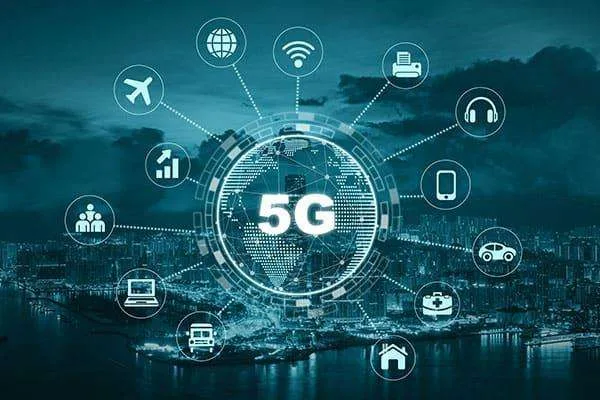
The shift from 4G to 5G represents a quantum leap forward in wireless technology, with download speeds potentially reaching up to 10 gigabits per second (Gbps)—100 times faster than 4G, according to data from Ericsson.
This leap isn’t just about faster web browsing; it is about enabling a hyper-connected ecosystem where machines, employees, and customers interact in real time. For businesses, this means:
- Improved operational efficiency through automated workflows.
- Smarter, data-driven decision-making.
- The capability to scale cutting-edge technologies like the Internet of Things (IoT), Artificial Intelligence (AI), and Augmented Reality (AR).
As companies race to stay competitive in a digital-first economy, understanding and harnessing the power of 5G has become a strategic imperative.
2. How 5G Enhances Business Operations
The impact of 5G on business operations is profound, primarily due to its ability to support high-speed data transfer and ultra-low latency.
Manufacturing & Logistics
In manufacturing, 5G enables the creation of smart factories where machines equipped with IoT sensors communicate seamlessly to optimize production lines. This minimizes downtime, reduces waste, and enhances precision. A report by McKinsey highlights that 5G-powered automation could increase productivity in industrial settings by up to 20%. Similarly, logistics companies use 5G to track global shipments with pinpoint accuracy.
Retail & E-Commerce Integration
Retail businesses also stand to benefit significantly. Brick-and-mortar stores can integrate AR to offer immersive shopping experiences, such as virtual try-ons or furniture placement simulations. Furthermore, 5G supports smart shelves and automated inventory systems. According to Forbes, retailers adopting 5G-driven solutions could see a 15% increase in operational efficiency.
- Automation & IoT Integration: Connects thousands of devices per square kilometer for real-time data collection.
- Remote Operations: Manage distant or hazardous facilities with minimal delay.
- Energy Efficiency: Optimized processes reduce power consumption, aligning with corporate sustainability goals.
3. Revolutionizing Business Communication & Collaboration
Communication is the backbone of any organization, and 5G is revolutionizing how teams connect internally and engage with customers.
- Unified Communication & Video Conferencing: Tools like Zoom and Microsoft Teams benefit from reduced lag and pristine high-definition video quality, making remote collaboration feel as natural as in-person meetings.
- AI-Powered Customer Service: Telecom giants like Verizon note that 5G enables faster response times in customer service applications, such as real-time AI chatbots that process queries instantly.
- Enhanced Customer Retention: A study by Deloitte predicts that companies leveraging 5G for communication could see a 25% improvement in customer retention through personalized, immersive interactions.
4. Industry-Specific Impacts of 5G
The influence of 5G stretches across diverse sectors, delivering tailored advantages:
- Healthcare: Enables telemedicine with real-time diagnostics and remote surgeries. The Harvard Business Review reports that 5G could reduce medical procedure times by up to 30%.
- Automotive: Powers connected and autonomous vehicles, allowing cars to communicate with infrastructure and other vehicles to prevent accidents (Tesla case studies highlight major safety strides).
- Entertainment & Media: Facilitates ultra-high-definition 4K/8K streaming and immersive cloud gaming without buffering, even in congested areas.
- Agriculture: Drives precision farming through real-time crop and soil monitoring via connected drones, boosting yields by up to 15% (Agriculture.com).
5. 5G vs. 4G: Feature Comparison Table
To understand why 5G is a fundamental game-changer, review the direct technical and practical comparison below:
| Feature | 5G Network | 4G Network |
| Peak Speed | Up to 10 Gbps | Up to 100 Mbps |
| Latency | 1 millisecond (ms) | 20–30 milliseconds (ms) |
| Device Capacity | 1,000,000 devices / km² | 100,000 devices / km² |
| Energy Efficiency | High (dynamically optimized usage) | Lower (less optimized power draw) |
| Primary Applications | IoT, AR/VR, Autonomous Systems, Smart Cities | Basic Mobile Data, Standard Streaming |
6. Challenges and Implementation Considerations
While the benefits of 5G are undeniable, adoption requires navigating notable hurdles:
- Infrastructure Costs: Rolling out private or enterprise 5G requires investment in small cells, antennas, and network upgrades. Cisco estimates global 5G infrastructure spending will exceed $1 trillion by 2030.
- Cybersecurity Risks: With a massive expansion in connected endpoints, the attack surface grows. Kaspersky warns that poorly secured 5G networks risk sophisticated data breaches.
- Regulatory and Spectrum Complexities: Inconsistent policies across regions can slow down global deployment timelines.:
Conclusion: The Future of Business with 5G
The impact of 5G on business operations and communication is nothing short of revolutionary, setting the stage for a future where high-speed connectivity drives continuous progress. From smart factories humming with IoT-enabled machines to customer service powered by real-time AI chatbots, 5G is redefining what is possible in the modern marketplace. Its ability to deliver lightning-fast speeds, ultra-low latency, and massive device connectivity empowers organizations to innovate, adapt, and scale in ways that were once unimaginable.
Frequently Asked Questions (FAQs)
Q: How does 5G improve daily business efficiency?
A: 5G boosts efficiency by enabling ultra-fast data transfer, real-time industrial automation, and seamless multi-device connectivity, which cuts down operational delays and optimizes workflows.
Q: Is 5G secure for enterprise business use?
A: While 5G includes advanced encryption standards, its expanded connectivity increases the potential attack surface. Businesses must implement zero-trust architectures and robust cybersecurity protocols to mitigate these risks.
Q: Which industries benefit the most from adopting 5G?
A: Healthcare, manufacturing, automotive, retail, and entertainment are leading the charge, utilizing 5G for telemedicine, smart factories, connected vehicles, and immersive customer experiences.
Q: What are the primary costs of adopting 5G for small businesses (SMEs)?
A: Costs typically include compatible hardware upgrades, network subscription or private infrastructure deployment, and staff training. SMEs often begin with hybrid or cloud-managed solutions to balance costs.
Q: How does 5G impact remote and hybrid work models?
A: 5G enhances remote work by eliminating video conference lag, enabling simultaneous file sharing of massive datasets, and supporting high-performance cloud tools from any location.
