



Single Page Applications (SPAs) are a modern web development approach that allows users to interact with a web application seamlessly without reloading the entire page. In an SPA, only the necessary parts of the page are updated, delivering a faster and smoother user experience. In contrast to traditional web applications that reload an entire page each time the user interacts with it, SPAs use JavaScript to dynamically update the page as users interact with it. This not only improves user engagement but also enhances the application’s overall performance.
SPAs have gained popularity in recent years, driven by the rise of frameworks like React, Angular, and Vue.js.
Understanding the Fundamentals of SPAs
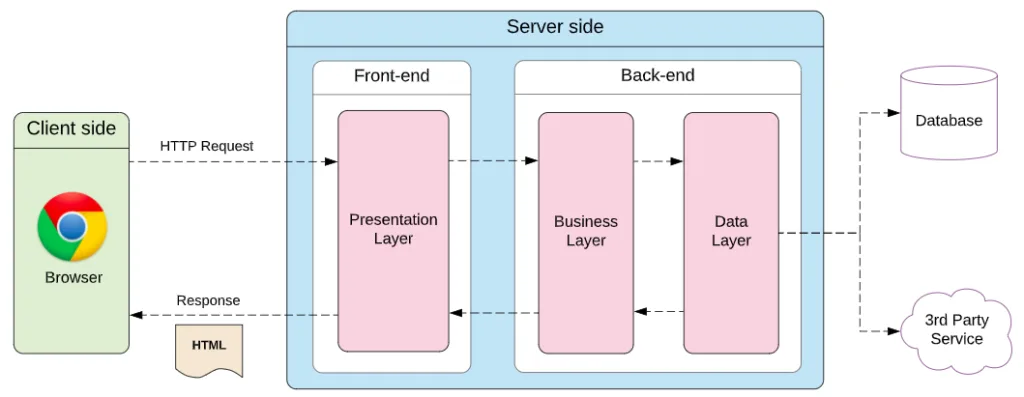
In a traditional multi-page application (MPA), the server loads a new HTML page for every request. For example, when a user clicks a link, the browser requests a new page from the server, and a full-page reload occurs. SPAs, however, load a single HTML file at the start and dynamically update its content. This is done by fetching data asynchronously, usually with the help of JavaScript and frameworks like React or Angular. In short, SPAs work by updating content within the current page without having to reload or redirect to another page.
The key technology that enables SPAs is AJAX (Asynchronous JavaScript and XML), which allows the web application to communicate with the server behind the scenes. When a user takes an action that would normally require a new page, like clicking a button or filling out a form, AJAX sends a request to the server and updates only the part of the page that needs to be changed. This creates a more responsive and fluid user experience, similar to that of a native app.
How Do SPAs Work?
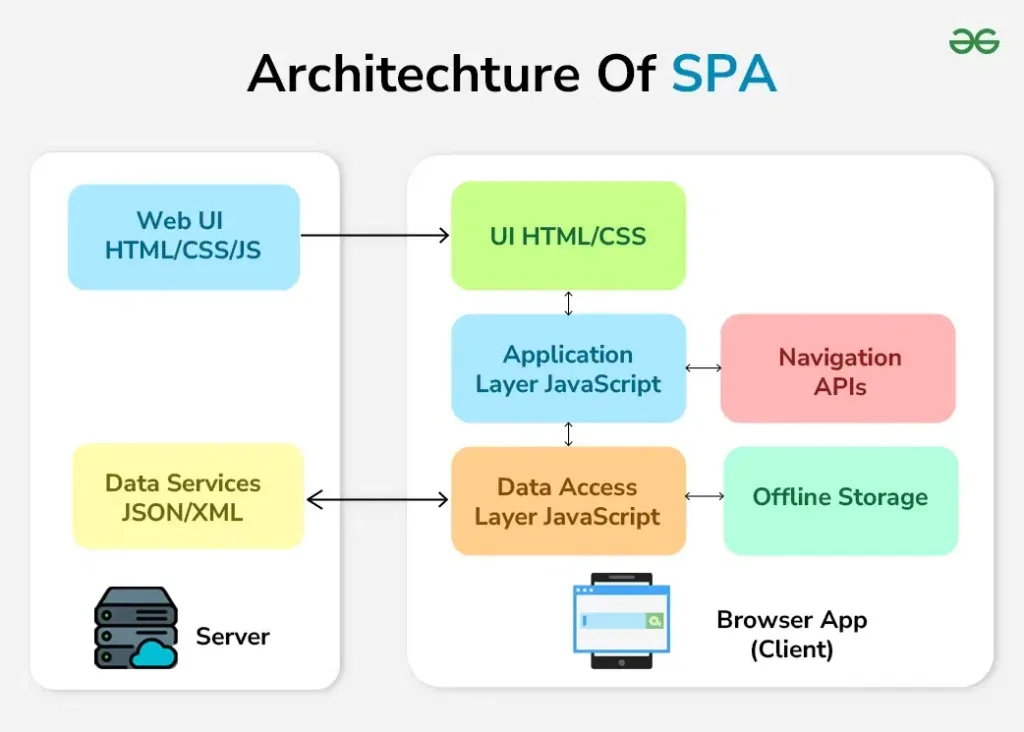
When a user visits an SPA, the application loads a single HTML page along with all the necessary CSS and JavaScript. This is known as the initial load. After this initial load, any interaction with the application—such as clicking a link or submitting a form—does not require a new page to be loaded. Instead, JavaScript intercepts the event and makes an API call to fetch only the data that is needed, updating the HTML dynamically.
The process of an SPA typically includes:
- Initial Load: When the user first opens the SPA, a single HTML file and all relevant JavaScript and CSS files are loaded. This is the most resource-intensive part of using an SPA since the entire application logic is loaded at once.
- Rendering and Routing: The application manages user navigation and routes without changing the page URL. For instance, clicking on a link might update only part of the page or load a new component while keeping the user on the same “page.”
- Data Fetching: The SPA fetches data from the server through API calls and updates the page dynamically using JavaScript. It only loads what is required rather than reloading the entire page.
- DOM Manipulation: JavaScript frameworks like React and Vue utilize a “virtual DOM” to efficiently render only the elements that need updating, reducing the burden on the browser.
- Session Management: To maintain the user’s session without full-page reloads, SPAs often use techniques like storing data in the browser’s
localStorage,sessionStorage, or using cookies.
Why Are SPAs So Popular?

SPAs have gained popularity among web developers for several reasons:
1. Enhanced User Experience
SPAs deliver a fast and fluid user experience, similar to native applications. Since they load only the essential components and data required for each interaction, users experience minimal delays, creating a smooth and uninterrupted browsing experience. For example, if a user wants to view a new article on a news website, an SPA can dynamically load the article content without reloading the page.
2. Speed and Performance
SPAs are generally faster than traditional multi-page applications. Since the SPA initially loads everything it needs, subsequent interactions require less data transfer, resulting in faster load times. This is particularly advantageous on mobile devices where network speeds can vary. The dynamic nature of SPAs ensures that data is fetched and loaded only when needed, reducing the overall data usage and improving performance.
3. Efficient Development with Reusable Components
Modern JavaScript frameworks enable developers to build applications using reusable components. Components are modular units that can be reused throughout an application. For instance, a login form, a navigation bar, or a product card can be created once and used across different sections of the app. This component-based approach improves development efficiency and maintainability, allowing developers to work faster and more effectively.
4. Real-Time Feedback
SPAs provide real-time feedback, which is crucial for interactive applications like social media, e-commerce, and messaging platforms. Actions like form validation, content updates, and notifications can be handled in real-time without waiting for a page reload. This enhances user engagement and satisfaction by making the application feel responsive and interactive.
5. Compatibility with Mobile and Desktop Apps
Many SPAs are designed to function seamlessly across different devices, making them a popular choice for applications that need to be responsive. Some SPAs are even developed as Progressive Web Apps (PWAs), allowing users to install the web app on their device, access it offline, and receive push notifications, similar to native mobile apps.
Read more blog : AI AssistWorks Review: Features, Pricing & Use Cases
Advantages of SPAs
- Blazing-Fast Navigation By loading the core application shell once and fetching data dynamically via APIs, SPAs eliminate the need for full-page reloads. This creates seamless, instant transitions that mimic a desktop application—essential for high-engagement platforms like social media and real-time collaboration tools.
- Streamlined Development Lifecycle Modern frontend ecosystem components (like React, Angular, and Vue) decouple the client-side UI from the backend logic. This separation allows frontend and backend teams to work in parallel. Furthermore, reusable component architectures and robust state management libraries dramatically accelerate feature delivery while keeping the codebase clean.
- Robust Offline Capabilities SPAs naturally evolve into Progressive Web Apps (PWAs). By leveraging service workers and local caching strategies, they can store critical data on the user’s device. This ensures the application remains functional and responsive even during complete network dropouts—a massive win for mobile users on unstable connections.
Disadvantages of SPAs
Heavy Initial Load Time (The “Blob” Effect) Because SPAs typically rely on client-side rendering, the browser must download, parse, and execute a massive initial JavaScript bundle before displaying any meaningful content. On slower networks or low-spec mobile devices, this can lead to a frustrating, prolonged white-screen experience during the first visit.
SEO Challenges
Since SPAs dynamically render content on the client side, traditional search engines may struggle to index their pages effectively. While search engines have improved at crawling JavaScript-rendered pages, SPAs may still have challenges with SEO compared to MPAs, which offer static HTML pages. To improve SEO, developers may need to implement Server-Side Rendering (SSR) or Static Site Generation (SSG).
Increased Memory Usage
SPAs keep most of the application logic on the client side, which can lead to higher memory usage. This can be a concern for users with low-powered devices, as the application may perform poorly if it consumes too much memory.
Popular Frameworks for Building SPAs
Several JavaScript frameworks have emerged to help developers create SPAs efficiently:
- React: Developed by Facebook, React is one of the most popular libraries for building SPAs. Its component-based architecture and virtual DOM make it highly efficient for creating dynamic applications.
- Angular: Maintained by Google, Angular is a full-featured framework that provides tools for routing, state management, and form handling, making it ideal for larger applications.
- Vue.js: Vue is a lightweight framework with a gentle learning curve, popular among developers for building SPAs. It offers a component-based architecture and integrates well with existing applications.

Conclusion
The popularity of SPAs shows no signs of waning. The combination of fast, dynamic user experiences and development efficiency has made them a go-to choice for modern web applications. As technology continues to evolve, the introduction of better SEO techniques, improved JavaScript engines, and offline capabilities will likely make SPAs an even more attractive choice. Whether for creating an e-commerce site, a social media platform, or an internal business application, SPAs provide developers with the tools to build robust, responsive, and user-friendly applications.
FAQs About Single Page Applications (SPAs)
1. What is a Single Page Application (SPA)?
A Single Page Application (SPA) is a web application that loads a single HTML page and dynamically updates content without reloading the entire website. SPAs provide a faster and smoother user experience compared to traditional multi-page websites.
2. Why are SPAs popular in modern web development?
SPAs are popular because they offer faster performance, seamless navigation, real-time updates, and an app-like user experience. Frameworks like React, Angular, and Vue.js also make SPA development more efficient and scalable.
3. How do Single Page Applications improve website performance?
SPAs improve performance by loading only the required data instead of refreshing the entire page. This reduces server requests, minimizes loading times, and creates a smoother browsing experience for users.
4. What are the disadvantages of SPAs?
Some common disadvantages of SPAs include slower initial load times, higher browser memory usage, and SEO challenges due to client-side rendering. Developers often use Server-Side Rendering (SSR) or Static Site Generation (SSG) to improve SEO performance.
5. Which frameworks are commonly used to build SPAs?
The most popular frameworks and libraries for building SPAs are React, Angular, and Vue.js. These technologies help developers create fast, responsive, and scalable web applications.
