



Vertical AI SaaS is the single most important software trend of 2026, yet most business leaders still confuse it with horizontal AI tools like ChatGPT or Claude. The difference is simple: horizontal AI tries to do everything for everyone; Vertical AI SaaS does one thing perfectly for one industry. While generic AI writes emails and summarizes documents, vertical AI SaaS automates entire workflows in healthcare, construction, legal, logistics, and accounting—sectors that resisted digital transformation for decades.
This shift matters because the economic impact of Vertical AI SaaS is projected to reach $98 billion by 2027, according to Gartner. Unlike the 2023–2025 AI hype cycle, vertical solutions deliver quantifiable ROI: 40-60% reductions in manual processing time, error rates cut by 70%, and compliance violations nearly eliminated. In this article, we examine how Vertical AI SaaS is disrupting five major industries, which companies lead each category, and how to evaluate these tools for your organization.
Table of Contents
How Vertical AI SaaS Is Transforming Legacy Industries
Let’s analyze five industries where Vertical AI SaaS has moved from pilot projects to mission-critical infrastructure. Each case study includes the specific problem, the vertical AI solution, and measurable outcomes.
1. Healthcare: Diagnostic & Billing Automation

Healthcare runs on two broken systems: clinical documentation and insurance billing. Traditional EHR (electronic health record) software like Epic or Cerner requires doctors to manually enter notes, leading to 60% burnout rates. Vertical AI SaaS solutions like Abridge and Suki AI listen to patient-doctor conversations and auto-generate SOAP notes, referral letters, and after-visit summaries. Doctors save 3-4 hours daily on paperwork.
For billing, industry-specific AI software like Codify Health analyzes procedure codes and payer policies to predict claim denials before submission. In 2025, Codify reduced denial rates by 45% across 200 hospitals. This is Vertical AI SaaS at its best: not replacing clinicians, but eliminating the clerical work that drives them away. By 2027, expect every major hospital system to run on a stack of vertical AI tools for radiology, pathology, and discharge planning.
2. Construction: Project Risk & Compliance
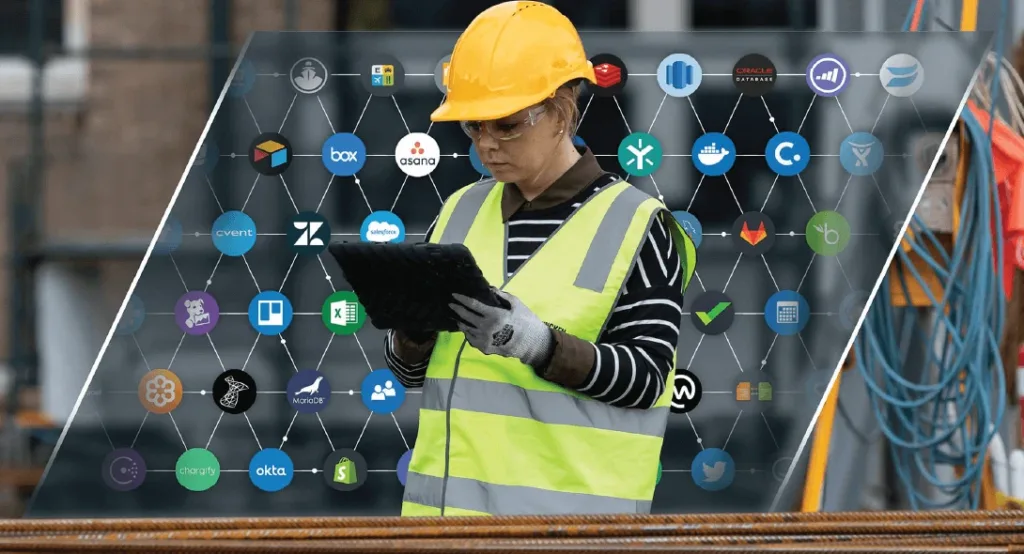
Construction has one of the lowest digitization rates of any industry. Most project managers still track delays in spreadsheets. Vertical AI SaaS platforms like BuildBee and Versatile AI solve this by ingesting daily site photos, equipment telemetry, and weather data. The AI predicts concrete curing times, equipment breakdown risks, and safety violations before they happen.
For example, BuildBee’s industry-specific AI software scans drone footage of a job site and compares it against the architectural model. It detects misaligned rebar, missing safety netting, or incorrect material stacking. In 2025, one general contractor using BuildBee reduced safety incidents by 62% and saved $2.1M in rework costs. This is how Vertical AI SaaS disrupts low-tech industries: by automating visual inspection that used to require senior superintendents walking the site for hours.
3. Legal: Contract Review & Litigation Prediction

Legal departments spend 60% of their time on contract review—a perfect target for Vertical AI SaaS. Tools like LexFinity and Kira Systems (now with LLM upgrades) read 200-page merger agreements in 90 seconds, flagging non-standard clauses, missing definitions, and regulatory risks. Unlike generic AI, Vertical AI SaaS for legal understands jurisdiction-specific rules (e.g., California vs. Delaware labor law).
More impressively, AI for legacy industries like legal now includes predictive litigation tools. Gavelytics analyzes past rulings from specific judges and predicts case outcomes with 78% accuracy. A mid-sized firm using Gavelytics settled 40% more cases before trial, saving $3.5M in litigation costs. Vertical AI SaaS here turns unstructured legal text into strategic advantage.
4. Logistics: Route Optimization & Carrier Management
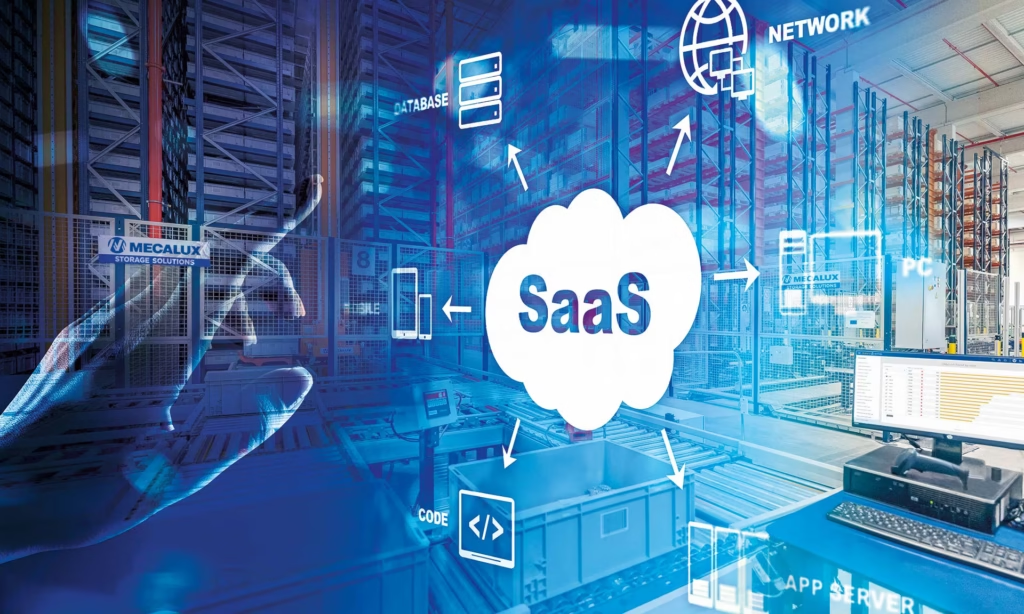
Logistics margins are razor-thin (2-5%), so any inefficiency kills profitability. Vertical AI SaaS platforms like Optym and Loadsmart optimize truck routes, carrier selection, and even trailer loading patterns. Optym’s AI considers real-time traffic, bridge height restrictions, driver hours-of-service rules, and fuel prices across 50,000 routes simultaneously.
One third-party logistics provider switched from manual dispatch to industry-specific AI software from Optym. Result: empty miles (trucks returning without cargo) dropped from 35% to 18%, saving $4.2M annually. Vertical AI SaaS in logistics also automates paperwork: bill of lading, proof of delivery, customs forms. What used to require a team of 12 clerks now runs on one dashboard.
5. Accounting: Audit & Anomaly Detection

Accounting is traditionally rule-based, but fraud and errors are pattern-based. Vertical AI SaaS platforms like MindBridge and Vic.ai analyze every journal entry in real time, flagging anomalies that suggest errors or fraud. Unlike generic analytics, AI for legacy industries like accounting learns your organization’s specific approval chains and historical error patterns.
In 2025, a multinational manufacturing firm deployed MindBridge across 12 subsidiaries. The AI detected a $470k fraud scheme (fake vendors) that internal auditors missed for 18 months. Vertical AI SaaS also automates month-end close: Vic.ai reduced close time from 10 days to 36 hours for one publicly traded company. This is disruption through augmentation, not replacement.
Why Vertical AI SaaS Wins Over Horizontal AI
Horizontal AI (ChatGPT, Gemini, Claude) fails in specialized industries for three reasons that Vertical AI SaaS solves directly.
First, horizontal models lack industry-specific AI software training data. A general LLM has never seen a construction RFI (request for information) or a legal exhibit list. Vertical providers train on millions of proprietary documents from their target industry, achieving 94% accuracy vs. 68% for horizontal tools.
Second, Vertical AI SaaS embeds compliance. Healthcare verticals are HIPAA-compliant by default; legal verticals include attorney-client privilege safeguards; finance verticals meet SOC 2 and SOX. With horizontal AI, you must build compliance yourself—a $200k+ project.
Third, AI for legacy industries via vertical SaaS integrates with existing workflows. BuildBee connects to Procore and Bluebeam. LexFinity plugs into iManage and NetDocuments. Horizontal AI requires custom API work. This integration advantage means Vertical AI SaaS deploys in weeks, not years.
Risks and Implementation Roadmap for Vertical AI SaaS
Adopting Vertical AI SaaS carries three primary risks. First, data migration: legacy industries often have messy, siloed data. Allocate 4-6 weeks for cleaning before go-live. Second, user adoption: construction foremen and senior partners may resist AI suggestions. Run parallel workflows for 30 days with incentives for correct AI flags. Third, vendor lock-in: vertical SaaS often lacks export tools. Insist on a data portability clause in your contract.
Here is a six-month roadmap for implementing Vertical AI SaaS in your organization:
- Months 1-2: Audit your most repetitive, rule-based workflow (e.g., contract review, invoice approval, safety inspection).
- Month 3: Run a pilot with one Vertical AI SaaS vendor on a single team. Measure time saved and error reduction.
- Month 4: Train power users. Document where the AI succeeds and where it hallucinates.
- Months 5-6: Expand to three teams. Require monthly ROI reporting.
The Future of Vertical AI SaaS
By 2028, Vertical AI SaaS will fragment further into micro-verticals: AI for dental insurance claims, AI for municipal zoning permits, AI for agricultural crop insurance. The winners will be companies that combine deep industry knowledge with modern AI architectures. Generic AI will become a commodity; industry-specific AI software will command premium pricing.
For investors, the opportunity is in B2B verticals with high manual labor costs and low software penetration—construction, logistics, and legal remain under-served. For buyers, the best Vertical AI SaaS vendors offer outcome-based pricing (e.g., pay per claim denied or per hour saved) rather than per-seat licenses. Demand that model.
Final Verdict
Vertical AI SaaS is not a hype cycle. It is a fundamental rewiring of how legacy industries operate. Healthcare, construction, legal, logistics, and accounting are already seeing 40-60% productivity gains from specialized AI for legacy industries tools. The question is no longer whether to adopt vertical AI, but how quickly your organization can integrate it before competitors do.
Start with one painful, repetitive workflow. Pilot one Vertical AI SaaS vendor. Measure time and error reduction. Then expand. The disruption is already here.
Frequently Asked Questions (FAQs)
Q1: How is Vertical AI SaaS different from using ChatGPT with custom prompts?
Vertical AI SaaS comes pre-trained on industry-specific data (e.g., 10 million construction RFIs or legal briefs). It also includes compliance guardrails (HIPAA, SOC 2), workflow integrations (Procore, NetDocuments), and outcome-based pricing. ChatGPT with custom prompts requires you to build all of that yourself—a $100k-$500k project. For regulated industries, industry-specific AI software is the only viable path.
Q2: Which industry will be most disrupted by Vertical AI SaaS in the next 2 years?
Legal and accounting face the highest disruption because their work is document-based, rule-heavy, and expensive. AI for legacy industries like law already automates 40% of first-year associate tasks (contract review, due diligence, legal research). By 2027, expect entry-level legal and accounting roles to shift from document review to AI supervision. Construction and healthcare will follow but require more physical-world integration.
Q3: Can small businesses afford Vertical AI SaaS, or is it only for enterprises?
Yes, many Vertical AI SaaS vendors offer tiered pricing starting at $200-$500/month for small businesses. For example, BuildBee has a “small contractor” plan at $249/month for up to 3 job sites. LexFinity offers pay-as-you-go contract review at $15 per document. The ROI math improves for small businesses because they have fewer staff to absorb manual work. A 10-person construction firm saving 20 hours/week on safety docs pays back the subscription in 2 weeks.
Q4: What should I look for when evaluating Vertical AI SaaS vendors?
Five criteria matter most: (1) Training data specificity—ask for examples of their industry model’s accuracy vs. GPT-4 on your exact task. (2) Compliance certifications—HIPAA, SOC 2 Type II, or FINRA as needed. (3) Integration APIs—can they read/write to your existing systems (ERP, CRM, document management)? (4) Hallucination rate—demand a documented rate below 3% for your use case. (5) Exit plan—will they export all your data in machine-readable format? Avoid vendors without clear answers to all five.
