


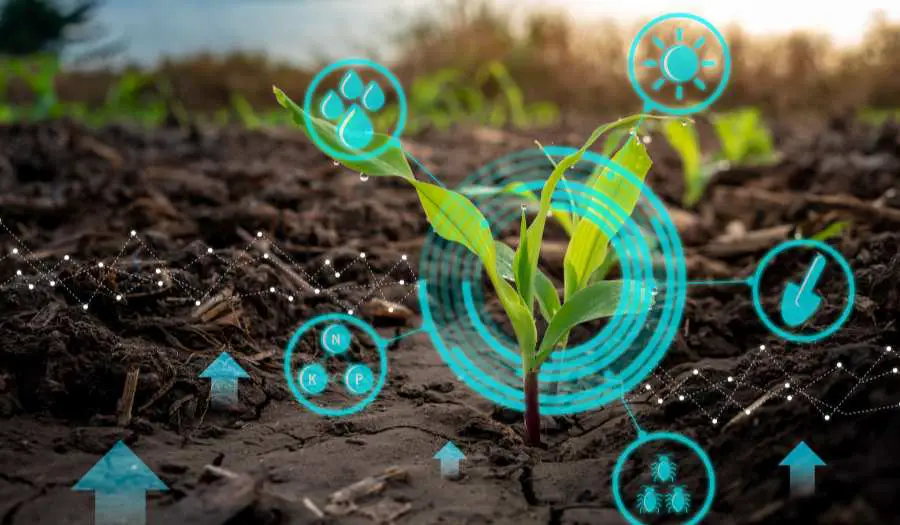
IoT in Precision Agriculture is revolutionizing the fundamental economics of farming. By integrating a network of physical devices—sensors, drones, and automated machinery—with data analytics, this approach allows for microscopic management of field conditions. The primary economic driver for adoption is the direct and significant reduction of the three largest operational costs: water, fertilizer, and labor.
Moving beyond blanket applications and manual guesswork, IoT in Precision Agriculture enables farmers to apply resources only where they are needed, in the exact amounts required, and at the optimal time. This targeted strategy not only boosts profitability but also promotes profound environmental stewardship.
This article explores how interconnected technologies are creating a new era of efficiency, slashing input waste and redefining farm management.
Table of Contents
The Core Challenge: Inefficiency in Traditional Practices
Conventional farming often operates on a whole-field basis, treating vast acres as a uniform entity. Water is applied via flood or broad sprinkler systems, fertilizer is spread evenly, and labor is spent on repetitive, manual scouting and tasks. This paradigm is inherently wasteful, as it ignores the natural variability within any single field—differences in soil composition, moisture retention, slope, and microclimates.
The result is the over-application of expensive inputs in some areas and under-application in others, leading to suboptimal crop performance, nutrient runoff, depleted water resources, and unnecessarily high labor overheads. Enter the data-driven, site-specific approach made possible by the Internet of Things.
Optimizing Water with Smart Irrigation
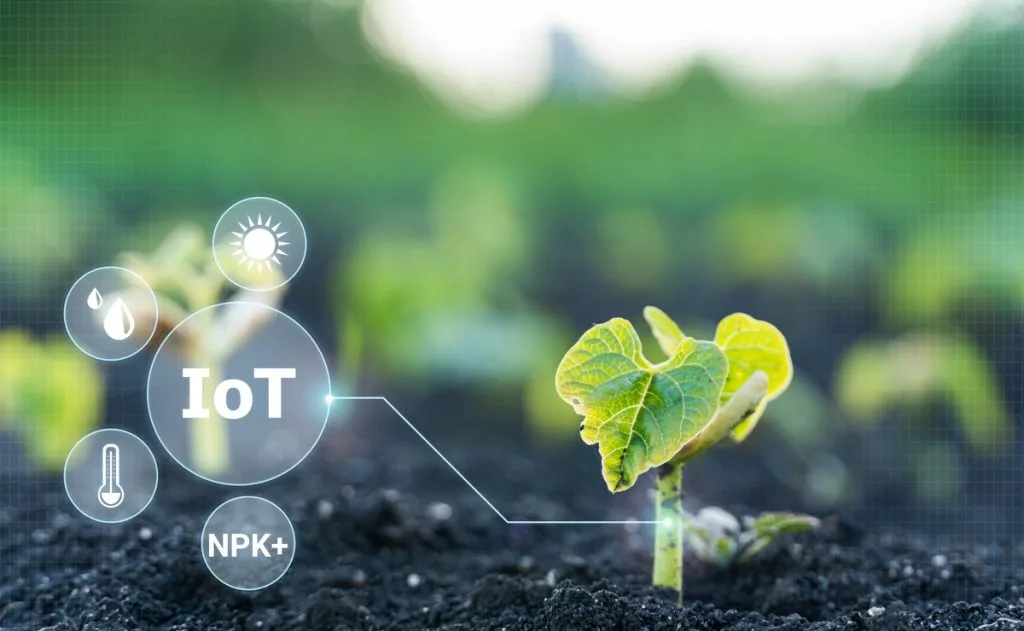
Water scarcity is a critical global issue, and agriculture is the largest consumer of freshwater. IoT in Precision Agriculture tackles this head-on through smart irrigation systems, which are the antithesis of traditional watering schedules.
- The Sensor Network: Underground soil moisture probes provide real-time, volumetric data at various root-zone depths. These IoT in Precision Agriculture sensors tell the system not just surface conditions, but exactly how much water is available to the plant.
- Automated, Informed Action: This data is fed to a central control system, which can automatically activate and adjust drip or pivot irrigation zones. The system integrates with local weather station data to account for evapotranspiration and rainfall forecasts, preventing watering before a rain event.
- The Outcome: Farmers can achieve precise irrigation, maintaining ideal soil moisture levels. This reduces water usage by 20-30% on average, lowers pumping energy costs, minimizes nutrient leaching beyond the root zone, and promotes healthier, less disease-prone crops. Every drop is accounted for and utilized effectively.
Targeting Fertilizer with Variable-Rate Technology
Fertilizer represents a massive and volatile cost input. Applying it uniformly is both economically and environmentally unsustainable. IoT enables a surgical approach.
- Data Collection for Nutrient Mapping: Sources of data include soil electrical conductivity (EC) sensors, satellite or drone-based NDVI (Normalized Difference Vegetation Index) imagery showing plant health/vigor, and historical yield maps. This creates a multi-layered map of field variability.
- Prescription Maps and Automated Application: Analytics software interprets this data to generate a “prescription map.” This map is loaded into a tractor-equipped with a variable-rate spreader or sprayer. As the machinery traverses the field, GPS guidance ensures it automatically adjusts the fertilizer blend and application rate on-the-fly, meter by meter.
- The Outcome: This ensures nutrients are supplied according to the specific deficiency and yield potential of each micro-zone. It boosts crop uptake efficiency, reduces total fertilizer use by 10-20%, increases yield quality, and dramatically cuts the risk of nitrogen runoff into waterways, combating pollution and algal blooms.
Automating Labor-Intensive Tasks
Labor is often the most challenging cost to manage, marked by shortages, rising wages, and human fatigue. IoT in Precision Agriculture addresses this through automation and remote monitoring.
- Remote Monitoring: Instead of daily physical scouting, farmers use data dashboards. Soil moisture, crop canopy images from field cameras, and pest trap sensors provide a comprehensive field status from their office or smartphone. This shifts labor from manual discovery to strategic response.
- Automated Machinery: From auto-steer GPS tractors that drive themselves with centimeter accuracy to fully automated weeders that use computer vision to identify and eliminate weeds, machinery is becoming autonomous. Drones can autonomously scout hundreds of acres in minutes or even apply targeted treatments.
- The Outcome: This reduces the hours required for routine tasks like irrigation checks, scouting, and even driving equipment. It allows the existing workforce to focus on higher-value management, maintenance, and strategic decision-making. It also enables farm managers to oversee more acreage with greater control and less physical strain.
Integration and the Path to a Connected Farm
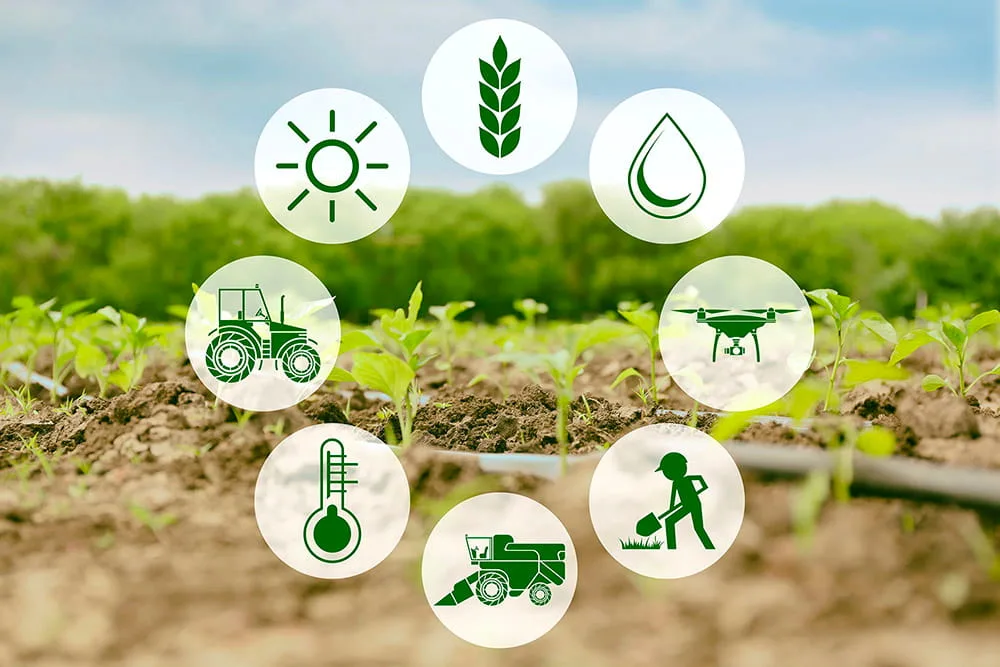
The true power of IoT in Precision Agriculture is realized when these systems are integrated. Data from soil sensors informs both irrigation and fertilization schedules. Yield data from one harvest refines the planting and input strategy for the next. This creates a virtuous cycle of continuous improvement and learning. The integrated “Farm Management Information System” (FMIS) becomes the digital brain of the operation, turning disparate data streams into a cohesive action plan that systematically drives down costs across the board.
While challenges like initial investment, data literacy, and reliable rural connectivity persist, the return on investment (ROI) is becoming increasingly clear and compelling. As technology costs fall and interoperability improves, the barrier to entry lowers. The future points towards even more integrated systems, where AI models predict pest outbreaks or optimize harvest times, further locking in efficiency gains.
Conclusion
The integration of IoT within precision agriculture is fundamentally a story of resource intelligence. By replacing estimation with exact measurement and blanket applications with targeted action, farmers are gaining unprecedented control over their largest cost centers.
The trilogy of water, fertilizer, and labor—long the burdens of agricultural production—is being transformed into areas of optimized efficiency and savings. IoT in Precision Agriculture is not merely a technological upgrade; it is an essential strategic tool for ensuring the economic viability and environmental sustainability of farms in the 21st century, proving that the most intelligent farms are also the most economical.
FAQs on IoT in Precision Agriculture
1. Is the initial cost of IoT technology prohibitive for small to mid-sized farms?
While there is an upfront investment, the ROI through input savings (water, fertilizer, fuel) and labor efficiency often justifies the cost. Many solutions are now modular and scalable. A farmer can start with a basic soil moisture sensor system for smart irrigation, which pays for itself in water savings, and then gradually add variable-rate fertilization or drone scouting. Additionally, grants, subsidies, and ” Farming-as-a-Service” leasing models are becoming more available.
2. How does IoT in precision agriculture handle data security and privacy?
This is a valid concern. Farmers should work with reputable providers who offer clear data ownership agreements—ensuring the farmer retains ownership of their agronomic data. Secure, encrypted cloud platforms and private local networks (like LoRaWAN) are used to transmit data. It’s crucial for farmers to inquire about security protocols and data usage policies before adopting any platform.
3. What happens if the internet connection fails on a remote farm?
Modern systems are designed with offline functionality. Sensor gateways can often store data locally until connectivity is restored. Critical automated machinery, like tractors with auto-steer, typically use GPS signals directly and store pre-loaded prescription maps, so they can operate without a live internet connection. System design should always include redundancy for critical operations.
4. Can IoT systems really account for the immense variability in weather?
Yes, this is a key strength. IoT systems don’t operate in a vacuum. They integrate real-time hyper-local weather data from on-farm stations and forecast services. This allows for dynamic adjustment. For example, a smart irrigation system will automatically skip a scheduled cycle if rainfall is detected or forecasted, and a disease-risk model can alert a farmer to spray based on specific leaf wetness and temperature conditions, not just a calendar date.
