


The success of a high-stakes project is rarely decided during execution; it is determined during the Project Startup Phase. While the instinct of many leaders is to rush into the “doing” phase, the most critical focus area for a project startup is establishing absolute clarity.
In digital transformation and startup scaling, clarity acts as the fundamental architecture. Without it, even the most talented teams succumb to scope creep, mismatched expectations, and resource drain.
Also Read – How to Invest in Startups
The Definition of a Project Startup Phase
Think of the startup phase as the “Strategic Blueprinting” period. It is the stage where a project transitions from an abstract concept to a structured initiative. Key objectives during this phase include:
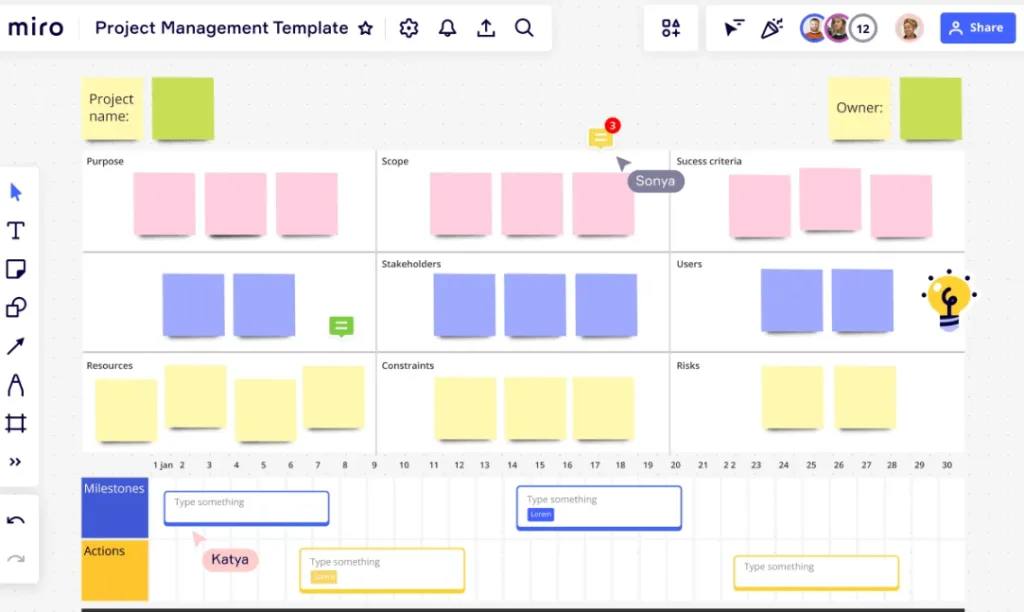
- Problem Validation: Confirming the core pain point being solved.
- Resource Alignment: Ensuring the right talent and tools are in place.
- Risk Mitigation: Identifying potential “roadblocks” before they cost time or capital.
It’s not the “flashy” part, but it’s where the success of your entire journey is quietly decided.
Strategic Summary: Why Clarity Wins
When you prioritize clarity during the startup phase, you aren’t just “planning”—you are building a culture of accountability.
| Feature | Benefit |
| Defined Scope | Prevents budget overruns and resource fatigue. |
| Clear Roles | Enhances team autonomy and execution speed. |
| Risk Mapping | Ensures project resilience during market shifts. |
Strategic Blueprint: 10 Critical Execution Steps
Launching a project requires more than enthusiasm; it requires a structured framework. Here is how to transition from an idea to a high-performing initiative without the “textbook” jargon.
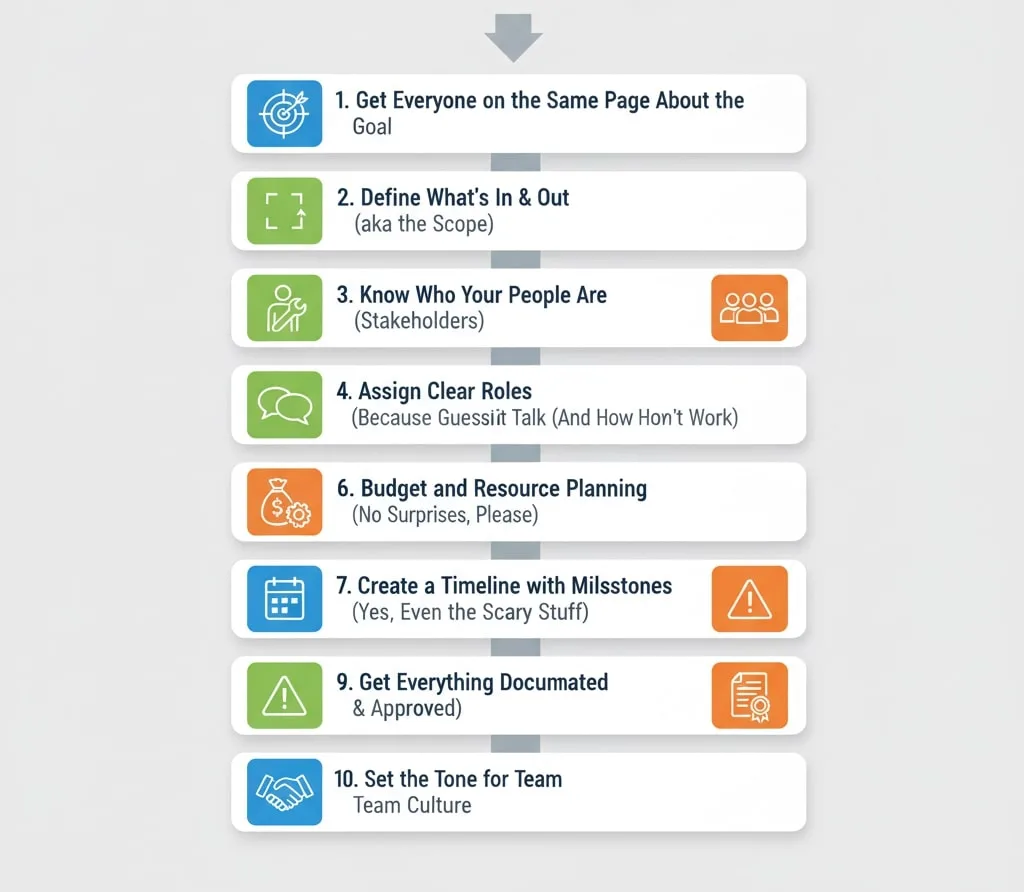
1. Establish the “North Star” Goal
Before deployment, every team member must understand the ultimate objective. Confusion at this stage leads to “drift,” where the final product doesn’t solve the original problem.
- The Focus: Define success in plain, non-technical language.
- Action: Secure a verbal and written “Yes” from every lead before moving forward.
2. Draw the Boundary Lines (Scope Management)
Scope creep is a silent project killer. By defining what you won’t do, you protect your team’s energy and the project’s budget.
- The Focus: Differentiate between “Critical Path” items and “Phase 2” enhancements.
3. Map Your Stakeholder Ecosystem
Identify everyone who has a “vote” or a “voice” in the project. Managing expectations early prevents friction during the final approval stages.
- The Focus: Understand individual success metrics for each stakeholder—what does “good” look like to them?
4. Optimize Accountability (RACI Framework)
Avoid the “bystander effect” where everyone assumes someone else is handling a task.
- The Focus: Assign a single “Owner” for every milestone. If two people are responsible, no one is.
5. Architect Your Communication Cadence
Email is where information goes to die. Decide early on the “Flow of Information.”
- The Focus: Choose your tools (Slack, Teams, or Asana) and set a rhythm—daily stand-ups or weekly deep dives.
6. Resource & Fiscal Planning
Surprises in the budget are rarely pleasant. A startup phase must include a realistic look at both capital and human hours.
- The Focus: Build a 10% “buffer” into your resources to account for the unknown.
7. Define Measurable Milestones
A deadline is a destination; milestones are the signposts. Break the project into 2-week increments to maintain momentum.
- The Focus: Use visual tools like Gantt Charts or Kanban Boards to make progress visible to everyone.
8. Proactive Risk Mitigation
High-performance teams don’t ignore “scary” possibilities; they plan for them.
- The Focus: Conduct a “Pre-Mortem.” Ask: “If this project fails six months from now, what would be the likely reason?” Then, solve for that reason today.
9. The Formalization Step (Sign-offs)
Documentation isn’t about bureaucracy; it’s about alignment. A simple summary email or a signed charter ensures that today’s handshake doesn’t become tomorrow’s argument.
- The Focus: Convert verbal agreements into “Source of Truth” documents.
10. Cultivating a Culture of Excellence
Projects are executed by humans, not algorithms. The tone you set in the first week will dictate the team’s resilience in the final month.
The Focus: Prioritize psychological safety. Encourage team members to flag errors early without fear of blame.
🚀 Launch blazing-fast websites with Cloudways! Get powerful cloud hosting, free SSL, and 1-click installs—no tech headaches. Try Cloudways now
Read More – How to Get Funding for Startup
Why Clarity Is Your Project’s
Let’s face it: starting anything new is exciting… and a little chaotic.
But when you slow down, take a deep breath, and focus on clarity, the whole project becomes lighter, easier, and more successful.
Here’s what you get when you do it right:
- A confident, informed team
- Fewer misunderstandings
- Fewer delays
- Happier clients
- A smoother path forward
📬 Grow your audience and income with Kit! All-in-one email platform for creators—email, automations, landing pages, and more. Start with Kit
Build Your Next Venture with Strategic Precision
Launching a project is easy; sustaining it is the challenge. Whether you are navigating a digital transformation or scaling a new startup, success requires a foundation of technical excellence and strategic foresight.
Frequently Asked Questions: Project Startup Mastery
What is the single most important document in a project startup?
The Project Charter. It serves as the “Source of Truth” that outlines the purpose, scope, and stakeholders. It is the document everyone returns to when confusion arises.
How long should the startup phase last?
There is no fixed duration, but it should occupy roughly 10-15% of the total project timeline. Rushing this phase to save a week often leads to losing months during execution.
Does a startup phase apply to agile teams?
Yes. Even in Agile environments, “Sprint 0” acts as the startup phase where the initial backlog is groomed and the infrastructure is set.
