


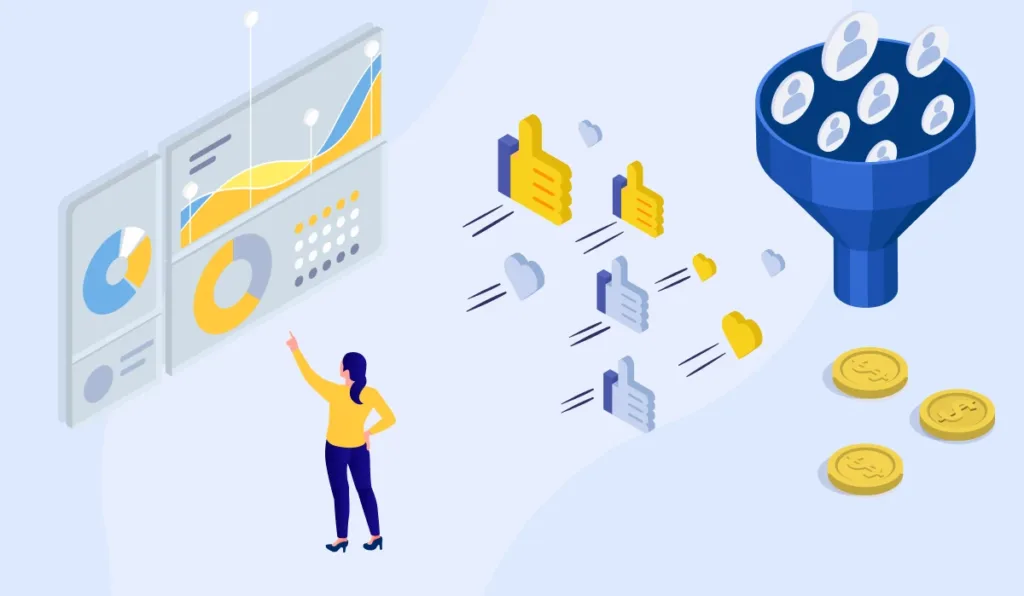
Community-led growth marketing has quietly become the most effective customer acquisition channel for B2B and B2C brands alike. While competitors fight over expensive Google Ads and cold email spam, smart marketers are building communities where customers recruit customers.
The rise of community-led growth marketing is simple math: a customer acquired through a referral from a community member costs 80% less than a paid ad and churns at half the rate. According to a 2026 study by Common Room, companies with mature community-led strategies grow 2.5x faster than product-led or sales-led peers.
This guide explains what community-led growth marketing is, why it works better than traditional funnels, and how to build a community that drives acquisition. Whether you are a B2B SaaS founder or an e-commerce brand, community-led growth marketing can become your lowest-cost, highest-retention channel. We will cover the three phases of CLG, specific tactics for each phase, and the metrics that prove ROI.
Table of Contents
The Rise of Community-Led Growth Marketing: A 3-Phase Framework

Let’s break down how community-led growth marketing works in practice. Unlike traditional marketing (push ads) or product-led growth (users discover product value), community-led growth starts with peer connection. Members join for each other, stay for the value, and eventually adopt the product because it solves problems discussed inside the community.
Phase 1: Build a Problem-Focused Community
The first phase of community-led growth marketing is not about your product. It is about the problem your product solves. If you sell project management software, do not start a “Project Management Software Users” group. Start a “Freelance Project Managers Avoiding Burnout” group. The difference is critical. CLG strategy succeeds when the community exists for member benefit, not vendor benefit.
In community-led growth marketing, you choose a platform based on where your audience already gathers. Options include:
- Slack or Discord for real-time, high-engagement communities (B2B, developers, creators)
- LinkedIn or Facebook Groups for professional or interest-based communities
- Circle or Mighty Networks for owned communities with paid tiers
- Reddit subreddits for public, searchable communities (you can moderate your own)
The best community-led growth marketing examples started small. Notion’s community began as a 50-person Slack group. Figma’s community started with 100 designers sharing files. To build community-driven acquisition, you do not need thousands of members. You need 20-30 active, engaged members who show up daily.
Action step: Choose one problem your product solves. Create a free community space on Slack or Circle. Invite 20 people manually (past customers, LinkedIn connections, Twitter followers). Post one discussion question daily for 30 days.
Phase 2: Facilitate Value Before Product
The second phase of community-led growth marketing is facilitation. Your role is not to sell. Your role is to connect members, answer questions, and celebrate wins. The CLG strategy works when members forget you are a vendor and see you as a helpful peer.
Specific facilitation tactics for community-led growth marketing:
- Weekly “wins and struggles” threads where members share progress
- Office hours where you answer questions (no product pitch)
- Member introductions matching people with complementary skills
- Resource library of templates, guides, and tools (some yours, mostly others)
- Ask me anything (AMA) sessions with industry experts
The moment you pitch your product in community-led growth marketing, trust erodes. Instead, let members discover your product naturally. When someone asks “How do you track project timelines?” another member might answer “I use [Your Product]—here is my template.” That peer recommendation is 10x more powerful than any ad. Community-driven acquisition happens when members become your sales force.
Action step: For 60 days, post daily value without mentioning your product. Answer every question. Introduce members. After 60 days, create a “Resources” channel that includes your product as one option among many.
Phase 3: Convert Through Community-Specific Offers
The third phase of community-led growth marketing is conversion—but not through hard selling. You create offers that reward community participation. Examples of CLG strategy conversion tactics:
- Community-only discount: “Active members (50+ messages) get 20% off”
- Beta access: “Help us test our new feature—free for community members”
- Ambassador program: “Refer 3 members and get 6 months free”
- Community award: “Member of the Month gets a free year”
These offers feel like rewards, not sales pitches. The community-led growth marketing conversion rate from active member to customer is typically 40-60%, compared to 2-5% from website traffic. That is the power of community-driven acquisition.
Action step: After 90 days of facilitation, announce a community beta for your product. Give free access to the 20 most active members. Ask them to share feedback publicly. Let their enthusiasm attract others.
Why Community-Led Growth Marketing Works Better Than Traditional Channels
The rise of community-led growth marketing is not a trend—it is a structural shift. Here is why it outperforms paid and organic channels.
Trust transfer: When a peer recommends your product in a community, trust transfers from the peer to your brand. Ads have zero trust. SEO has low trust. Community referrals have high trust.
Lower churn: Customers acquired through community-driven acquisition stay 2-3x longer because they have relationships inside the community. Leaving your product means leaving their peer group.
Feedback loop: Community-led growth marketing gives you instant product feedback. Members tell you what features to build, which pricing works, and where competitors are winning. That data is worth more than the direct revenue.
Self-sustaining growth: Once a community reaches critical mass (typically 500-1,000 active members), it grows itself. Members invite peers. Peers invite more peers. Your role shifts from facilitator to moderator.
Measuring Community-Led Growth Marketing ROI
CLG strategy requires different metrics than traditional marketing. Track these five weekly.
Active members: Number of members who post or reply in the last 7 days. Target: 30% of total members.
Member-to-customer conversion rate: Percentage of active members who become paying customers. Target: 40-60%.
Customer referral rate: Percentage of new customers who mention the community as their source. Target: >25%.
Community NPS: Ask members “How likely are you to recommend this community to a peer?” (not your product). Target: >50.
Customer lifetime value (LTV) by source: Compare LTV of community-acquired customers vs. ad-acquired. Community should be 2-3x higher.
Common Mistakes in Community-Led Growth Marketing
Avoid these three errors.
Mistake #1: Starting a community for your product, not the problem. “Acme Software Users Group” fails because it is vendor-centric. “Freelance Designers Who Hate Invoicing” works because it is problem-centric. Successful community-led growth marketing always starts with member needs, not vendor needs.
Mistake #2: Selling too early. If you mention your product in the first 60 days, members see you as a marketer, not a peer. Wait until trust is built. The best CLG strategy lets members recommend your product organically.
Mistake #3: Ignoring moderation. Toxic members or spam kill communities quickly. Assign daily moderation. Remove self-promotion. Enforce a “no unsolicited DMs” rule. Community-driven acquisition requires a safe, helpful environment.
Real-World Example: How One B2B SaaS Built 40% of New Revenue from Community
A B2B SEO tool (call it RankFlow) started a Slack community called “SEO Managers Under Pressure.” No product talk for 90 days. They posted daily discussion prompts, hosted weekly office hours, and introduced members. After 90 days, members started asking “What tools do you use for X?” Other members replied “RankFlow—here is my workflow.” RankFlow created a community-only discount.
Within 6 months, 40% of new customers came from community referrals. Customer LTV was 2.7x higher than ad-acquired customers. This is community-led growth marketing at scale.
The Future of Community-Led Growth Marketing
By 2028, community-led growth marketing will be a standard function in every mid-sized B2B company, just like SEO and email marketing are today. AI will help moderate communities at scale, translate conversations across languages, and identify power users who are ready to become ambassadors. However, the core—authentic human connection—cannot be automated. The brands that build real communities will win. Those that treat community as another “channel” to blast links will fail.
Final Verdict
Community-led growth marketing is the highest-ROI channel for 2026. Build a problem-focused community. Facilitate value for 60-90 days without selling. Convert through community-specific rewards. Measure active members, conversion rates, and referral rates. Avoid selling too early. If you commit to this 90-day framework, you will build a self-sustaining acquisition engine that outperforms ads and SEO. Start your community this week with 20 people. The rise of community-led growth marketing is already here.
Frequently Asked Questions (FAQs)
Q1: Is community-led growth marketing only for B2B SaaS?
No. Community-led growth marketing works for B2C, e-commerce, creator economy, and even local businesses. Examples: A yoga apparel brand can start a “Yoga Teachers Sharing Class Plans” Facebook group. A local coffee shop can start a “Remote Workers in [City Name]” Discord. A financial advisor can start a “First-Time Investors Under 30” Slack. The principle is the same: build a community around a problem or identity, facilitate value, and let members discover your product naturally. CLG strategy is industry-agnostic.
Q2: How much time does community-led growth marketing require?
In the first 90 days, plan for 5-10 hours per week: 1 hour daily for posting discussion prompts, answering questions, and introducing members. After 90 days, reduce to 2-5 hours per week as the community becomes self-sustaining. You can also hire a community manager ($2,000-$4,000/month part-time) once you have 200+ active members. The ROI justifies the time: community-driven acquisition has 80% lower cost per acquisition than ads.
Q3: What if no one joins my community in the first 30 days?
That is normal. Most community-led growth marketing efforts start slowly. Do not post “Join my community” links everywhere. Instead, personally invite 20-30 people via DM or email. Offer something specific: “I am starting a weekly group for [problem]. Would love your expertise—no selling, just peer support.” The first 20 members are the hardest. Once you have 20 active members, invite them to invite one peer each. Growth becomes exponential after 100 members.
