


SaaS tools to scale your business are the secret weapon of modern entrepreneurs. In a digital ecosystem defined by rapid growth and fierce competition, trying to manage every process manually is a recipe for burnout and stagnation.
The right software can automate repetitive tasks, provide deep customer insights, and streamline operations, allowing you to focus on strategic decisions rather than administrative chores.
This article will guide you through seven essential SaaS platforms designed to help you scale your online business efficiently and effectively, paving the way for sustainable, long-term growth.
Why Scalability Demands the Right Tech Stack
Scaling a business isn’t just about increasing sales; it’s about building an infrastructure that can handle that growth without breaking. A manual, people-dependent process might work with ten customers, but it will crumble under the weight of a thousand.
A strategic tech stack acts as a force multiplier. It creates systems that work consistently, automates workflows to free up valuable human hours, and provides the data you need to make informed decisions. Investing in these SaaS tools to scale your business is not an expense; it’s a direct investment in your company’s capacity and future.
The Growth Stack: Selecting the Right Tools for Your Business
Before we dive into the details, here is a quick-selection guide to help you identify which SaaS tools to scale your business align with your current growth priorities. This overview highlights the core “superpower” of each platform.
| Platform | Primary Focus | Best For… | Scaling Superpower |
| HubSpot | CRM & Marketing | All-in-one Growth | Unifying customer data and sales pipelines. |
| Zapier | Automation | Workflow Efficiency | Connecting 5,000+ apps to eliminate manual tasks. |
| Slack | Communication | Team Alignment | Real-time collaboration and centralized info. |
| Asana | Project Management | Operational Clarity | Managing complex projects and team deadlines. |
| QuickBooks | Finance | Cash Flow Control | Automating accounting and financial reporting. |
| Zendesk | Customer Support | Service Excellence | Managing high-volume support without losing quality. |
| GA4 | Data & Analytics | Growth Insights | Tracking user behavior to optimize conversions. |
The Top 7 SaaS Tools to scale your business
After analyzing the market and foundational needs of a growing online business, these seven tools consistently stand out for their power, integration capabilities, and ability to drive scalability.
1. HubSpot: The All-in-One Growth Engine
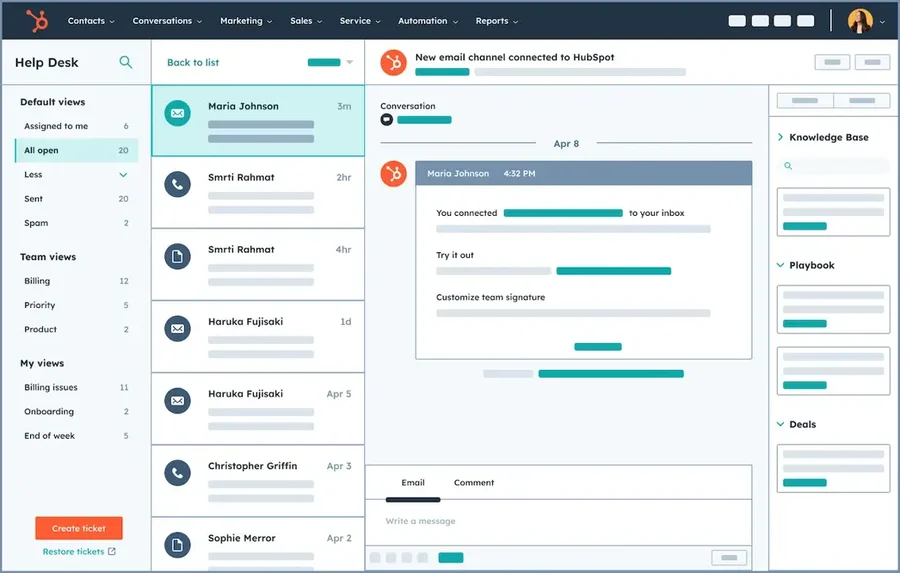
HubSpot began as a marketing platform but has evolved into a comprehensive CRM suite encompassing marketing, sales, content management, and customer service. For a business looking to scale, its true power lies in its ability to create a seamless customer journey.
You can attract leads through its marketing tools, nurture them with automated email workflows, manage your pipeline with the sales hub, and provide support—all within a single, integrated system. This eliminates data silos and gives you a 360-degree view of your customer, which is crucial for strategic scaling.
2. Zapier: The Automation Nervous System

As you grow, the number of apps you use will inevitably increase. Zapier is the connective tissue that links them all, enabling automatic workflows between over 5,000 web applications. For example, you can create a “Zap” that automatically adds new email subscribers to your CRM, creates a task in your project management tool, and sends a welcome message on Slack.
By automating these cross-platform tasks, you eliminate manual data entry, reduce errors, and ensure that your team can focus on high-value work, making it a cornerstone for business growth.
3. Slack: The Central Hub for Communication
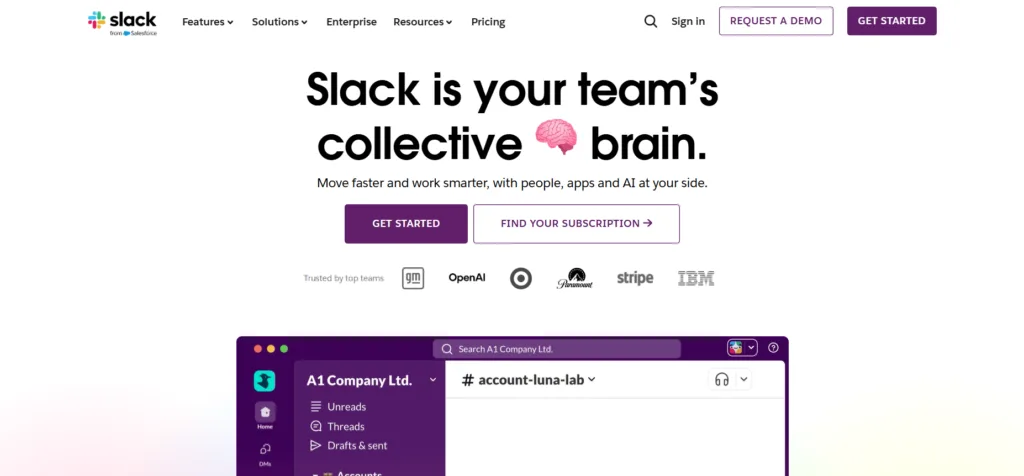
Miscommunication and slow information flow can cripple a scaling team. Slack replaces scattered emails and meetings with organized, channel-based messaging. Create channels for specific projects, departments, or even key clients.
Its deep integrations mean you get notifications from your code repository, support tickets, and sales deals directly in the relevant channel. This creates a central “office” where information is transparent, searchable, and accessible to everyone who needs it, keeping your entire team aligned as you expand.
4. Asana: The Command Center for Projects
Keeping projects on track with a growing team is a complex challenge. Asana provides a clear visual platform to manage tasks, deadlines, and overall project timelines. You can assign owners, set dependencies, and view progress through lists, boards, or timelines. This clarity ensures that everyone, from leadership to individual contributors, understands their responsibilities and how their work contributes to the company’s larger goals. It brings order to chaos and is essential for managing the increasing number of initiatives that come with scaling up your online business.
5. QuickBooks Online: The Financial Backbone
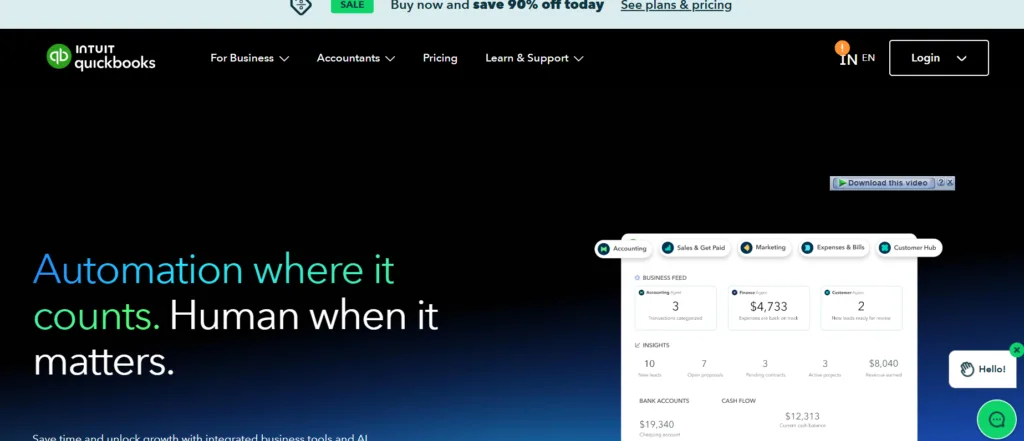
You cannot scale what you cannot measure, especially your finances. QuickBooks Online automates and simplifies the entire financial management process. It connects to your business bank accounts and credit cards to track income and expenses, generates and sends invoices, manages payroll, and handles tax preparation.
Having a real-time, accurate view of your cash flow, profit & loss, and financial health is non-negotiable for making smart scaling decisions and ensuring you have the capital to fuel your growth.
6. Zendesk: The Scalable Support Solution
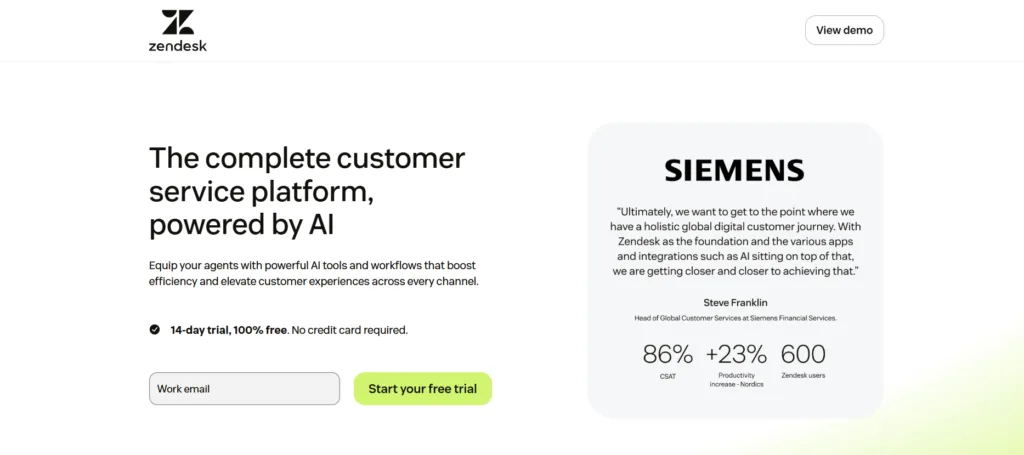
Customer support volume grows in direct proportion to your customer base. Zendesk allows you to scale your support operations without a linear increase in headcount or a drop in quality. Its ticketing system organizes customer inquiries from email, chat, social media, and phone into a single, unified queue.
Features like automated ticket routing, a robust knowledge base, and help center forums empower customers to find answers themselves and help your agents resolve issues faster, maintaining high customer satisfaction during rapid growth.
7. Google Analytics 4 (GA4): The Insight Engine
Finally, scaling effectively requires a deep understanding of user behavior. Google Analytics 4 is the indispensable tool for this. It tells you how users find your website, what they do once they get there, and where they drop off. For an online business, this data is gold.
You can identify your most valuable marketing channels, optimize your website for conversions, and understand the customer journey on a profound level. These data-driven insights allow you to allocate your resources wisely and double down on what truly works for business growth.
Integrating Your Tools for Maximum Impact
The final step is to weave these individual tools into a cohesive ecosystem. Use Zapier to connect your contact forms in HubSpot directly to a lead-nurturing sequence and a notification in Slack. Connect your e-commerce platform to QuickBooks for automatic sales tracking.
The goal is to create a self-reinforcing system where data flows automatically, tasks are handled behind the scenes, and your team is empowered to do their best work. This integrated approach is what truly allows a business to scale effortlessly.

Final Thoughts: Building Your Scalable Future
Scaling an online business is a monumental challenge, but it is one you don’t have to face alone. By strategically implementing these SaaS tools to scale your business, you aren’t just buying software—you are building a robust, automated, and intelligent infrastructure designed for long-term growth.
These platforms act as the “silent partners” in your success, handling the heavy lifting of communication, project management, and data analysis. This allows you and your team to step away from administrative burnout and return to what truly matters: innovation, strategy, and the vision that started it all.
The most successful companies don’t just work harder; they build better systems. Start with one or two of these essential tools today and watch your operational capacity transform.
Frequently Asked Questions
1. How do I choose which SaaS tools are right for my specific business?
Start by identifying your biggest bottlenecks or most time-consuming manual processes. Are you struggling with lead management? Look at a CRM like HubSpot. Is project chaos slowing you down? Prioritize a tool like Asana. The best tool is the one that solves your most pressing operational pain point and integrates well with the other software you already use.
2. Isn’t this many tools expensive and complicated for a small team?
While cost is a factor, most of these tools offer tiered pricing, including free or low-cost plans for small teams. The complication is managed through proper onboarding and integration. The initial time investment in setting up a tool like Zapier or Asana pays for itself many times over in the hours of manual work it saves each week, making your small team significantly more efficient and capable.
3. Can these tools truly help if I’m a solo entrepreneur?
Absolutely. In fact, they are arguably more critical for solopreneurs. These tools act as your automated team members. They manage your tasks, handle your customer follow-ups, and keep your finances in order, allowing you to operate at a scale that would be impossible for one person to manage manually. They are the foundation for building a business that can grow beyond your own personal time and capacity.
