


SaaS Tools for Marketing Teams have become the fundamental building blocks of modern digital strategy. In an era where efficiency, data-driven decisions, and personalized customer journeys are paramount, relying on scattered spreadsheets and manual processes is a recipe for being left behind.
The right stack of software-as-a-service applications can automate repetitive tasks, unify customer data, and provide actionable insights, allowing marketers to focus on creativity and strategy.
This guide explores the ten best SaaS Tools for Marketing Teams designed to elevate your campaigns, streamline your workflow, and drive measurable results.
Table of Contents
The Core Categories of Marketing SaaS
Before diving into the specific tools, it’s helpful to understand the core categories they serve. A robust marketing tech stack typically includes tools for Customer Relationship Management (CRM), marketing automation, content creation and management, social media scheduling, analytics, and advertising.
The best SaaS Tools for Marketing Teams often integrate across these categories, creating a seamless flow of information from the first touchpoint to post-sale loyalty.
1. HubSpot
A leader in the all-in-one space, HubSpot offers a powerful, integrated suite that includes a free CRM, marketing hub, sales hub, and service hub. Its marketing automation features are exceptional, allowing teams to create sophisticated email workflows, lead scoring models, and personalized content based on user behavior. It’s an ideal starting point for businesses looking to consolidate their efforts.
2. Mailchimp

Known for its user-friendly interface, Mailchimp has evolved from an email marketing platform into a full-fledged marketing platform. It offers robust automation features, AI-powered content creation tools, landing page builders, and basic social media posting. Its tiered pricing makes it accessible for startups and small businesses.
3. Semrush
For any team focused on SEO and content marketing, Semrush is an indispensable tool. It provides comprehensive data on keyword research, competitor analysis, site audits, and backlink tracking. Its Position Tracking tool allows you to monitor your daily rankings for target keywords, giving you a clear picture of your SEO performance.
4. Ahrefs
A strong competitor to Semrush, Ahrefs is particularly renowned for its best-in-class backlink index and site explorer tool. Marketing teams use it to dissect their competitors’ link-building strategies, find content gaps, and discover new keyword opportunities. Its Content Gap analysis is a powerful feature for refining your content strategy.
5. Canva
Empowering teams to create professional-quality visuals without needing a full-time designer, Canva has revolutionized design. With thousands of templates, a vast stock photo library, and collaborative features, it allows marketing teams to quickly produce everything from social media graphics and presentations to infographics and flyers.
6. Hootsuite
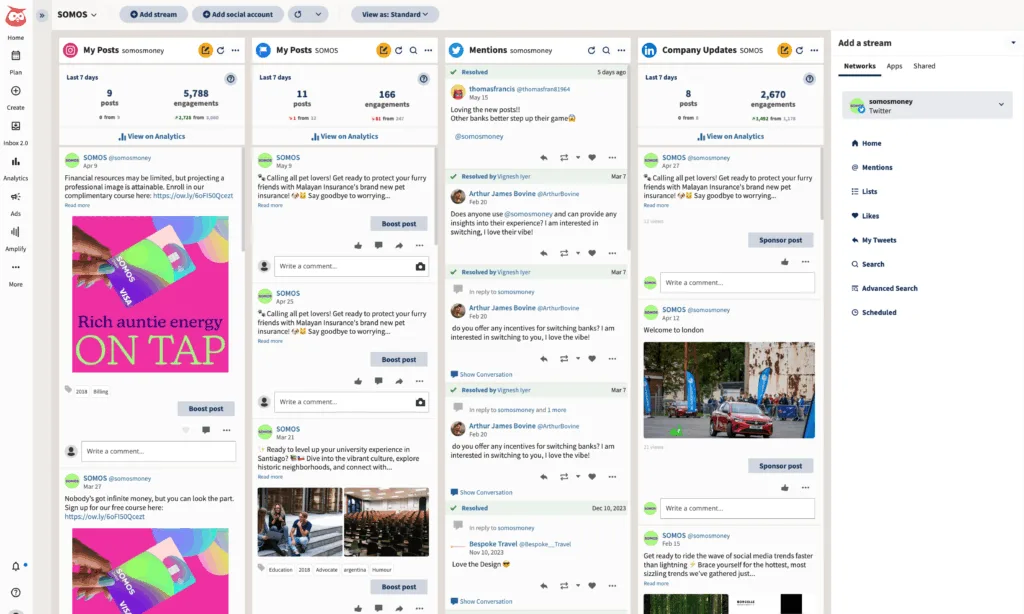
For social media management, Hootsuite remains a top choice. It allows teams to schedule posts across multiple platforms from a single dashboard, monitor brand mentions and relevant conversations, and analyze social media performance. Its collaborative features help streamline the approval process for social content.
7. Google Marketing Platform (Especially Analytics & Tag Manager)
While a collection of tools, Google’s offerings are non-negotiable. Google Analytics 4 provides the deep, user-centric data needed to understand audience behavior and campaign ROI. Coupled with Google Tag Manager, which simplifies the process of managing tracking codes, these free tools form the analytical backbone of any data-driven marketing team.
- ActiveCampaign
If sophisticated email marketing and automation are your primary needs, ActiveCampaign is a powerhouse. It combines email marketing, automation, CRM, and machine learning for predictive sending and lead scoring. Its automation maps can be incredibly complex, enabling hyper-personalized customer journeys.
- Sprout Social
Another excellent social media management platform, Sprout Social emphasizes customer engagement and deep analytics. Its unified inbox pulls all messages from different social networks into one place, ensuring no customer query is missed. Its reporting features are also among the most detailed in the category.
- Drift
Focusing on conversational marketing, Drift uses chatbots and live chat to engage website visitors in real-time. For B2B marketing teams, it’s a game-changer for qualifying leads, booking meetings, and providing instant support, effectively turning your website into a 24/7 lead generation machine.
Key Considerations When Choosing SaaS Tools for Marketing Teams
Selecting the right tools is only half the battle. Implementation and integration are key. The best tools are the ones your team will actually use. Look for platforms with intuitive interfaces and robust customer support. Furthermore, prioritize tools that offer native integrations with each other or can be connected via a platform like Zapier. This creates a single source of truth for your customer data and automates workflows between systems, such as adding new email subscribers from a form directly into your CRM.
Frequently Asked Questions (FAQs)
1. How many SaaS tools does a marketing team typically need?
There’s no magic number, as it depends on the team’s size and goals. A small team might start with an all-in-one platform like HubSpot, while a larger enterprise might use 10-15 best-in-class specialized tools. The focus should be on covering your core marketing functions without so much overlap that it creates complexity and inefficiency.
2. What is the biggest mistake teams make when building their marketing tech stack?
A common mistake is choosing tools in isolation without considering integration. If your email platform doesn’t talk to your CRM, and your analytics tool doesn’t connect to your ad platform, you’re left with data silos. This prevents a unified view of the customer journey and hinders your ability to run truly data-driven campaigns.
3. Are free versions of these SaaS tools sufficient for a small team?
Yes, many of the tools listed, such as HubSpot, Mailchimp, and Canva, offer robust free plans or free trials. These are excellent for getting started, proving value, and understanding your needs before committing to a paid subscription. The key is to scale your tool usage with your business growth.
