


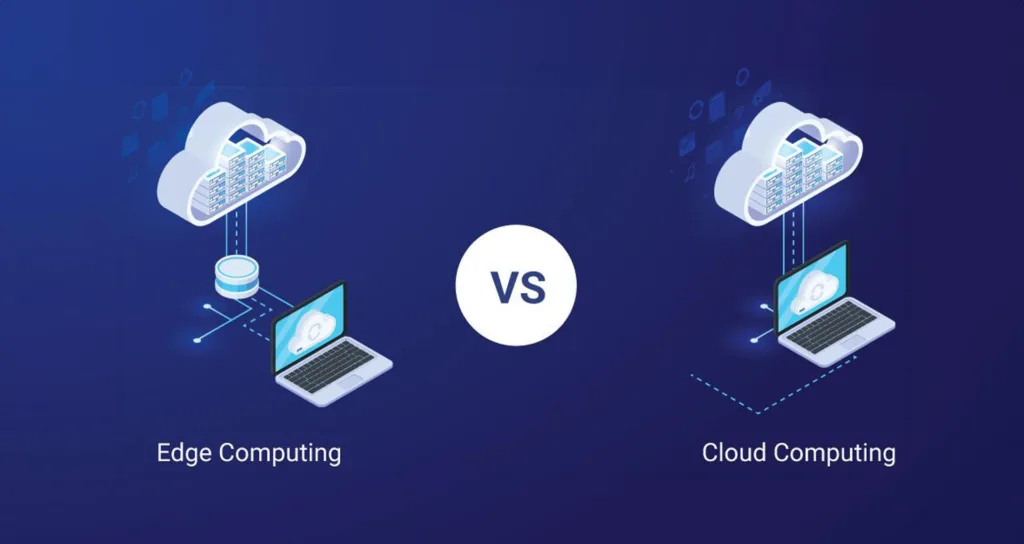
Edge computing vs cloud computing for SaaS applications is a critical topic for businesses seeking to optimize performance, reduce latency, and ensure scalability.
As SaaS solutions become more complex and data-driven, companies must carefully choose between centralized cloud infrastructure and distributed edge computing systems.
While cloud computing offers robust storage, scalability, and ease of management, edge computing brings processing closer to users, reducing delays and enhancing real-time performance.
This article examines the strengths and weaknesses of both models, discusses scenarios where each excels, and helps businesses determine the most effective strategy for enhancing user experience, security, and cost efficiency in their SaaS applications.
Table of Contents
Understanding Edge Computing vs Cloud Computing for SaaS Applications
Edge computing vs. cloud computing for SaaS applications refers to two distinct models of data processing and delivery. In cloud computing, data is collected from users and devices, sent to centralized data centers, and processed remotely before being returned to the user’s device.
This architecture provides scalability and vast storage capacity but may result in higher latency, especially for time-sensitive tasks.
Edge computing, on the other hand, processes data closer to the user, often on local servers, gateways, or devices themselves. By handling data at or near the source, edge computing minimizes delays and improves responsiveness, making it ideal for applications requiring real-time insights or rapid decision-making.
SaaS companies must carefully evaluate these models based on their application needs. For instance, collaboration platforms or analytics dashboards that serve users worldwide may benefit from cloud scalability, whereas IoT-based monitoring tools or video streaming services may require edge computing to reduce latency and enhance user experience.
Choosing the right architecture depends on factors such as performance requirements, data volume, security, and cost. Some companies are now combining both models in hybrid setups, optimizing for both speed and scalability, depending on user location and workload demands.
Benefits and Limitations of Edge and Cloud Architectures
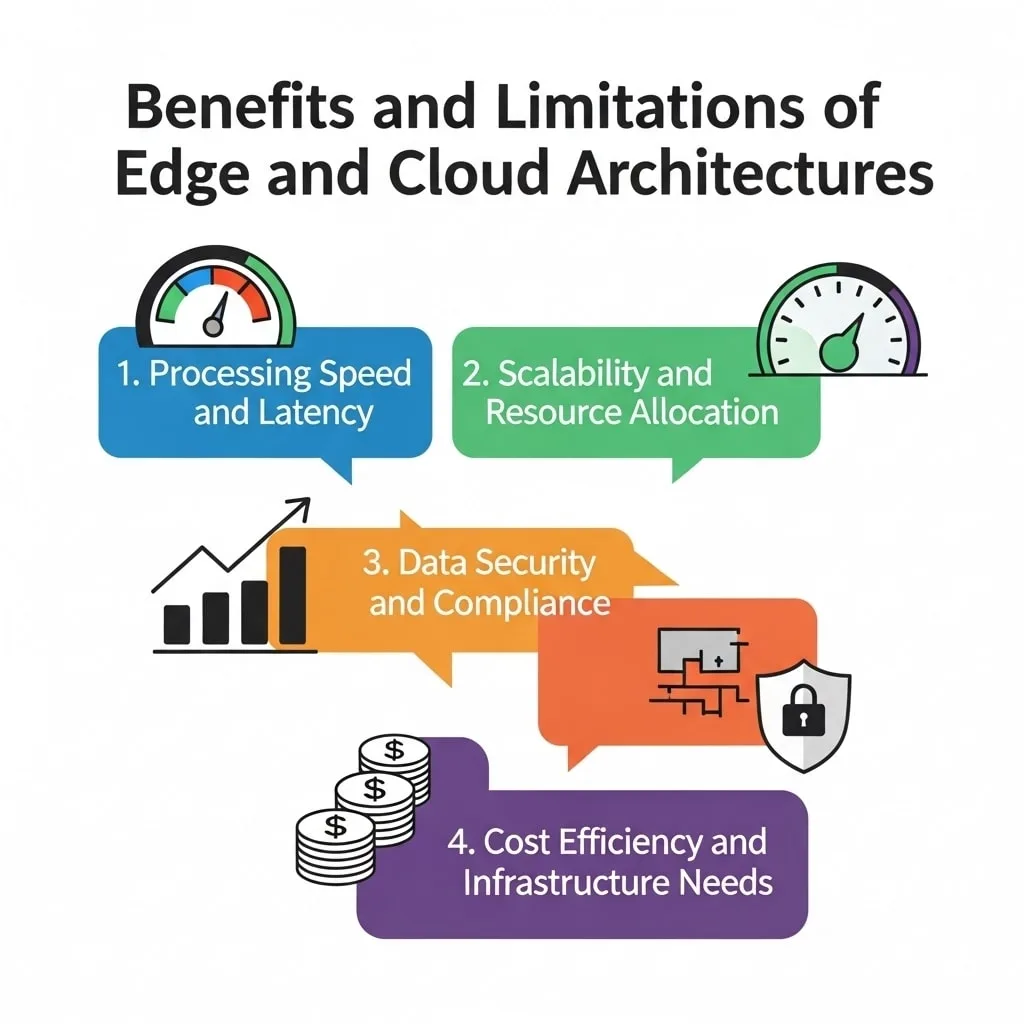
With the growing adoption of SaaS applications, understanding the strengths and limitations of edge and cloud computing helps companies design efficient systems tailored to their needs.
- Processing Speed and Latency
Edge computing excels in reducing latency by processing data closer to the source. Applications such as video conferencing, IoT monitoring, and gaming benefit from near-instant data analysis.
Cloud computing, while powerful, may experience delays due to the time it takes for data to travel to and from centralized servers, especially when users are geographically dispersed.
- Scalability and Resource Allocation
Cloud platforms can easily scale up or down depending on demand, allowing businesses to handle sudden spikes in traffic without significant infrastructure investment.
Edge networks, in contrast, require additional local servers or devices to expand capacity, which adds complexity and costs.
- Data Security and Compliance
Edge computing offers enhanced control over sensitive information by keeping data localized, reducing the need to transfer it across networks. This can aid in complying with regional data protection laws.
Cloud computing, however, provides extensive security protocols and certifications that many organizations rely on for regulatory compliance and data protection.
- Cost Efficiency and Infrastructure Needs
Edge computing may involve higher upfront costs due to distributed infrastructure and maintenance requirements.
Cloud computing offers cost-effective storage and processing through shared resources, with predictable pricing models, though long-term usage at scale can lead to significant expenses.
Both architectures present distinct advantages, and SaaS companies often weigh these factors when choosing the right solution for their users and business goals.
Challenges in Integrating Edge and Cloud Computing for SaaS
While integrating edge and cloud computing offers many advantages, SaaS companies face several challenges when implementing hybrid architectures.
One of the biggest issues is network reliability. Edge devices and local servers depend on stable, high-speed connections to communicate with cloud data centers. Inconsistent connectivity can lead to data delays or loss, impacting user experience.
Another major challenge is data synchronization. With information being processed in multiple locations, ensuring that updates are consistent across edge nodes and cloud servers requires robust systems.
Conflicts between versions or delayed updates can create inaccuracies, especially in real-time applications like financial dashboards or remote monitoring.
Security concerns also play a significant role. Local edge devices may be more vulnerable to physical or cyber threats, requiring additional encryption and monitoring.
Meanwhile, cloud infrastructure must protect large volumes of centralized data from external attacks. Coordinating security protocols across both environments adds complexity.
Finally, managing hybrid infrastructure demands expertise in both edge and cloud technologies. Monitoring performance, ensuring compliance, and balancing workloads requires sophisticated tools and workflows. Companies must invest in automation, training, and support systems to handle the increased complexity without compromising reliability or cost efficiency.
Despite these hurdles, many SaaS providers are successfully navigating the challenges, recognizing that the benefits of combining edge and cloud computing often outweigh the risks.
How Edge and Cloud Computing Will Shape SaaS Architecture
The future of edge and cloud computing in SaaS architecture is moving toward hybrid models that combine the strengths of both systems.
As applications demand faster processing and broader reach, businesses are adopting edge solutions for tasks requiring low latency, while leveraging cloud infrastructure for large-scale storage and data analysis.
AI-powered edge computing is a significant trend shaping this evolution. By embedding machine learning algorithms directly into edge devices, SaaS applications can offer personalized recommendations, predictive maintenance, and real-time decision-making without needing to send data back to the cloud. This enhances both performance and privacy.
Hybrid computing models also enable more flexible resource allocation. Companies can decide which workloads are best handled at the edge and which benefit from cloud scalability.
For example, sensitive data may be processed locally to meet compliance requirements, while aggregated analytics are sent to cloud platforms for deeper insights.
As 5G networks expand and IoT devices proliferate, the synergy between edge and cloud computing will become a cornerstone of modern SaaS architecture.
Businesses that invest in these technologies will be better positioned to meet customer expectations, reduce latency, and manage costs while maintaining agility in an increasingly competitive marketplace.
FAQS
In simple terms, what’s the main difference for a SaaS application?
Think of it as centralized vs. decentralized processing. Cloud Computing processes data in a few large, remote data centers. Edge Computing processes data much closer to where it’s generated (e.g., on a user’s device, a local server, or a nearby gateway). For SaaS, this means choosing between universal access (cloud) and ultra-low latency (edge).
When should a SaaS startup prioritize Edge Computing over traditional cloud?
Prioritize edge if your application is latency-sensitive or needs to operate offline. Key use cases include: Real-time IoT analytics (e.g., manufacturing sensors), Augmented Reality (AR)/Virtual Reality (VR) applications, video processing and analysis, and any tool where a delay of even milliseconds impacts the user experience.
Can I use both, and how would that work?
Absolutely. This hybrid model is often the most powerful approach. The edge nodes handle the immediate, time-sensitive processing and decision-making. Then, only the relevant, summarized data is sent to the cloud for long-term storage, deeper analysis, machine learning model training, and overall management. This combines the speed of edge with the power and scale of the cloud.

