


Why Startup Idea Validation Matters
If you’ve ever had a “million-dollar idea” you’ll know how thrilling it was. But here’s the thing – most startup ideas don’t succeed because they’re not good ideas, but because nobody wants them. This is where idea validation for startups comes in. It’s like dipping your toe in the water. Before you spend months developing a product, you test if there’s an interest first.
Not testing is like starting a restaurant without knowing if there are people who want that type of food nearby. Sounds risky, right? The same applies to startups. When it comes to startups, without market validation, you’re just guessing. And guesswork is costly in business.
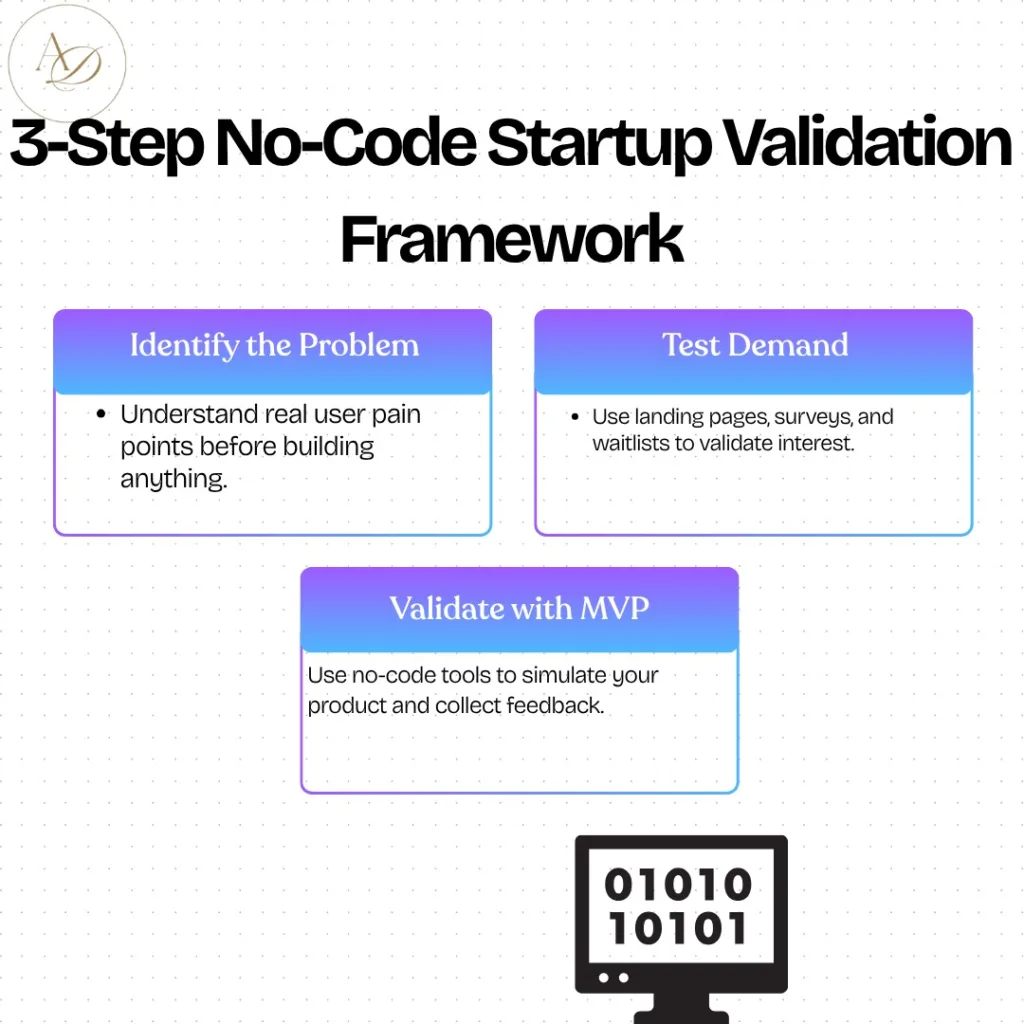
Understanding the Startup Validation Process
The startup validation process is a process of testing your idea before you invest your time, money and effort into it. It’s a guide to answering a critical question: Can people afford to pay for it?
Typically, it includes finding a problem, validating your idea, gathering feedback, and improving your product. Rather than developing a product, you test your ideas gradually. It’s more economical and allows you to pivot if necessary.
Identifying Your Target Audience
First, you must identify your customers. You can’t sell health apps to people who don’t care about their health, can you? Who you are selling to is the key to validating your startup idea.
Create basic customer personas. Ask yourself:
- Who is experiencing this problem?
- What’s their problem?
- What solutions are they using?
When you deeply understand your audience, your validation becomes more accurate and meaningful.
Market Validation for Startups
But the question is, does the market need your product? Market validation for startups means looking at market, competition and trends.
Look at competitors. If you can find other products, that’s a good indicator that there’s a market. But you need to find your unique selling proposition. Look at Google Trends, Reddit threads, or conduct a poll on LinkedIn to gauge interest.
Additionally, you can research Funding Trends in Indian Startups to see what investors are investing in. Funding in an area may also mean there is a market and opportunity.
No Code Startup Validation Methods
The best part about validating your idea is you don’t need to know how to code. No code start up validation has democratised entrepreneurship.
A simple way is to create a landing page. Explain the product, talk about the benefits and include a “Join Waitlist” button. If they opt-in, that’s a sign of interest.
You can also:
- Use Facebook/Google ads
- Use social media polls
- Create explainer videos
This approach can get feedback without actually building a product.
Build MVP Without Coding
A minimum viable product (MVP) doesn’t need to be complicated. You can build MVP without coding with platforms such as Webflow, Bubble or Notion.
For instance, webflow startup validation lets you build websites fast. You can showcase your vision, generate leads and even mock up features. It’s a bit like creating a “fake door” to test if people walk through it.
This is a way to test demand before building.
Testing Demand Before Building
Validation is about proof One of the strongest proofs? People are willing to pay.
Offer a pre-sale Do pre-order or discounts. If successful, you’ll have confirmed market interest. If they don’t, you’ve saved yourself months of work.
Surveys and interviews also work well. Be open-ended and talk about problems, not solutions. You may learn things you hadn’t thought of.
Strategies for Early-Stage Startups
When you’re just starting, Strategies for Early-Stage Startups should be all about speed and learning. The more rapid the experimentation, the sooner you discover the solution.
Adopt a lean approach:
- Test small ideas quickly
- Gather feedback
- Iterate constantly
It’s like sculpting a piece of art – you don’t get there in one go. You work on it.
Role of Feedback in Validation
Validation is best done with feedback. It can tell you what’s going well and what isn’t. But the secret is – don’t listen to the positive. Look for criticism.
If they say “It’s good” or “It’s nice” it’s not. If they say, “I want it badly enough to pay for it,” that’s great.
Startup Valuation in India & Validation Impact
Validation doesn’t just help you build better products—it also impacts Startup Valuation in India. Investors love startups that have proven demand.
If you can show traction—like signups, pre-orders, or user engagement—your startup becomes more attractive. It reduces risk for investors and increases your chances of funding.
Funding Trends in Indian Startups
Validation not only ensures you’re creating the right product, but it affects Startup Valuation in India. Funders like startups with market demand.
If you have the idea, you can demonstrate interest (such as signups, pre-orders or other forms of user engagement). It makes your startup less risky for investors and gives you a better chance of securing investment.
Common Mistakes to Avoid
Founders often get swayed by their own idea, not the problem. Validation should be rational.
Avoid:
- Building too early
- Ignoring negative feedback
- Trying to get everyone to buy
Remember, validation is about learning, not proving yourself right.
How Arunangshudas Can Guide You
In the quest to learn how to validate your startup ideas, taking advice from experts can help. Arunangshudas provides practical advice on how to validate ideas in the real world. Rather than abstract concepts, he provides practical advice such as validating the idea, building no-code MVPs and gaining deep insights into user behavior. If you’re starting a startup, he can save you time and money, and accelerate your learning. It’s like getting advice from someone who has already been there.
Conclusion
You can – and should – validate a startup idea without writing a line of code. By using the right tools, techniques and mindset, you can validate your idea, learn about your market and develop a product people want to use.
It’s not about being right. It’s to learn, pivot and get on with it. Because when it comes to startups, the best ideas don’t win, the best tested ideas do.
FAQs
1. What is startup idea validation?
It’s the process of testing whether your idea solves a real problem and if people are willing to pay for it.
2. How can I validate a startup idea without coding?
You can use landing pages, surveys, social media, and no-code tools to test demand.
3. What is no code startup validation?
It involves using tools like Webflow or Bubble to test ideas without writing code.
4. Why is market validation important for startups?
It ensures there is demand before you invest time and money into building a product.
5. Can validation help in getting funding?
Yes, validated ideas with real traction attract investors more easily.
