


As digital banking, e-commerce, and cloud storage dominate everyday life, the modern digital landscape has expanded our convenience while exposing our personal information to advanced cyber threats. To protect people, companies, and networks, two vital professions have taken center stage: cybersecurity professionals and ethical hackers.
Many people mistakenly use cybersecurity vs. ethical hacking interchangeably. While both fields share the common mission of protecting digital data, their methods, tools, and day-to-day functions are distinct. This guide covers the precise differences between the two, how they collaborate, and which career path suits your professional goals.
What Is Cybersecurity?

Cybersecurity is the practice of protecting computers, servers, mobile devices, electronic systems, networks, and data from malicious digital attacks. The ultimate goal of cybersecurity is to stop unauthorized users, malware, and cybercriminals from breaching sensitive systems.
Think of your computer system as a physical home. Cybersecurity functions like the heavy-duty deadbolts, security cameras, and alarms protecting your household from intruders.
Core Domains of Cybersecurity
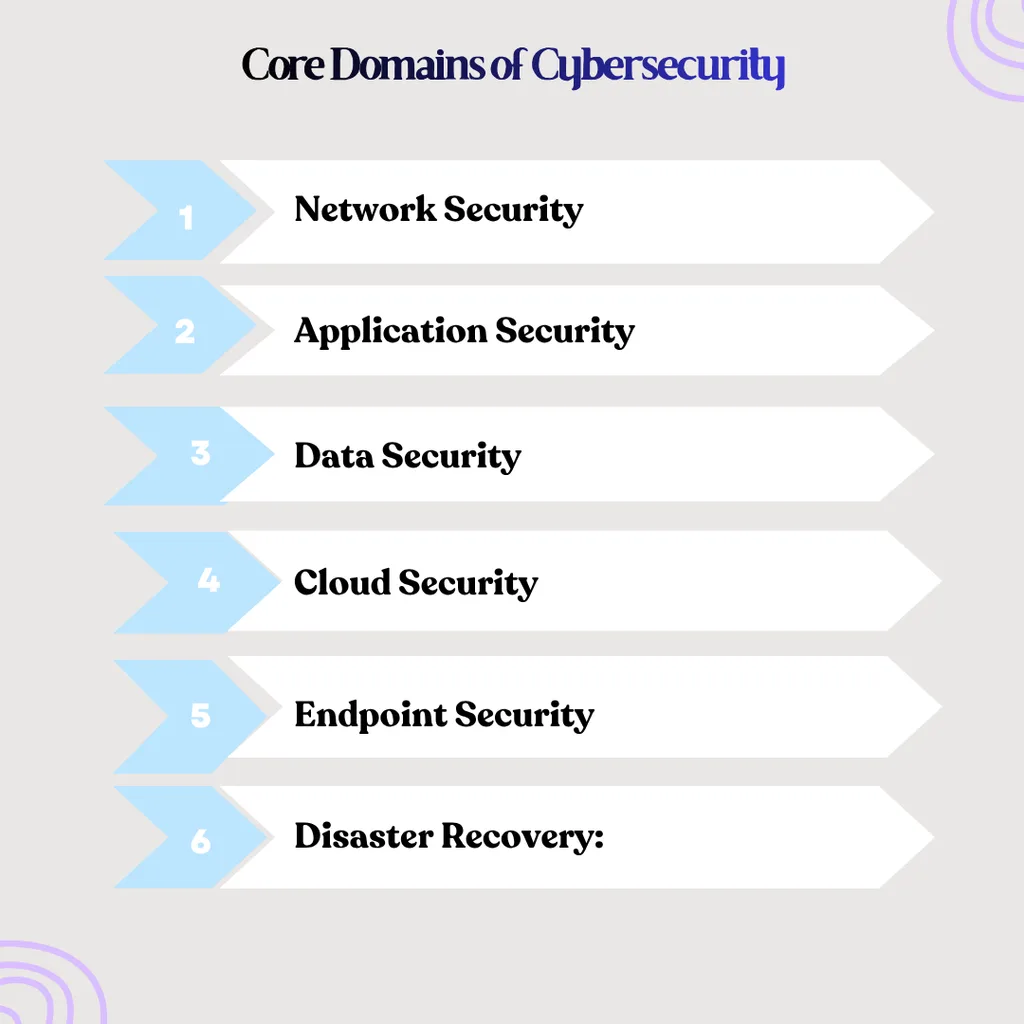
- Network Security: Defending internal corporate or personal networks (Wi-Fi and LAN) from unauthorized access.
- Application Security: Ensuring software and mobile apps are engineered without exploitable vulnerabilities.
- Data Security: Protecting sensitive private records, financial info, and proprietary secrets using encryption.
- Cloud Security: Safeguarding external data storage infrastructures like Google Drive, AWS, or Microsoft OneDrive.
- Endpoint Security: Securing individual hardware devices, including laptops, smartphones, and workstations.
- Disaster Recovery: Formulating tactical blueprints to help organizations bounce back following an active cyberattack or data loss.
Read More Blog : Cybersecurity Challenges in the Era of 5G
What Is Ethical Hacking?
Ethical hacking involves authorized testing of computer systems, applications, or networks to uncover security holes legally and with explicit permission. Often called white-hat hackers, ethical hackers replicate the strategies of malicious actors to evaluate system safety and remediate flaws before cybercriminals exploit them.
Continuing the home analogy, ethical hacking is equivalent to hiring a professional security consultant to try picking your locks so you can upgrade your weak points before a real thief arrives.
Main Objectives of Ethical Hacking
- Identify and patch hidden security loopholes.
- Test the real-world strength of current defense mechanisms.
- Preemptively block zero-day exploits and threat actors.
- Help organizations fortify infrastructure resilience.
Common Types of Ethical Hacking
- Web Application Hacking: Stress-testing web platforms and APIs.
- Network Penetration Testing: Probing internal and external perimeter security.
- Wireless Hacking: Evaluating Wi-Fi configurations and network encryption standards.
- Social Engineering: Simulating phishing attacks or credential harvesting to gauge employee awareness.
- System Hacking: Attempting privilege escalation to check operating system gaps.
Cybersecurity vs. Ethical Hacking: Comprehensive Comparison
| Feature | Cybersecurity | Ethical Hacking |
| Primary Focus | Building, managing, and maintaining defensive security architecture. | Probing, testing, and exploiting systems to uncover weaknesses. |
| Operational Approach | Defensive (firewalls, encryption, security policy enforcement). | Offensive (penetration testing, adversary simulation, vulnerability discovery). |
| Professional Role | Security guard or architect. | Friendly simulated attacker or bug hunter. |
| Primary Tools Used | Splunk, Wireshark, enterprise firewalls, antivirus platforms. | Kali Linux, Metasploit, Burp Suite, Nmap, John the Ripper. |
| Legal Standing | Universally legal and authorized standard practice. | Legal strictly with prior written permission. |
| Required Skills | Security frameworks, risk management, network topologies, OS administration. | Advanced exploit development, scripting (Python, C++), penetration testing tools. |
| Common Job Titles | Security Analyst, Network Security Engineer, CISO. | Ethical Hacker, Penetration Tester, Vulnerability Analyst, Red Team Specialist. |
How Cybersecurity and Ethical Hacking Work Together
Although their approaches differ, cybersecurity and ethical hacking complement each other to form a unified defense strategy. Cybersecurity experts build the protective walls—such as firewalls and encryption mechanisms—while ethical hackers test the strength of those walls.
For instance, after a cybersecurity engineering team sets up a secure corporate network, they may commission an ethical hacker to perform a penetration test. If the ethical hacker successfully breaches the perimeter, the cybersecurity team learns precisely what needs reinforcement. This collaborative loop forms the backbone of modern enterprise security architecture.
Read More Blog : Difference Between Network Security, Cybersecurity, and Information Security
Which Career Path Should You Choose?
Both career paths offer high salary potential, long-term stability, and continuous global demand. Your ideal choice depends on your daily preferences and technical interests.
Choose Cybersecurity If:
- You prefer building structured frameworks, configuring firewalls, and managing compliance.
- You enjoy analyzing log data, tracking threat feeds, and monitoring network traffic.
- You prefer a systematic, policy-driven environment focused on defense and governance.
Choose Ethical Hacking If:
- You love solving complex, creative problems and thinking like an attacker.
- You enjoy hands-on penetration testing, bug hunting, and breaking down software.
- You are naturally curious about how malware and exploits function under the hood.
Essential Industry Certifications
Accelerate your career trajectory in either discipline with these top-tier credentials:
- For Cybersecurity Careers:
- CompTIA Security+
- Certified Information Systems Security Professional (CISSP)
- Certified Information Security Manager (CISM)
- ISO 27001 Lead Implementer
- For Ethical Hacking Careers:
- Certified Ethical Hacker (CEH)
- Offensive Security Certified Professional (OSCP)
- GIAC Penetration Tester (GPEN)
- eLearnSecurity Web Application Penetration Tester (eWPT)

Conclusion :
In conclusion, understanding the core dynamics of cybersecurity vs. ethical hacking is essential for anyone looking to build a secure digital environment or pursue a rewarding tech career. While cybersecurity acts as the foundational shield—building robust firewalls, encryption protocols, and data defenses—ethical hacking serves as the strategic sword, testing those very barriers to uncover hidden vulnerabilities before malicious actors can exploit them.
Ultimately, these two disciplines do not compete; they complement each other in a continuous cycle of defense and validation. Whether you choose to safeguard enterprise infrastructure as a cybersecurity expert or probe system vulnerabilities as an ethical hacker, your contributions directly ensure a safer, more resilient digital world for everyone.
Frequently Ask Questions :
What is the fundamental difference between cybersecurity and ethical hacking?
Cybersecurity is broad and focuses on building defense systems (like firewalls and encryption) to protect data from threats. Ethical hacking is a specialized sub-branch of cybersecurity that focuses on offense—legally breaking into systems with permission to find vulnerabilities before malicious hackers do.
Is ethical hacking legal?
Yes, ethical hacking is completely legal as long as the practitioner has explicit, written authorization from the system owner to test their infrastructure. Performing these exact activities without permission is illegal and considered cybercrime.
Which career path pays better?
Both fields offer lucrative salaries, but specialized offensive roles—such as senior penetration testers or Red Team operators—frequently command high compensation due to the advanced technical skills required to execute manual exploits.
Do I need to know how to code for these careers?
While entry-level defensive cybersecurity roles (like security operations center analysts) rely more on monitoring tools and frameworks than heavy coding, ethical hackers and penetration testers typically require a solid grasp of programming languages like Python, C++, or JavaScript to write custom exploit scripts.
Can an ethical hacker transition into general cybersecurity roles?
Yes. Many professionals move fluidly between defensive and offensive positions. Having a background in ethical hacking gives you deep insight into attacker methodologies, making you a significantly more effective architect of secure defensive systems.
