

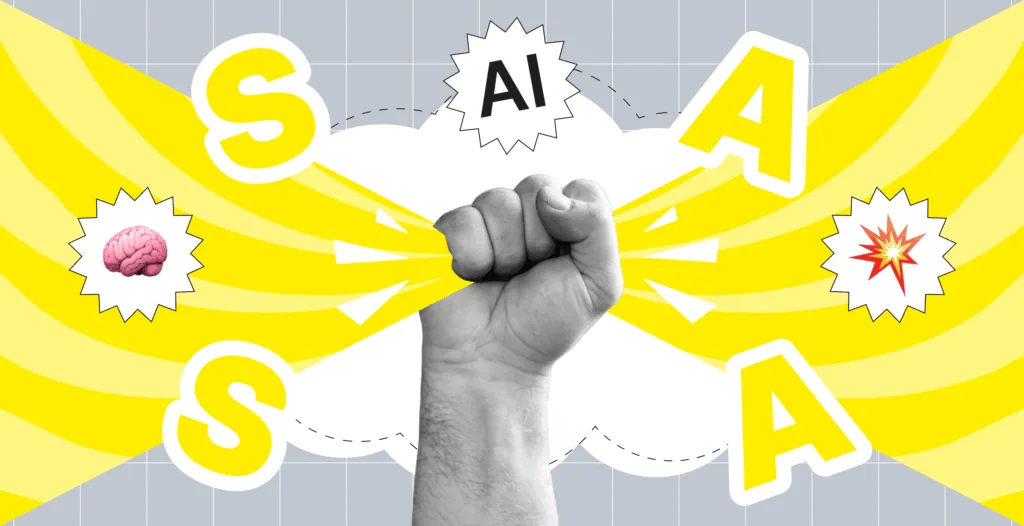
AI SaaS is no longer a futuristic concept; it is the present engine of a profound revolution in the creative industries. For decades, the processes of copywriting and graphic design were considered uniquely human domains, reliant on intuition, years of honed skill, and often, a touch of artistic genius.
Today, a new paradigm is emerging. Artificial Intelligence, delivered through scalable and accessible Software-as-a-Service (SaaS) platforms, is dismantling traditional workflows, democratizing creativity, and fundamentally altering how businesses approach content creation. This isn’t about replacing humans; it’s about augmenting their capabilities and achieving unprecedented levels of efficiency and scale.
The disruption is palpable. Marketing teams that once waited days for a designer’s mockup or a writer’s first draft can now generate a plethora of options in the time it takes to drink a coffee. This shift towards instant, on-demand content is reshaping brand strategies, competitive landscapes, and the very definition of creative work.
Table of Contents
The Engine of Disruption: Understanding AI SaaS
To understand the impact, we must first define the vehicle of change. AI SaaS platforms combine two powerful modern technologies:
- Artificial Intelligence (AI) and Machine Learning (ML): These systems are trained on vast datasets of text, images, and design principles. They learn patterns, styles, tones, and structures, enabling them to generate original, human-like output based on simple user prompts.
- Software-as-a-Service (SaaS): This is the delivery model. Instead of complex, installed software, users access these powerful AI tools through a web browser or app, typically via a subscription. This makes cutting-edge AI available to freelancers, startups, and enterprise giants alike, without massive upfront investment.
The fusion of these technologies creates a powerful, always-on creative assistant that never suffers from writer’s block or creative fatigue.
Revolutionizing the Written Word: AI in Copywriting
The field of copywriting has been one of the earliest and most visibly transformed by AI SaaS. Platforms like Jasper, Copy.ai, and Writesonic have become ubiquitous in marketing departments.
How it Works: A user provides a prompt—for example, “a Facebook ad headline for a new vegan protein powder targeting fitness enthusiasts.” The AI, trained on millions of high-performing ads, instantly generates a dozen variations, experimenting with emotional triggers, power words, and calls to action.
The benefits are transformative:
- Unmatched Speed and Scale: Blog outlines, product descriptions, email sequences, and social media posts can be produced in bulk, allowing businesses to maintain a constant and pervasive online presence.
- Data-Driven Creativity: These tools are often integrated with SEO data, suggesting keywords and phrases that improve search rankings. The copy isn’t just creative; it’s engineered for performance.
- Ideation and Overcoming Blocks: Writers are using AI as a brainstorming partner. It can suggest angles, expand on bullet points, and rephrase clumsy sentences, freeing the human professional to focus on strategy, nuance, and final polishing.
The role of the human copywriter is evolving from a pure content producer to a strategic editor, prompt engineer, and brand voice guardian.
Transforming Visuals: AI in Graphic Design
Parallel to the text revolution, AI is making seismic waves in graphic design. Tools like Canva (with its Magic suite of AI tools), Adobe Firefly, and Midjourney are putting immense design power into the hands of non-designers.
How it Works: A user can type a descriptive prompt like, “a minimalist logo for a tech startup called ‘Nexus’ with a blue and green gradient,” and the AI will generate numerous visual concepts. Beyond image generation, AI can automatically resize designs for different platforms (e.g., Instagram post vs. story), suggest font pairings, and color palettes based on brand guidelines, and even edit photos by removing backgrounds or expanding images beyond their original borders.
The impact is profound:
- Democratization of Design: Small business owners, social media managers, and interns can now create professional-looking graphics without needing years of experience in Adobe Illustrator or Photoshop. This drastically reduces reliance on overburdened design teams for simple tasks.
- Hyper-Efficiency: Tedious tasks like resizing, formatting, and background removal are handled in seconds. This liberates professional designers to focus on high-concept work, complex branding projects, and strategic creative direction.
- Unlimited Inspiration: Designers can use these tools to break through creative blocks, generate mood boards, and explore visual concepts they might never have considered, accelerating the initial phases of the design process.
The Human-AI Collaboration: The New Creative Workflow
The narrative that AI will wholly replace copywriters and designers is a misconception. The true disruption is the redefinition of their roles. The future lies in collaboration.
The human professional becomes the conductor of an AI orchestra. They provide the strategic vision, the nuanced understanding of the target audience, the brand’s core voice, and the emotional intelligence that AI currently lacks. They input the precise prompts, curate the best outputs from the AI, and refine, edit, and add the crucial layer of human touch that makes content truly resonate.
AI handles the heavy lifting of ideation and first drafts; humans provide the critical thinking, quality control, and strategic oversight. This symbiotic relationship allows creatives to produce higher-quality work at a scale previously unimaginable.
Challenges and Ethical Considerations
This disruption is not without its challenges. The rise of AI SaaS raises important questions about:
- Originality and Plagiarism: As AIs are trained on existing human-created work, where is the line between inspiration and infringement?
- Job Displacement: While it augments roles, it may reduce the need for junior-level content producers, forcing a shift in required skillsets within the industry.
- Bias: AI models can perpetuate and amplify biases present in their training data, leading to non-inclusive or stereotypical content if not carefully guided.
- Brand Voice Dilution: Over-reliance on AI without strong human oversight can lead to generic, homogenized content that lacks a distinct brand personality.
Navigating these challenges requires ethical guidelines, transparent usage policies, and a commitment to human-led creativity.
Conclusion: The Future is Collaborative
The disruption caused by AI SaaS in copywriting and design is irreversible and accelerating. It has shifted content creation from a painstaking, time-consuming craft to an agile, scalable, and data-informed process. The businesses that will thrive are those that embrace this change not as a threat, but as an opportunity. They will be the ones who learn to harness the raw speed and power of AI while investing in the human creativity, strategy, and emotional intelligence that give content its ultimate meaning and impact. The goal is no longer just to create content in seconds, but to use those saved seconds to create something truly profound.
FAQS
1. Will AI SaaS tools like ChatGPT and Midjourney replace human copywriters and designers?
No, they are not replacements but powerful augmentations. These tools excel at generating ideas, first drafts, and options at scale. However, they lack human qualities like strategic thinking, emotional intelligence, cultural nuance, and a deep understanding of brand voice. The future role of humans will be to act as creative directors, curators, and editors for AI output, ensuring it meets strategic goals and resonates on a human level.
2. How can I ensure the content generated by AI is original and not plagiarized?
Reputable AI SaaS platforms are designed to generate original content, not directly copy and paste from their training data. They work on pattern recognition. However, it’s crucial to use these tools as a starting point. Always fact-check, edit, and add your own unique perspective and insights. Using a plagiarism checker on final drafts is also a recommended best practice for important content.
3. What are the ethical considerations of using AI for creative work?
Key ethical concerns include transparency (should you disclose AI use?), bias (AI can reflect biases in its training data), and copyright (who owns the output?). It’s important to use AI responsibly, be aware of its limitations, and ensure a human is ultimately accountable for the final content that is published.
4. How do I choose the right AI SaaS tool for my needs?
Consider your primary use case. For copywriting, explore tools like Jasper or Copy.ai. For graphic design, look at Canva’s AI features or Adobe Firefly. For more artistic image generation, consider Midjourney or DALL-E 3. Most platforms offer free trials. Start with a clear goal, test a few options, and evaluate which tool’s output, interface, and pricing best align with your workflow and requirements.
